


Advertisement|Remove ads.
MU Stock Selloff Intensifies After Google’s TurboQuant Rollout, Debt Buyback — But Retail Traders Unfazed
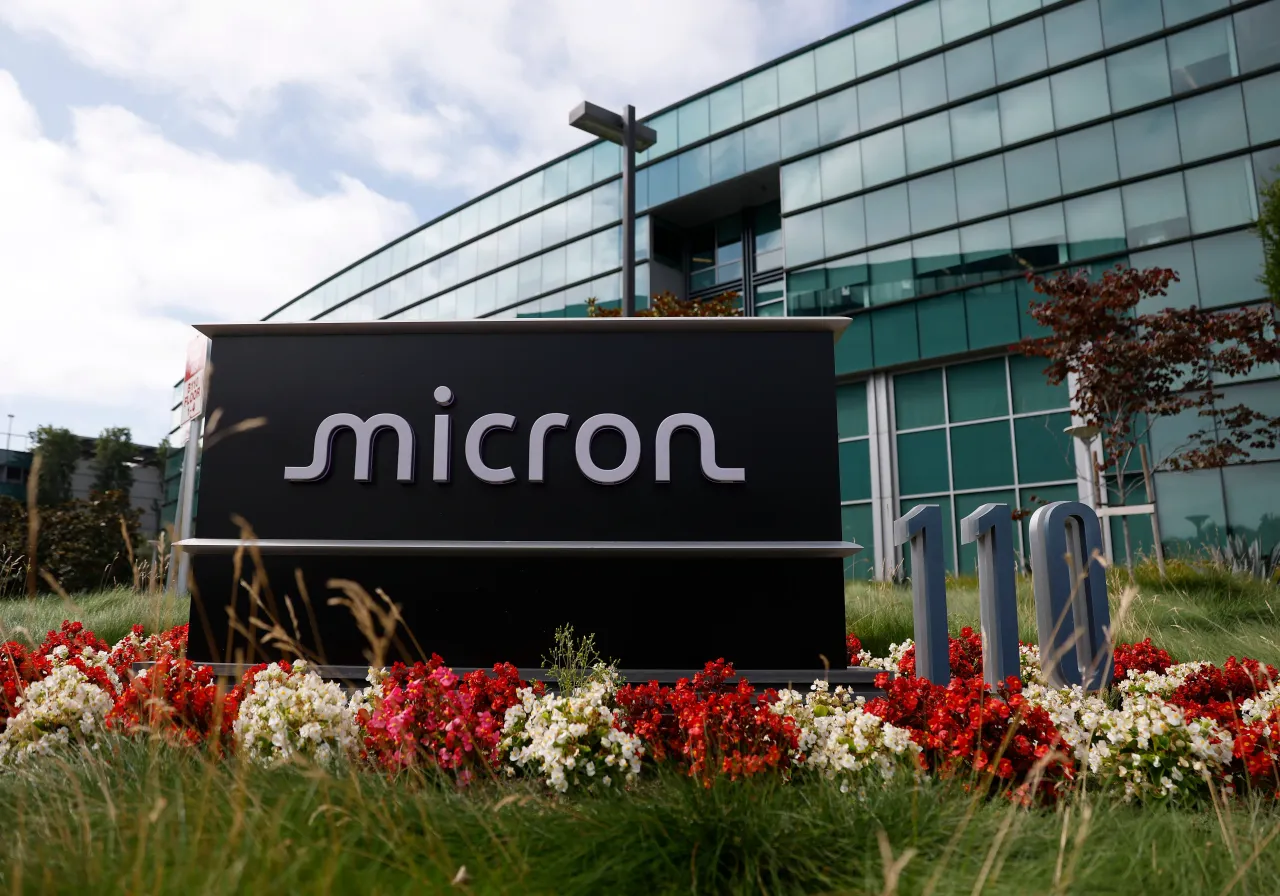


- Major memory chip stocks, including SanDisk, SK Hynix and Samsung, fell on Google’s latest unveiling.
- MU stock posted its fifth day in the red.
- Micron launched a tender offer to buy back $5.4 billion of its senior notes, raising some concerns about whether it is the best use of the company’s cash.
Advertisement|Remove ads.
Micron and SanDisk stock slid by about 3.5% on Wednesday amid global declines in memory chip stocks, triggered by Google's unveiling of a new technology that it claims reduces the amount of memory required to run AI models by at least a factor of six.
However, despite the stock sliding for a fifth day, the retail sentiment around Micron on Stocktwits climbed higher to ‘extremely bullish.’

Alphabet’s TurboQuant technology could lower the memory capacity needed for AI training, some investors believe, reflected in Wednesday’s trading activity. Memory and storage companies have been on a strong run, with prices climbing in recent months amid supply shortages driven by surging AI-led demand.
Advertisement|Remove ads.
In Korea, shares of SK Hynix and Samsung, two of the largest memory chip makers, declined 5.6% and 4.3%, respectively, on Thursday. In the U.S., Seagate and Western Digital stocks declined 2.6% and 1.6%, respectively, the previous day.
Meanwhile, SK Hynix said Wednesday it has confidentially filed with the U.S. Securities and Exchange Commission a registration statement for a potential U.S. listing later this year. The move would pit its shares directly against U.S. memory makers, broadening investor options for exposure to the sector and potentially weighing on trades in its American rivals.
Micron’s Debt Tender Offer
For Micron, additional company-specific factors are also weighing on the shares. The chip heavyweight on Wednesday announced a tender offer to buy back some of its senior notes maturing from 2030 to 2035. The notes have a total principal amount of $5.4 billion, and the offer expires at the end of this month.
Advertisement|Remove ads.
While not a negative move, it signals a shift toward balance sheet cleanup rather than aggressive investment during a key AI-driven growth phase. It might also raise questions about the best use of the company's cash at a time when investors expect maximum expansion.
Retail, Analyst Views On MU
“$MU tripled revenue and goes down.. ive seen that before, its called a buying opportunity,” posted a trader on Stocktwits, referring to Micron’s blowout quarterly report from last week.
"Micron $MU road to 700s remains fully intact in [a] couple weeks from now," said one user, implying a whopping 87% surge from current levels and pointing to the stock's rebound from a similar dip in December 2025.
Advertisement|Remove ads.
Wells Fargo said Google’s TurboQuant update could, in fact, end up being a positive for memory companies. While this kind of breakthrough could seem negative for memory companies, the idea of Jevons Paradox suggests the opposite may happen – making AI more efficient lowers costs, which can actually drive much wider use and demand over time, the research firm said in its investor note on Wednesday.
Micron shares declined a further 2.2% in Wednesday’s overnight session. As of the last close, the stock is still up 34% year-to-date.
For updates and corrections, email newsroom[at]stocktwits[dot]com.
Advertisement|Remove ads.
Read Next: INTC, AMD Stocks Rally: CPU Price Hikes Signal AI Demand Shift Beyond GPUs
Comments posted here will also appear on symbol pages.

Latest News
/filters:format(webp)https://news.stocktwits-cdn.com/large_Getty_Images_1569415620_1ad6cfc5c6.jpg)
/filters:format(webp)https://news.stocktwits-cdn.com/Anushka_Basu_make_me_smile_in_the_picture_b92832aa_af59_4141_aacc_4180d2241ba8_1_2_png_1086e0ed8c.webp) Anushka Basu·2h ago
Anushka Basu·2h ago/filters:format(webp)https://news.stocktwits-cdn.com/large_Getty_Images_2295245703_1237d2403d.jpg)
/filters:format(webp)https://st-everywhere-cms-prod.s3.us-east-1.amazonaws.com/i_OS_App_Icon_1_8054f2a2fe.png) Stocktwits News Desk·2h ago
Stocktwits News Desk·2h ago/filters:format(webp)https://news.stocktwits-cdn.com/large_new_york_stock_exchange_jpg_e1f85c0d8c.webp) Stocktwits News Desk·3h ago
Stocktwits News Desk·3h ago/filters:format(webp)https://news.stocktwits-cdn.com/large_starlink_jpg_39bb7b2774.webp) Stocktwits News Desk·5h ago
Stocktwits News Desk·5h ago/filters:format(webp)https://news.stocktwits-cdn.com/large_cathiewood_OG_jpg_a3c8fddb3f.webp) Stocktwits News Desk·6h ago
Stocktwits News Desk·6h ago/filters:format(webp)https://news.stocktwits-cdn.com/Getty_Images_2237643016_jpg_17a9a7eb9d.webp) Stocktwits News Desk·7h ago
Stocktwits News Desk·7h ago