


Advertisement|Remove ads.
Nvidia’s Jensen Huang Faces 50/50 Odds Of Staying At The Helm, Yale Professor Says: 6 CEO Scandals That Led To Departures


- Sonnenfeld said the board’s trust in Huang and what he disclosed to directors could matter more than the alleged relationship itself.
- He also questioned whether Nvidia has an executive ready to replace Huang in a leadership crisis.
- The professor pointed to several high-profile CEOs, including leaders at McDonald’s, Intel and Norfolk Southern, who left their roles after investigations into workplace conduct or personal relationships.
Advertisement|Remove ads.
Yale professor Jeffrey Sonnenfeld sees the odds of Nvidia (NVDA) CEO Jensen Huang keeping his job at roughly 50-50, pointing to a history of corporate leaders who lost their positions after personal scandals.
“I think it's about a 50-50 chance,” Sonnenfeld said in an interview with CNBC on Monday. According to him, previous CEO departures were not necessarily driven by public disapproval of infidelity, but by concerns about trust and disclosure.
“It wasn't because we are so puritanical a nation and culture that we're so worried about the infidelities and the frailties of human nature,” he said. “But it's when they deceive the board that we have the problem.”
Advertisement|Remove ads.
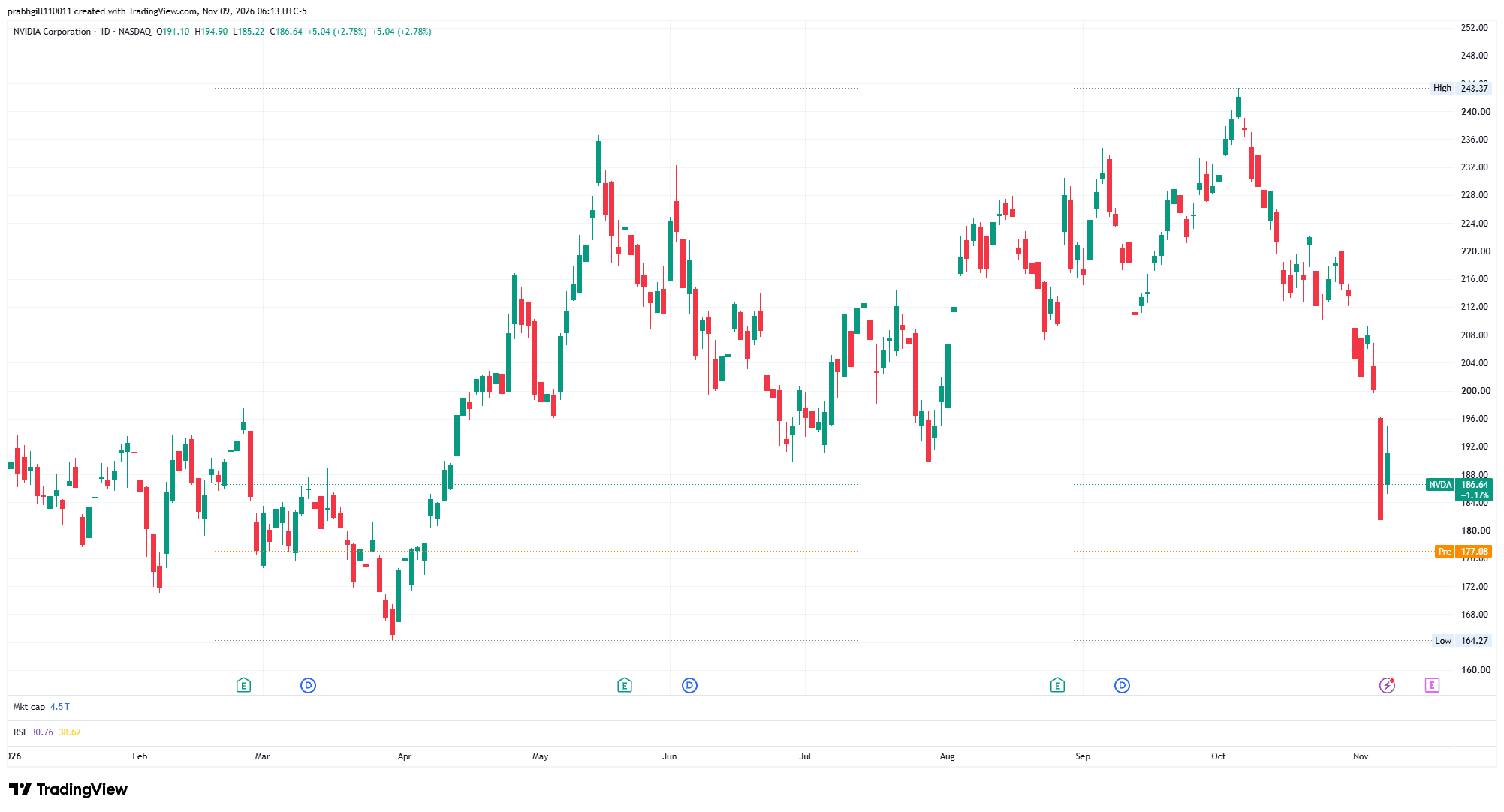
NVDA stock dropped as much as 4.5% in pre-market trade on Monday, on track to hit a five-month low, wipe out over $200 billion of its market capitalization if losses hold through the day, and was the top trending ticker on Stocktwits at the time of writing.
Sonnenfeld Says Board Trust Could Determine Huang’s Fate
According to Sonnenfeld, the board’s assessment of what Huang knew, when he knew it, and what he disclosed could be more important than the personal relationship alone. He pointed to the confidence Huang has built over more than three decades leading Nvidia, including support from prominent business leaders.
Sonnenfeld called the current situation a serious test of that standing. He said Huang had been “revered and trusted by everybody in technology,” but characterized the episode as “remarkably poor judgment.”
Advertisement|Remove ads.
“Any employee in Nvidia other than him would be fired over this,” he said, adding that the recklessness alone could mean “an irretrievable loss of confidence.”
Nvidia Doesn’t Have A Succession Plan
Sonnenfeld pointed out that even if the board considers a leadership change, it is uncertain if Nvidia has an obvious internal successor ready to take over.
He noted that while Nvidia has several strong senior executives, including its chief financial officer and chief operating officer, “none of them have ever led a public company” or have Huang’s visibility.
Advertisement|Remove ads.
“I don't see any one of them being able to step in here in a time of crisis,” Sonnenfeld said of the company’s board members.
From Intel To McDonald’s, CEO Scandals That Led To Departures
Sonnenfeld said several high-profile companies have removed CEOs after investigations into relationships, workplace conduct, or questions about executive disclosure.
At McDonald’s (MCD), Steve Easterbrook was fired in November 2019 after the board found he had engaged in a consensual relationship with an employee, violating company policy. The company later alleged that Easterbrook had concealed additional relationships and misled investigators, leading McDonald’s to seek the return of his severance package.
Advertisement|Remove ads.
Intel (INTC) CEO Brian Krzanich resigned in June 2018 after the company found that a past consensual relationship with an employee violated its non-fraternization policy.
Norfolk Southern (NSC) removed CEO Alan Shaw in September 2024 after an investigation found he had engaged in a relationship with the company’s chief legal officer, violating its policies.
Meanwhile, Best Buy (BBY) CEO Brian Dunn resigned in 2012 following a board investigation into his relationship with a female employee. At L-3 Communications, now part of L3Harris (LHX), Chris Kubasik resigned in 2012 after disclosing a relationship with a subordinate while he was president and CEO-elect.
Advertisement|Remove ads.
Sonnenfeld also noted former Hewlett-Packard (HP) CEO Mark Hurd, who resigned in 2010 after a board investigation into expense-report inaccuracies following a sexual-harassment complaint. The investigation did not substantiate the harassment allegations.
“That’s what happened with Mark Hurd and Hewlett Packard,” Sonnenfeld said, adding that in previous cases “the board didn't have full information, or there was some element of deceit.”
Hurd’s departure also illustrates that leaving a CEO role does not necessarily end an executive’s career. Oracle (ORCL) hired him as co-president about a month after he left HP.
Advertisement|Remove ads.
How Is Retail Feeling About NVDA Stock?
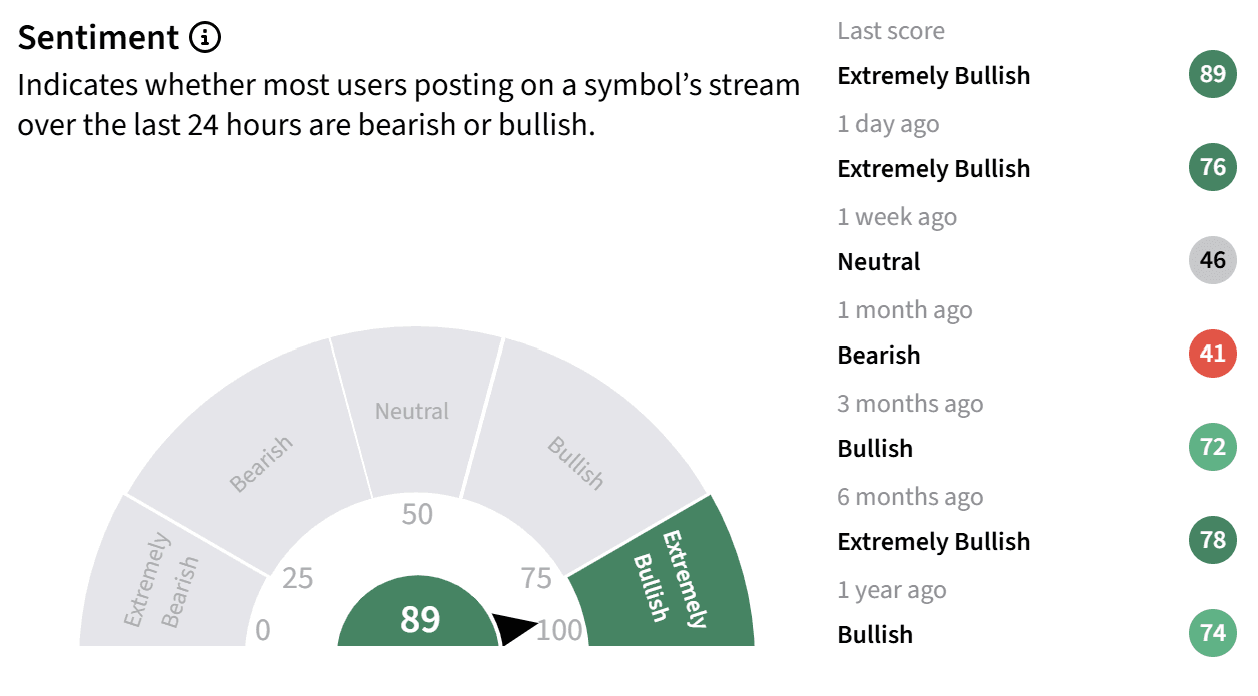
On Stocktwits, retail sentiment around Nvidia remained in ‘extremely bullish’ territory over the past day, while chatter rose to ‘extremely high’ from ‘high’ levels. Platform data showed an over 800% jump in message volume.
The drop in NVDA stock came after Nvidia launched an investigation into Huang’s relationship with a businesswoman who intelligence agencies say is a Chinese spy. U.S. intelligence agencies said Alice Huang, an executive at cloud company MegaSpeed, has been passing information to Beijing, according to reports in The New York Times and The Financial Times. However, Chinese intelligence has denied any such reports.
Some traders on Stocktwits debated that the controversy had little bearing on Nvidia’s underlying business and said they would consider buying more shares if the stock continued to fall.
Advertisement|Remove ads.
NVDA stock is down over 1% for the year, not accounting for the pre-market slide.
Advertisement|Remove ads.
Read also: From Musk’s Tesla Cybertruck To Ternus’ Memory Warning: MAG 7 Voices In Midterm Election Week
For updates and corrections, email newsroom[at]stocktwits[dot]com.
Comments posted here will also appear on symbol pages.

Latest News
 Prabhjote Gill·10m ago

 Aveek Bhowmik·20m ago

 Arnab Paul·28m ago

 Harshita Tyagi·32m ago

 Heera Hari·46m ago
 Harshita Tyagi·1h ago