


Advertisement|Remove ads.
Qnity Bets On Local Production To Win More AI Chip Business From Nvidia, TSMC – CEO Touts ‘Local-For-Local’ Strategy
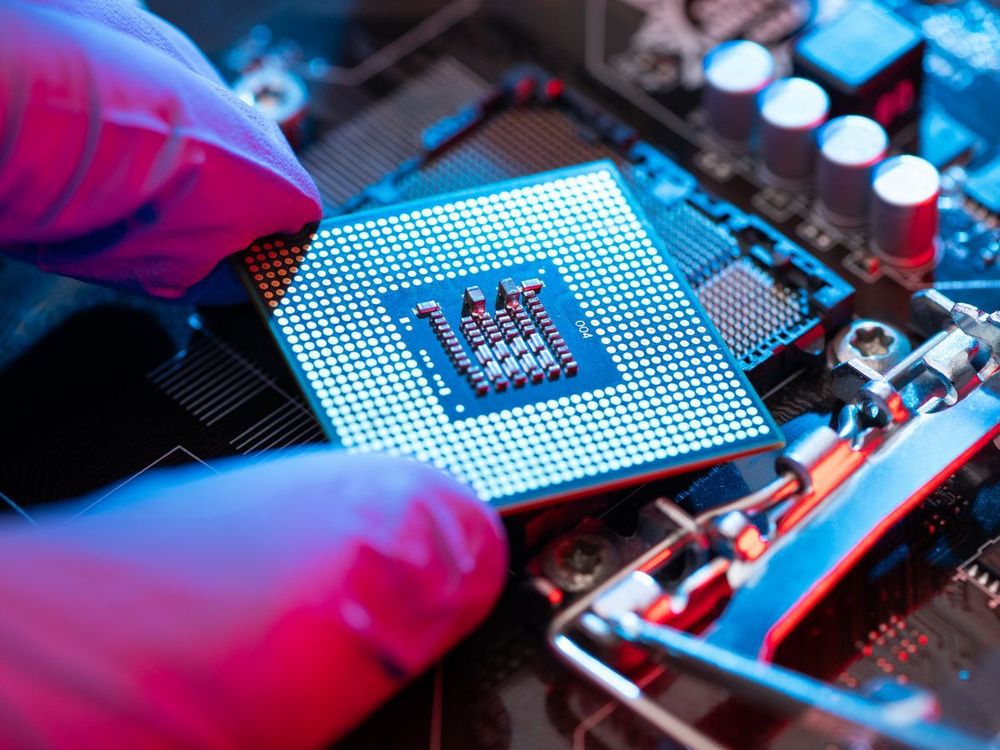


- CEO Jon Kemp said materials innovation is becoming increasingly important to the AI industry as demand grows for advanced chips and supporting technologies.
- In an interview with Nikkei Asia, Qnity CEO said the company sources more than 70% of its raw materials within the regions where it operates.
- He added that the firm is expanding production capacity across Asia and the U.S.
Advertisement|Remove ads.
Qnity (Q), a key supplier of semiconductor materials to Taiwan Semiconductor Manufacturing Co. (TSM) and Intel (INTC), is reportedly betting that local production and sourcing will help it win more business from chipmakers.
The strategy comes amid rising demand for materials used throughout the AI chip supply chain, including in technologies developed by Nvidia (NVDA).
CEO Jon Kemp told Nikkei Asia Qnity’s “local-for-local” strategy, which involves sourcing more than 70% of its raw materials within the regions where it operates, helps the company respond faster to customers, strengthen supply chains, and win a role in developing advanced chip technologies.
Advertisement|Remove ads.
“Our belief in that local-for-local operating model and being that partner of choice is to allow us to accelerate the pace of innovation and match the speed of our customers,” Kemp said.
Q stock edged as much as 1% lower in pre-market trade, on track to extend a drop of over 6% over the past five days. On Stocktwits, retail sentiment around Qnity slipped to ‘bearish’ from ‘neutral’ territory over the past day.
Semiconductor Suppliers Step Up Local Production
Qnity’s strategy reflects a broader shift in the semiconductor industry, the report said.
Advertisement|Remove ads.
Tariffs, industrial policy and concern about production concentrated in Taiwan are pushing chipmakers and suppliers to build closer to customers.
The U.S. imposed Section 232 chip tariffs in January and signed a reshoring deal with Taiwan the following day. TSMC is expanding in Arizona, and GlobalFoundries last week agreed to make interposers for TSMC in New York.
For Qnity, Kemp said the company’s manufacturing footprint and regional sourcing model give it an advantage by improving supply chain resilience, creating new business opportunities, and reducing exposure to logistics-driven inflation.
Advertisement|Remove ads.
Qnity recently invested $61.5 million to expand production capacity for advanced semiconductor materials and chemicals in Taiwan. It is also expanding in South Korea and has doubled its capacity in Vietnam.
In the U.S., the company opened a facility in Delaware earlier this year to support growing domestic production of advanced processors and memory chips.
AI Demand Drives Growth In Advanced Chip Materials
Qnity supplies semiconductor chemicals and materials to major chipmakers, including TSMC, Samsung and Intel. Its portfolio includes chemical mechanical polishing (CMP) pads and slurries, plus materials for advanced chip packaging and thermal management.
Advertisement|Remove ads.
Kemp said Qnity’s CMP-related business grew 20% in 2026. Materials for advanced packaging, AI-related printed circuit boards and thermal management applications each grew more than 50% year over year in the first half of the year.
“Materials are moving kind of from backstage to center stage,” Kemp said. “Materials innovation is a hidden hero of the AI era.”
In pre-market trade, TSM stock fell nearly 1% while INTC stock was down as much as 1.5%. Meanwhile, NVDA stock shed more than 1% amid broader weakness in semiconductor stocks. On Stocktwits, retail sentiment around NVDA and INTC continued to trend in ‘bearish’ territory over the past day. Sentiment around TSM deteriorated to ‘neutral’ from the ‘bullish’ zone.
Advertisement|Remove ads.
Qnity is scheduled to report its third-quarter (Q3) earnings results on November 4. Investors will be watching whether growth converts to free cash flow under incoming CFO Ken Rizvi. The company guided to $600 million to $700 million in free cash flow this year.
The market is expecting the firm to report earnings per share (EPS) of $1.20, on revenue of $1.49B, according to Koyfin data.
Advertisement|Remove ads.
For updates and corrections, email newsroom[at]stocktwits[dot]com.
Comments posted here will also appear on symbol pages.

Latest News
/filters:format(webp)https://st-everywhere-cms-prod.s3.us-east-1.amazonaws.com/large_crown_b_IV_3_C8_Tjq_YA_unsplash_7145a9f395.jpg)
/filters:format(webp)https://news.stocktwits-cdn.com/Harshita_3cfe02022c.jpg) Harshita Tyagi·5m ago
Harshita Tyagi·5m ago/filters:format(webp)https://news.stocktwits-cdn.com/large_Getty_Images_2295195765_631ba29211.jpg)
/filters:format(webp)https://news.stocktwits-cdn.com/Anushka_Basu_make_me_smile_in_the_picture_b92832aa_af59_4141_aacc_4180d2241ba8_1_2_png_1086e0ed8c.webp) Anushka Basu·19m ago
Anushka Basu·19m ago/filters:format(webp)https://news.stocktwits-cdn.com/large_Goldman_Sachs_resized_c6a47f630c.webp)
/filters:format(webp)https://news.stocktwits-cdn.com/Heera_1_1c30cb0170.PNG) Heera Hari·33m ago
Heera Hari·33m ago/filters:format(webp)https://news.stocktwits-cdn.com/large_unh_stock_resized_jpg_e69fd915e3.webp)
/filters:format(webp)https://news.stocktwits-cdn.com/vivekkrishnanphotography_58_jpg_0e45f66a62.webp) Arnab Paul·58m ago
Arnab Paul·58m ago/filters:format(webp)https://news.stocktwits-cdn.com/large_Goolsbee_Fed_jpg_4898d7f0b6.webp) Harshita Tyagi·1h ago
Harshita Tyagi·1h ago/filters:format(webp)https://news.stocktwits-cdn.com/Getty_Images_1238576948_jpg_125919428e.webp)
/filters:format(webp)https://news.stocktwits-cdn.com/Prabhjote_DP_67623a9828.jpg) Prabhjote Gill·1h ago
Prabhjote Gill·1h ago