


Advertisement|Remove ads.
SNDK, MU, WDC, Other Memory Stocks Rally As Investors Return To Beaten-Down AI Names


- BNP Paribas sees DRAM and NAND supply and demand nearing balance by mid-2027, which could bring price declines sooner than it previously expected.
- Micron said more than 75% of its 2027 output is already committed.
- Western Digital has demand visibility through 2030 and 2031 across its seven largest customers.
Advertisement|Remove ads.
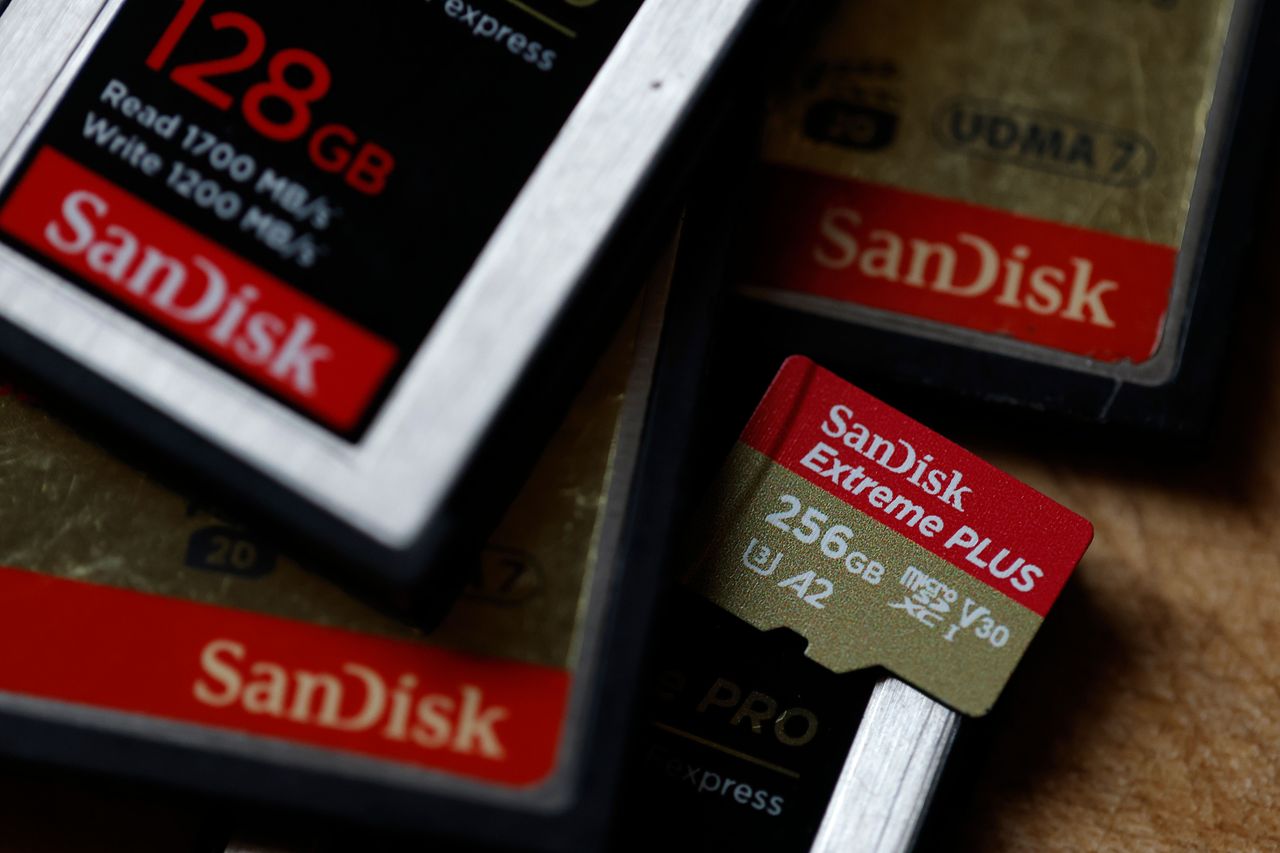
AI-linked memory and storage stocks rallied in Friday’s premarket trading, marking a comeback following a sharp November selloff. SanDisk (SNDK) stock surged over 9%, while Micron Technology (MU), Western Digital (WDC) and Seagate Technology (STX) gained over 5%.
The broader technology sector also recovered, with Nasdaq-100 futures rising nearly 3% ahead of Friday's Thanksgiving holiday-shortened trading session. The rebound followed weeks of volatile trading as investors questioned the profitability of AI infrastructure investments and the rising costs of financing them.

“The recovery in stocks seems technical,” Kathleen Brooks, research director at XTB, told Reuters, adding that the questions that caused the market panic remain unanswered.
Advertisement|Remove ads.
Memory Price Declines
TrendForce warned that uncertainty surrounding data center investment could affect DRAM demand over the next two years. In a report published Friday, the research firm said conventional DRAM contract price increases could narrow throughout 2027.
In its base-case scenario, the firm sees DRAM contract prices potentially leveling off in the second half before declining in 2028. Its more pessimistic scenario anticipates price declines beginning as early as the fourth quarter of 2027 if server manufacturers reduce procurement and inventory levels.
TrendForce cited reduced server DRAM demand from Chinese cloud providers, potential constraints on data center development, and growing production capacity among manufacturers.
BNP Paribas Flags Oversupply Risks
BNP Paribas analyst Karl Ackerman in a recent report stated that he expects DRAM and NAND supply and demand to approach balance by mid-2027, potentially bringing average selling price declines earlier than the firm previously anticipated.
Advertisement|Remove ads.
The analyst also pointed to uncertainty surrounding hyperscalers' 2028 capacity plans, additional memory wafer capacity, and reduced high-bandwidth memory content in Nvidia's Vera Rubin Ultra platform.
What The Companies Expect Ahead
SanDisk CEO David Goeckeler said during the October 29 earnings call that the company was seeing “a structural increase in NAND demand, driven particularly by AI”. He said customer demand signals now extend beyond fiscal 2030 through the company's new business model partnerships, adding that some customers were returning to request more NAND supply.
Micron Technology (MU) CEO Sanjay Mehrotra said the company expects memory and storage supply-demand conditions to be much tighter in 2027 and 2028 than in 2026. He told analysts in the earnings call that more than 75% of Micron's output for calendar 2027 was already committed, with customer discussions increasingly focused on 2028.
Advertisement|Remove ads.
Western Digital CEO Irving Tan said the company had demand visibility extending to 2030 and 2031 across its seven largest customers. “In fact, we see quarter after quarter, the demand signal actually increasing over time,” he said during the company's October earnings call.
Seagate Technology (STX) CEO Dave Mosley said during the company's October 27 earnings call that the company expects heat-assisted magnetic recording (HAMR) technology to account for roughly 50% of its nearline storage shipments, measured in exabytes, by the end of calendar 2026.
Retail Investors’ Sentiment Around Memory Stocks
On Stocktwits, retail investors’ sentiment around SNDK stock was ‘bullish,’ while MU stock attracted ‘neutral’ sentiment. Meanwhile, sentiment around Western Digital (WDC) and Seagate Technology (STX) stocks was ‘bearish.’
Advertisement|Remove ads.
Despite the recent selloff, memory stocks have posted strong gains this year. SNDK shares have surged nearly 114% year-to-date, while MU stock has climbed more than 90%. STX stock has rallied over 64%, and WDC shares have risen about 45% over the same period.
In comparison, the Roundhill Memory ETF (DRAM), which holds all these stocks, has risen more than 25% so far in 2026.
Advertisement|Remove ads.
For updates and corrections, email newsroom[at]stocktwits[dot]com.

Latest News

 Harshita Tyagi·13m ago

 Heera Hari·54m ago

 Arnab Paul·1h ago

 Prabhjote Gill·1h ago
 Harshita Tyagi·2h ago
 Harshita Tyagi·3h ago
Comments posted here will also appear on symbol pages.