


Advertisement|Remove ads.
Trump Pulls The Plug On Biden-Era EV Mandate, Touts $100B Investment In American Auto Industry — Says Buyers Will Save Thousands On New Cars
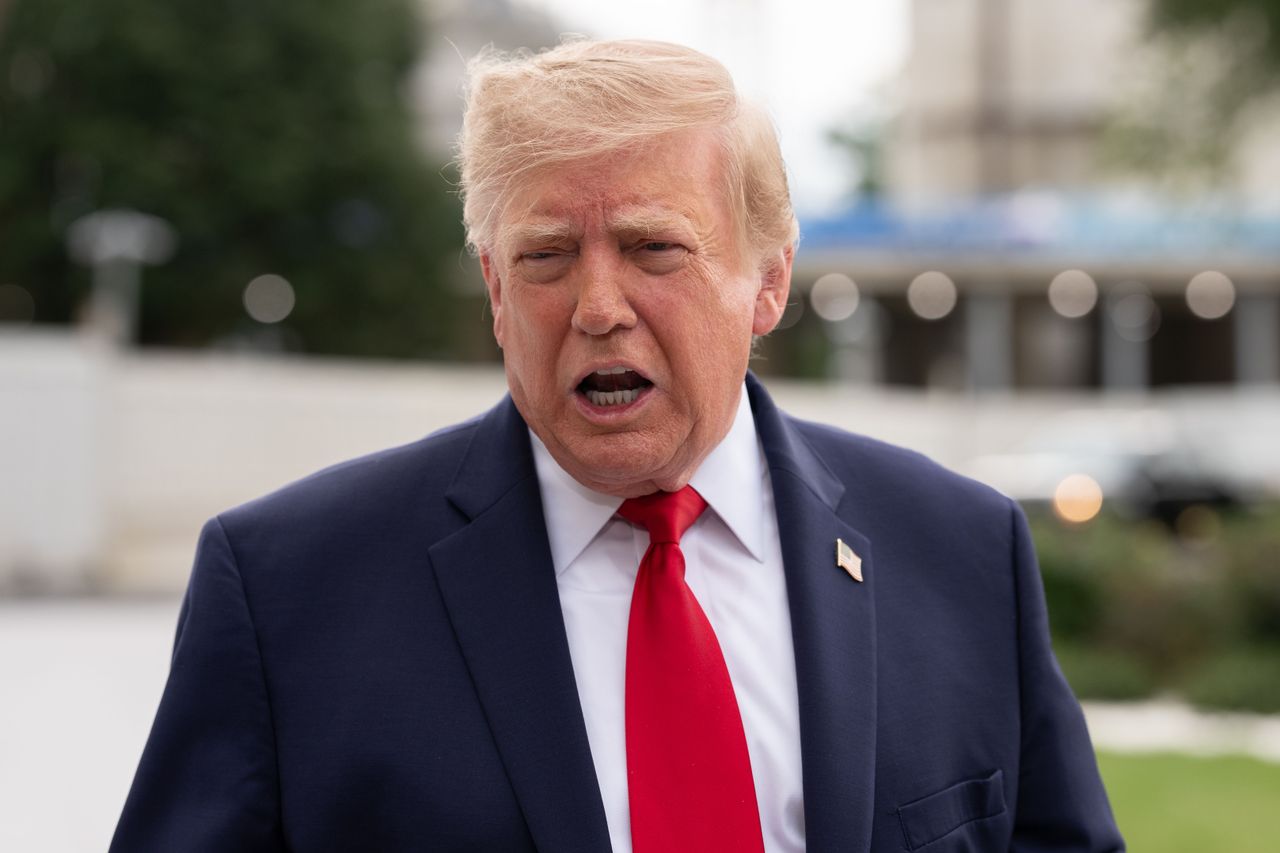


- Trump said that the new fuel economy standards will give automakers more flexibility in deciding which vehicles to build, while reducing the costs associated with meeting stricter efficiency requirements.
- According to Trump, the changes will translate into lower prices for consumers, with the president claiming that American families could save thousands of dollars when purchasing a new vehicle.
- Trump also pointed to new and expanded plants expected to support jobs in states including Michigan, Ohio, Indiana and South Carolina.
Advertisement|Remove ads.
President Donald Trump on Saturday said that his administration has approved new fuel economy standards that he described as a major reset for the U.S. auto industry.
In a post on Truth Social, Trump also touted more than $100 billion in automotive investments under his administration, while adding that the policy would support auto manufacturing and jobs across the country.
Trump Says New Rules Will Lower Car Prices
Trump added that the new fuel economy standards will give automakers more flexibility in deciding which vehicles to build, while reducing the costs associated with meeting stricter efficiency requirements.
Advertisement|Remove ads.
According to Trump, the changes will translate into lower prices for consumers, with the president claiming that American families could save thousands of dollars when purchasing a new vehicle.
Trump also pointed to new and expanded plants expected to support jobs in states including Michigan, Ohio, Indiana and South Carolina.
“Every manufacturer, from General Motors to Ford to Stellantis, has called me wanting to build here, and now they can!” he said.
Advertisement|Remove ads.
Trump also thanked Transportation Secretary Sean Duffy and Commerce Secretary Howard Lutnick for their roles in implementing the administration's auto policy.
Shares of General Motors (GM) and Stellantis NV (STLA) closed 3% higher on Friday, while Ford (F) shares gained about 1%. EV giant Tesla’s (TSLA) shares closed 2% lower, while rival Rivian (RIVN) saw its stock gain over 1%.
What Biden-Era Rules Required
The Biden administration's 2024 fuel economy standards called for passenger-car fuel economy to increase 2% annually for model years 2027 through 2031, while light trucks would see 2% annual increases from 2029 through 2031. The rules targeted average light-duty vehicle fuel economy of approximately 50.4 miles per gallon by 2031.
Advertisement|Remove ads.
The Transportation Department said the standards would save Americans more than $23 billion in fuel costs and nearly 70 billion gallons of gasoline through 2050, while preventing more than 710 million metric tons of carbon dioxide emissions.
The Biden administration also pushed to expand EV charging infrastructure. In January 2025, the Transportation Department announced $635 million in grants for 49 projects across 27 states, four federally recognized tribes and Washington, D.C., with the funding expected to add more than 11,500 EV charging ports and alternative-fueling infrastructure.
The administration had set a goal of 500,000 publicly available EV chargers by 2030 and said more than 206,000 charging ports were already available nationwide by January 2025. Trump's new rules now mark a shift away from the Biden administration's tougher fuel-economy targets.
Advertisement|Remove ads.
During the after-hours session, the SPDR S&P 500 ETF (SPY), which tracks the S&P 500 index, rose 0.09%; the Invesco QQQ Trust ETF (QQQ) gained 0.12%; and the SPDR Dow Jones Industrial Average ETF Trust (DIA) rose 0.04%. Retail sentiment on Stocktwits regarding the S&P 500 ETF was in the ‘extremely bullish’ territory.
The Max Auto Industry 3X Leveraged ETN (CARU) is down 44% over the past 12 months.
Advertisement|Remove ads.
For updates and corrections, email newsroom[at]stocktwits[dot]com.
Comments posted here will also appear on symbol pages.

Latest News
/filters:format(webp)https://news.stocktwits-cdn.com/large_Getty_Images_2290360640_1ec7422bc6.jpg)
/filters:format(webp)https://news.stocktwits-cdn.com/Anushka_Basu_make_me_smile_in_the_picture_b92832aa_af59_4141_aacc_4180d2241ba8_1_2_png_1086e0ed8c.webp) Anushka Basu·42m ago
Anushka Basu·42m ago/filters:format(webp)https://news.stocktwits-cdn.com/large_Getty_Images_2184298752_597d0bfcd2.jpg) Anushka Basu·3h ago
Anushka Basu·3h ago/filters:format(webp)https://st-everywhere-cms-prod.s3.us-east-1.amazonaws.com/large_charles_schwab_resized_79fd4282b7.jpg) Anushka Basu·5h ago
Anushka Basu·5h ago/filters:format(webp)https://news.stocktwits-cdn.com/large_Getty_Images_1236413131_82e1a6f16e.jpg) Anushka Basu·6h ago
Anushka Basu·6h ago/filters:format(webp)https://news.stocktwits-cdn.com/large_Getty_Images_2255514431_jpg_95e96b4025.webp)
/filters:format(webp)https://st-everywhere-cms-prod.s3.us-east-1.amazonaws.com/i_OS_App_Icon_1_8054f2a2fe.png) Stocktwits News Desk·6h ago
Stocktwits News Desk·6h ago/filters:format(webp)https://news.stocktwits-cdn.com/large_US_economy_representative_image_jpg_88c3aa4736.webp) Stocktwits News Desk·6h ago
Stocktwits News Desk·6h ago