


Advertisement|Remove ads.
US And Iran Sign Electronic Memorandum Of Understanding To End War: Reports
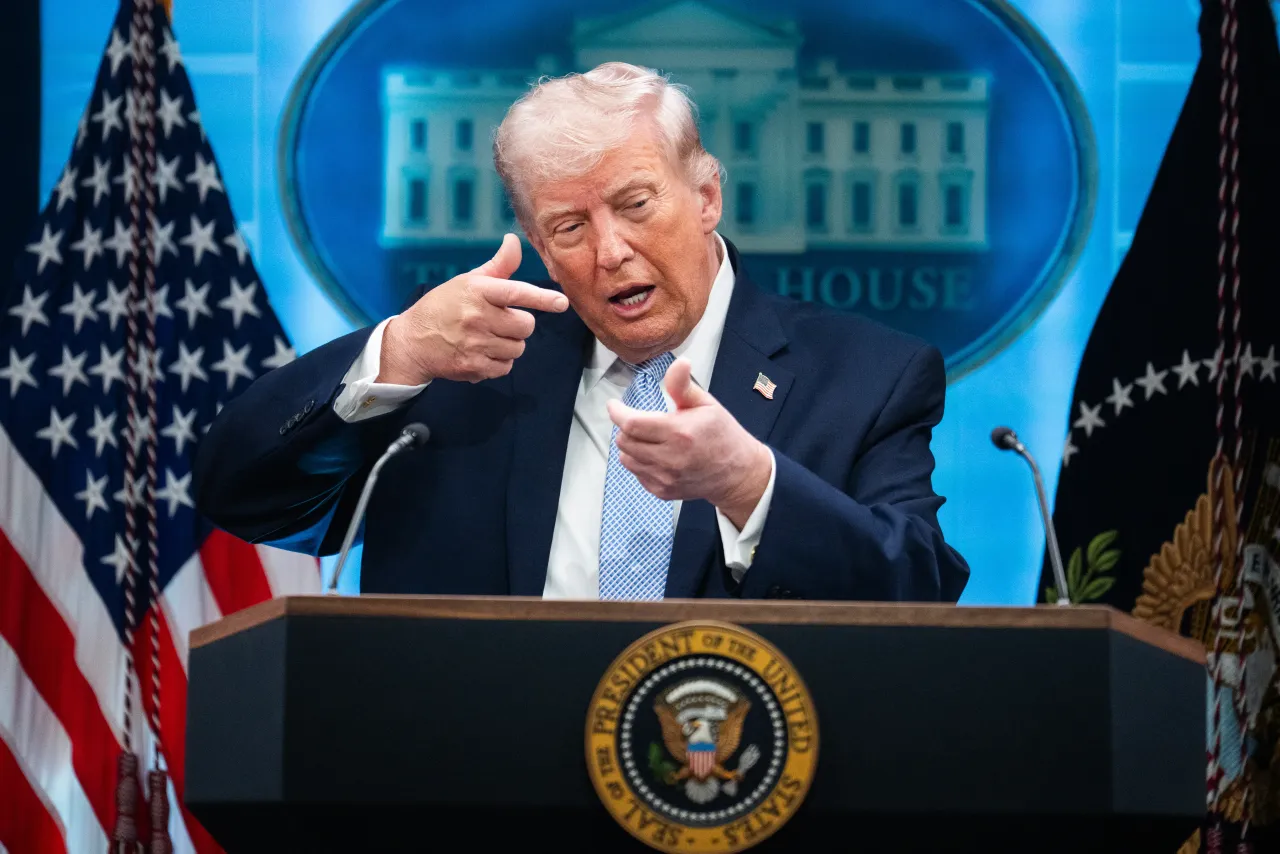

- President Donald Trump personally signed the agreement, one official told Axios.
- The interim deal is aimed at fast-tracking the reopening of the Strait of Hormuz.
- Iran’s foreign ministry said both sides agreed that the memorandum should be signed electronically by the two presidents, according to Axios.
Advertisement|Remove ads.
United States and Iranian officials have virtually signed a highly anticipated memorandum of understanding (MoU) to end the war and reopen the Strait of Hormuz, a move that could finalize the agreement days ahead of a scheduled diplomatic summit in Switzerland.
According to sources familiar with the matter, as cited by Axios, moving to digital signatures would immediately implement critical maritime frameworks concerning the strategic Strait of Hormuz.
Furthermore, an expedited finalization would clear the way for Washington to publicly release the agreement's full text. Diplomatic discussions had previously hit a roadblock over the disclosure of the document; Iranian negotiators had strictly insisted that the specifics of the accord remain confidential until a formal sign-off was achieved.
Advertisement|Remove ads.
The scheduled bilateral summit in Switzerland will proceed as planned on Friday in Switzerland. That meeting is set to be led by U.S. Vice President J.D. Vance and Iranian Parliament Speaker Mohammad Bagher Ghalibaf, with delegations from both nations gathering to address the broader geopolitical implications of the emerging framework.
Terms Of The MoU Between US And Iran
The 14-point draft of the Memorandum between the U.S. and Iran has been released by Axios. However, the official document has not been released to the public. The details published are based on a reading from a U.S. official to reporters.
According to a draft of the memorandum of understanding viewed by Bloomberg, the accord immediately grants Iran extensive sanctions waivers to restart its stalled crude oil exports. Additionally, the framework outlines provisions that clear a path for Iran to tap into a $300 billion global development fund, provided it complies with measures.
Advertisement|Remove ads.
Upon signing, the Islamic Republic of Iran will immediately take steps to ensure that the movement of merchant ships from the Persian Gulf to the Sea of Oman and vice versa is resumed within 30 days to the pre-war volume.
The signing would also mean an immediate and permanent end to the war on all fronts, including Lebanon.
Trump Faces Intense Criticism From Washington
Back in Washington, the deal has prompted unusually strident criticism from some of the president’s allies in Washington who had cheered his military campaign in Iran, Bloomberg reported. The criticism was primarily around the $300 billion Trump plans to provide Iran for reconstruction and economic development.
Advertisement|Remove ads.
“History teaches us giving billions of dollars to theocratic lunatics who want to murder us is not a good idea,” said Senator Ted Cruz, a Texas Republican, to Bloomberg.
Senator Lindsey Graham, one of Trump’s closest allies on Capitol Hill, said the memorandum is not so much a deal as a framework of how to get a deal.
However, Trump defended the $300-billion development program for Iran envisaged in the MoU, as per Bloomberg, reiterating that there’d be no U.S. government cash in it and that Iran would only benefit if it “behaves.” He added that U.S. forces would hit Iran again if its leaders didn’t adhere to the deal.
Advertisement|Remove ads.
The State Street SPDR S&P 500 ETF (SPY) was up 0.6% after-hours, and the Invesco QQQ Trust rose 1%, while the State Street SPDR Dow Jones Industrial Average ETF (DIA) gained 0.4% at the time of writing.
Retail sentiment on Stocktwits for SPY and QQQ was ‘normal’, while sentiment for DIA was ‘bullish.’
Read More: AAPL Stock In Focus: Tim Cook Reportedly Confirms Hike In Apple Products Due To Memory Chip Crunch
Advertisement|Remove ads.
For updates and corrections, email newsroom[at]stocktwits[dot]com.
Comments posted here will also appear on symbol pages.

Latest News
/filters:format(webp)https://news.stocktwits-cdn.com/large_Getty_Images_2295800057_fd745de575.jpg)
/filters:format(webp)https://news.stocktwits-cdn.com/shivani_photo_jpg_dd6e01afa4.webp) Shivani Kumaresan·52m ago
Shivani Kumaresan·52m ago/filters:format(webp)https://news.stocktwits-cdn.com/large_Oil_drill_06147e8349.webp)
/filters:format(webp)https://news.stocktwits-cdn.com/Aashika_Suresh_Profile_Picture_jpg_2acd6f446c.webp) Aashika Suresh·59m ago
Aashika Suresh·59m ago/filters:format(webp)https://news.stocktwits-cdn.com/large_pharma_stock_jpg_490939e580.webp)
/filters:format(webp)https://news.stocktwits-cdn.com/IMG_8805_JPG_6768aaedc3.webp) Deepti Sri·1h ago
Deepti Sri·1h ago/filters:format(webp)https://news.stocktwits-cdn.com/large_Getty_Images_2203983775_jpg_74bdd5dd43.webp) Aashika Suresh·2h ago
Aashika Suresh·2h ago/filters:format(webp)https://news.stocktwits-cdn.com/large_Getty_Images_2247874160_jpg_4fb51355e6.webp) Deepti Sri·2h ago
Deepti Sri·2h ago/filters:format(webp)https://news.stocktwits-cdn.com/large_Getty_Images_2261740761_jpg_17808aac0f.webp) Aashika Suresh·2h ago
Aashika Suresh·2h ago