


Advertisement|Remove ads.
Dollar Dominance Deepens: Offshore Greenback Deposits Hit $14.5 Trillion, Dwarfing Rivals
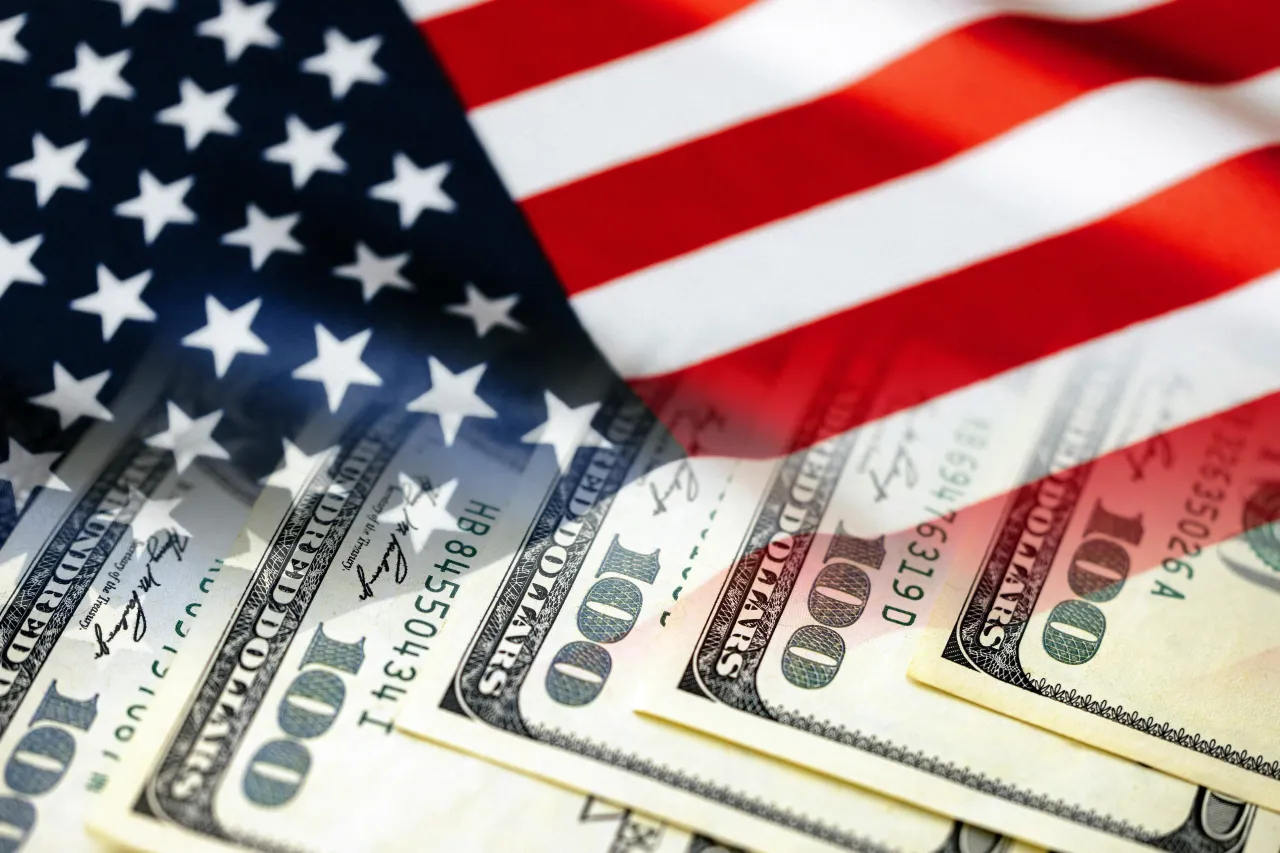


- The Federal Reserve and domestic commercial banks together hold more than $19.0 trillion, indicating that offshore U.S. dollar deposits are equivalent to about 43% of domestic bank deposits.
- Martin Varsavsky, Google-backed serial entrepreneur, believes that the dollar has retained its position as the top reserve currency not just because it is superior, but also because the alternatives do not hold up.
- The U.S. Dollar Index (DXY) was trading at about 98.54 at the time of writing.
Advertisement|Remove ads.
The world is leaning more heavily on the U.S. dollar amid escalating geopolitical tensions and economic uncertainty.
According to The Kobeissi Letter, offshore U.S. dollar deposits held in banks outside of the country have surged to a record $14.5 trillion, underscoring the dollar's dominant role in international finance.
“Global demand for USD is incredibly high,” the industry-leading market commentary service said in a post on X.
Advertisement|Remove ads.
Dollar Vs Euro
The latest figures indicate that the U.S. dollar is still the world’s go-to currency, and offshore deposits have more than tripled since the start of the century.
“This is +220% more than the ~$4.5 trillion held at the beginning of the century,” The Kobeissi Letter said. In comparison, about $3.5 trillion in euros is held in offshore banks outside the Eurozone, it added.
Meanwhile, the Federal Reserve and domestic commercial banks together hold more than $19.0 trillion of dollars, indicating that offshore U.S. dollar deposits are equivalent to about 43% of domestic bank deposits.
Advertisement|Remove ads.
The U.S. dollar has also strengthened in terms of global trade. Data from the Society for Worldwide Interbank Financial Telecommunication (SWIFT) showed that the dollar accounted for 51.14% of global payments in March, up from 49.25% in February. Meanwhile, the euro’s share declined to 21.30% from 22.82% over the same period.
Martin Varsavsky, Google-backed serial entrepreneur, believes that the dollar has retained its position as the top reserve currency not just because it is superior, but also because the alternatives do not hold up.
“The dollar keeps winning not because America is tidy but because every alternative is worse at scale: liquidity, law, depth and trust. Reserve currencies are not chosen by speeches. They are chosen under stress,” he said in a post on X.
Advertisement|Remove ads.
War’s Impact On The Dollar
The U.S. and Israel’s coordinated strikes against Iran, which have now entered their tenth week, have weighed heavily on global energy prices and heightened inflation risks. Oil prices have surged to their highest levels since 2022, with Brent crude rates touching $114 a barrel.
The U.S. Dollar Index (DXY), a benchmark index that measures the value of the U.S. dollar against a basket of six major foreign currencies, has, however, strengthened since the start of the conflict with Iran. It was trading at about 98.54 at the time of writing.
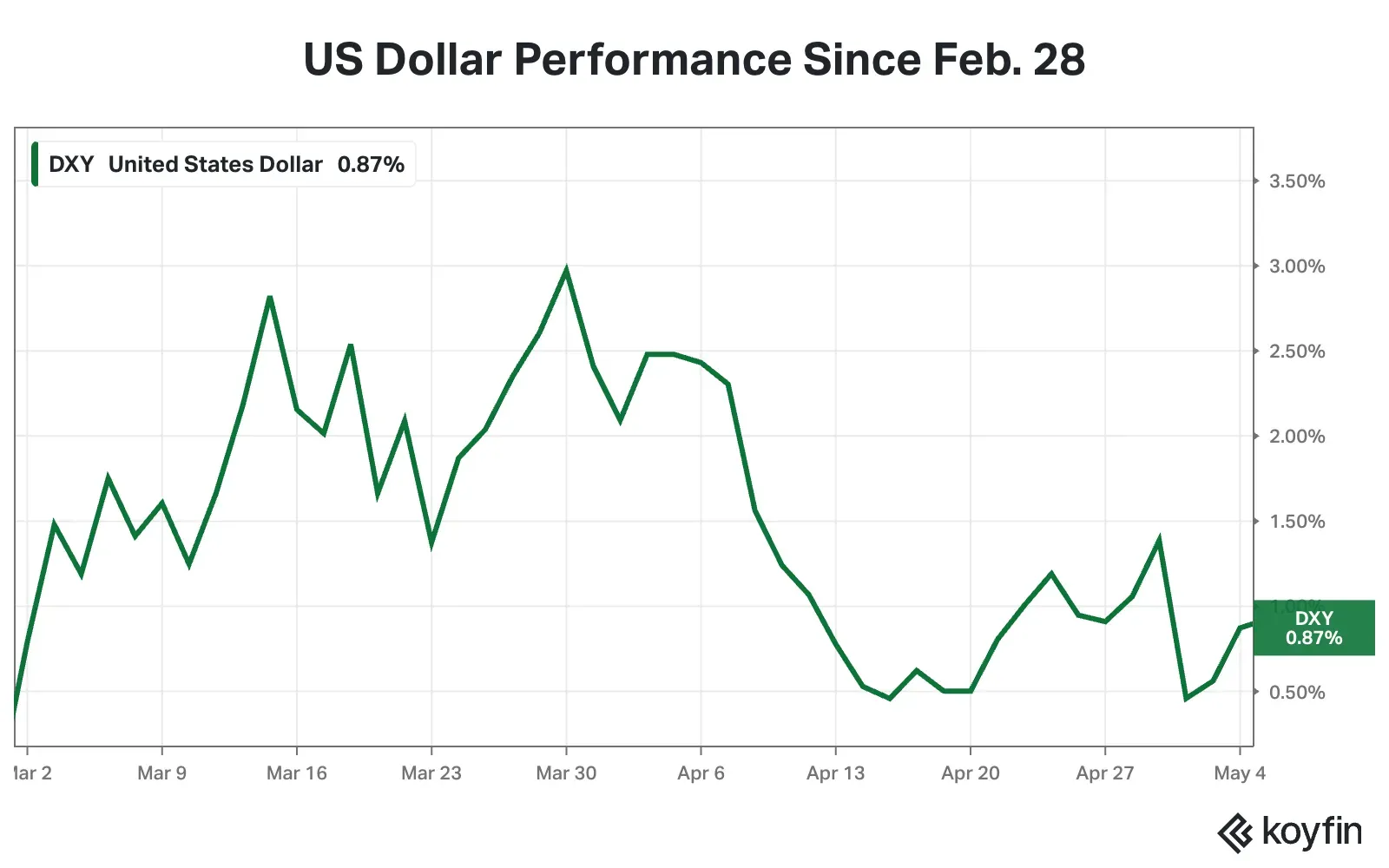
The WisdomTree Bloomberg U.S. Dollar Bullish Fund (USDU), an exchange-traded fund that seeks to gain from the dollar against a basket of currencies, has increased by more than 2% since the start of the conflict. Meanwhile, the Invesco DB US Dollar Index Bullish Fund (UUP) has gained 1.48% in the same period. Retail sentiment for USDU was in the ‘neutral’ territory at the time of writing, while it was in the ‘bearish’ territory for UUP.
Advertisement|Remove ads.
U.S. equities have also recovered since the start of the war, with the benchmark S&P 500 index and tech-heavy Nasdaq Composite notching record highs this year.
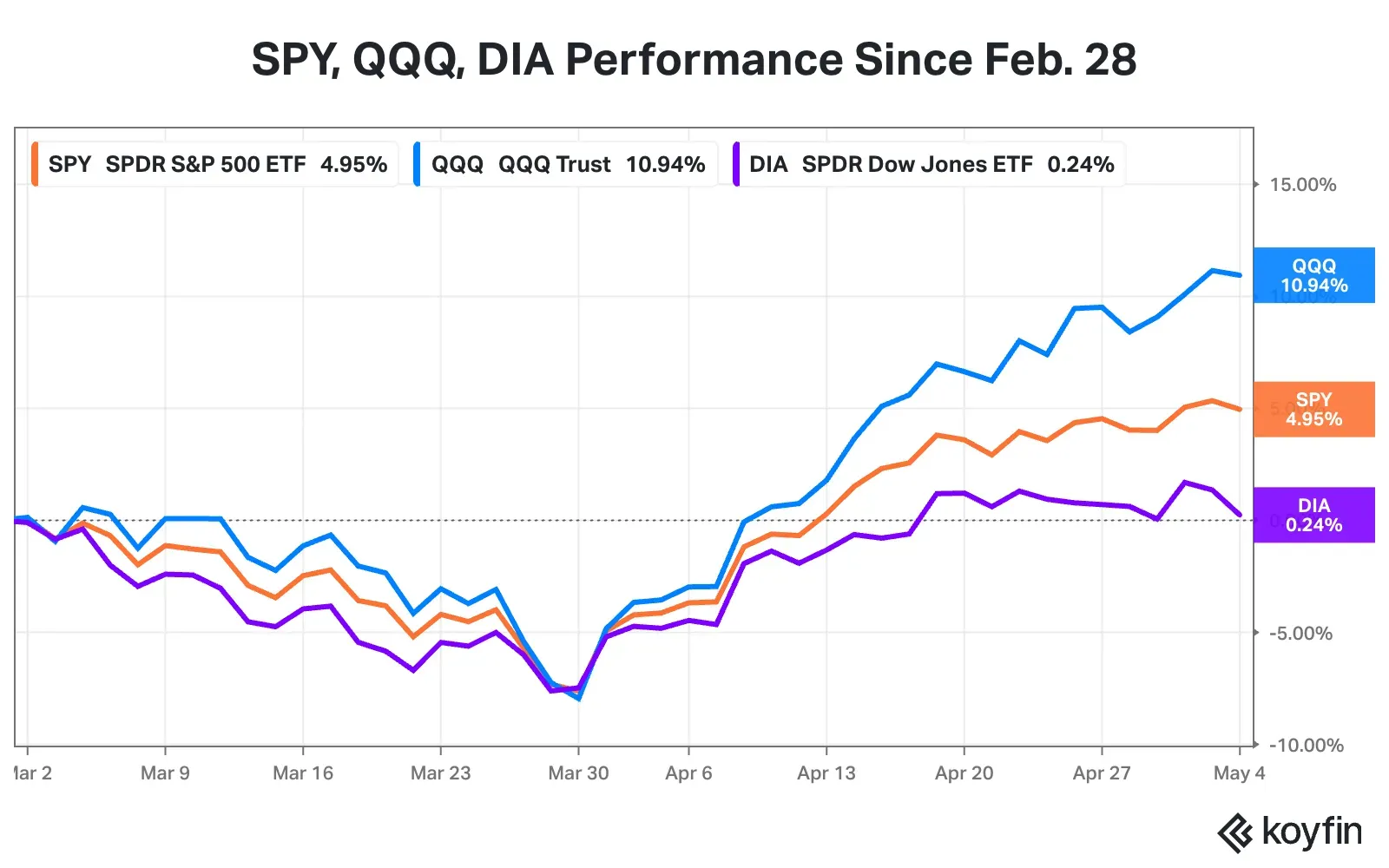
At the time of writing, the SPDR S&P 500 ETF (SPY), which tracks the S&P 500 index, was up 0.12%, the Invesco QQQ Trust ETF (QQQ) gained 0.21%, and the SPDR Dow Jones Industrial Average ETF Trust (DIA) edged 0.06% higher.
For updates and corrections, email newsroom[at]stocktwits[dot]com.
Advertisement|Remove ads.
Comments posted here will also appear on symbol pages.

Latest News
/filters:format(webp)https://news.stocktwits-cdn.com/large_wayne_thorsen_24be51de63.jpg)
/filters:format(webp)https://news.stocktwits-cdn.com/IMG_8805_JPG_6768aaedc3.webp) Deepti Sri·48 seconds ago
Deepti Sri·48 seconds ago/filters:format(webp)https://news.stocktwits-cdn.com/large_Getty_Images_2272134716_7dc7972b5f.jpg)
/filters:format(webp)https://news.stocktwits-cdn.com/shivani_photo_jpg_dd6e01afa4.webp) Shivani Kumaresan·5m ago
Shivani Kumaresan·5m ago/filters:format(webp)https://news.stocktwits-cdn.com/large_Getty_Images_2264361851_jpg_a240b74842.webp)
/filters:format(webp)https://news.stocktwits-cdn.com/Aashika_Suresh_Profile_Picture_jpg_2acd6f446c.webp) Aashika Suresh·13m ago
Aashika Suresh·13m ago/filters:format(webp)https://news.stocktwits-cdn.com/large_Getty_Images_2259256580_jpg_e72ea8ddc5.webp) Aashika Suresh·53m ago
Aashika Suresh·53m ago/filters:format(webp)https://news.stocktwits-cdn.com/large_Getty_Images_2287271159_bf0df4a3f6.jpg)
/filters:format(webp)https://news.stocktwits-cdn.com/unnamed_jpg_9dff551b50.webp) Anan Ashraf·2h ago
Anan Ashraf·2h ago/filters:format(webp)https://news.stocktwits-cdn.com/large_Getty_Images_2276989723_eb8b10972a.jpg)
/filters:format(webp)https://news.stocktwits-cdn.com/1707726834303_jpg_11f20a9aa9.webp) Shashank Nayar·2h ago
Shashank Nayar·2h ago