


Advertisement|Remove ads.
Wharton's Jeremy Siegel Warns Fed's Hawkish Tone Is 'Misguided', Says He'd Be A Buyer In Case Of A 5-10% Correction


- Siegel stated that categories pushing the CPI higher, such as health insurance and energy prices, are not responsive to tighter demand caused by elevated interest rates.
- According to data from the CME FedWatch tool, the probability of a 25-basis-point rate cut in December has decreased to 44.4%, down from 66.9% a week ago and 93.7% a month ago.
- As for valuations, Siegel noted that if AI earnings grow, then the current forward price-to-earnings multiple of 23 can be digested.
Advertisement|Remove ads.
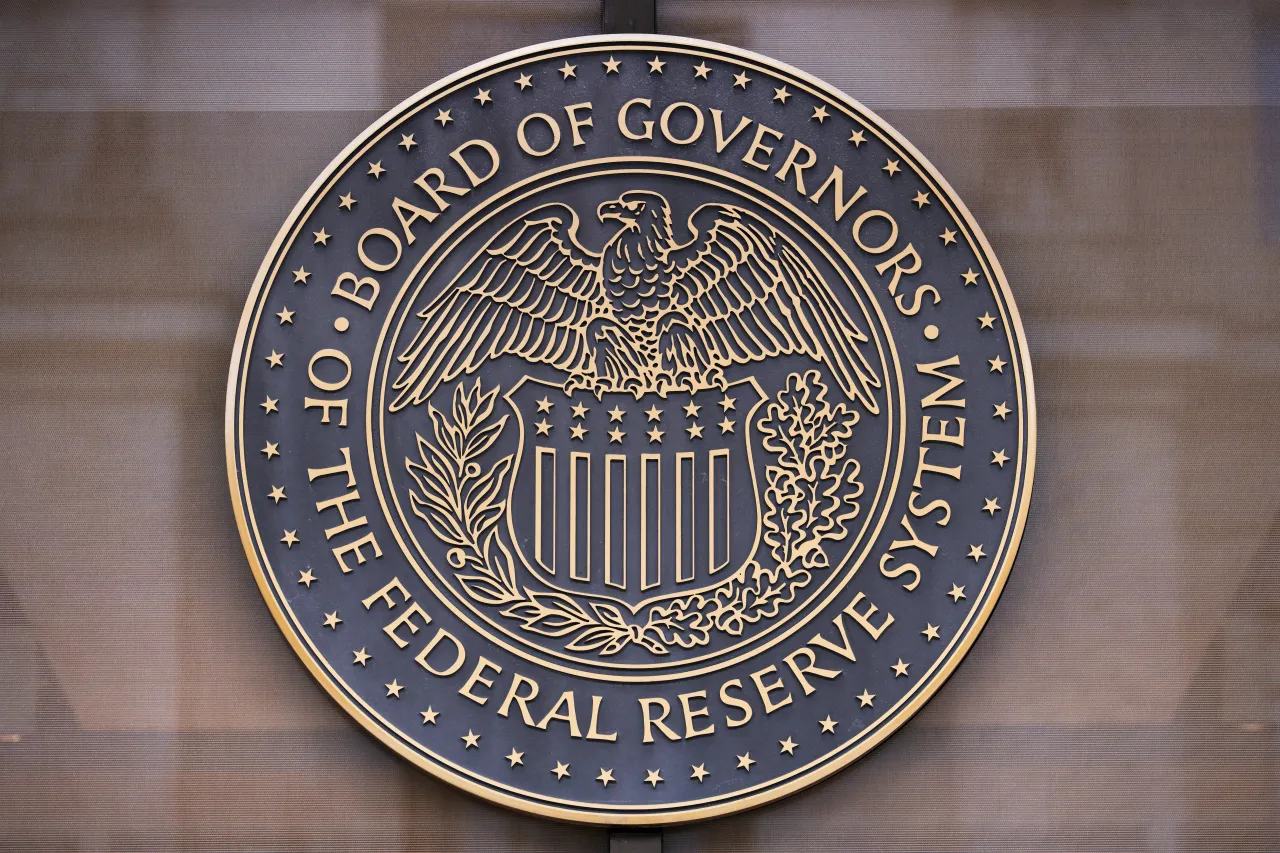
Jeremy Siegel, professor emeritus of finance at the University of Pennsylvania’s Wharton School of Business, on Tuesday warned that the Federal Reserve’s hawkish tone on inflation is misguided.
“The Fed’s more hawkish tone is also a proximate driver of the risk-off sentiment, and I think that Fed stance is misguided,” Siegel said in his weekly commentary.
He underscored this by stating that categories pushing Consumer Price Index (CPI) higher, which are health insurance and energy prices, are not responsive to tighter demand caused by elevated interest rates. “Staying more restrictive on policy won’t move those needles,” he added.
Advertisement|Remove ads.
Buyer In Case Of A Correction
Siegel also stated that he would be a buyer of U.S. equities in case of a correction.
“If big-box guidance softens under affordability pressure, a textbook 5–10% correction is in play. I’d be a buyer into that magnitude of weakness, because the macro still argues for resilience rather than recession,” he said.
He noted that if artificial intelligence (AI) earnings grow, then the current forward price-to-earnings (PE) of 23x can be digested. However, if earnings under-deliver, then Siegel recommends “owning stocks that benefit from curve normalization rather than paying ever-higher prices for growth stocks.”
Advertisement|Remove ads.
When Is The FOMC Meeting?
The Federal Open Market Committee (FOMC) is slated to meet again in December. The two-day meeting is scheduled for December 9 and 10.
The Federal Reserve is also increasingly divided on a December cut. While Fed Governor Stephen Miran called for a “minimum” of 25 basis point cut in December, Fed Vice Chair Philip Jefferson on Monday cautioned that the central bank should “proceed slowly” in light of an evolving balance of risks.
According to data from the CME FedWatch tool, the probability of a 25-basis-point rate cut in December has decreased to 44.4%, down from 66.9% a week ago and 93.7% a month ago.
Advertisement|Remove ads.
Meanwhile, U.S. equities declined in Tuesday’s pre-market trade. At the time of writing, the SPDR S&P 500 ETF (SPY), which tracks the S&P 500 index, was down by 0.46%, the Invesco QQQ Trust ETF (QQQ) declined 0.55%, while the SPDR Dow Jones Industrial Average ETF Trust (DIA) fell 0.71%. Retail sentiment around the S&P 500 ETF on Stocktwits was in the ‘neutral’ territory.
The iShares 7-10 Year Treasury Bond ETF (IEF) was up 0.23% at the time of writing.
Also See: Microsoft’s Azure, Amazon’s AWS Come Under EU’s Digital Markets Act Scanner For Potential Curbs
Advertisement|Remove ads.
For updates and corrections, email newsroom[at]stocktwits[dot]com.
Comments posted here will also appear on symbol pages.

Latest News
/filters:format(webp)https://news.stocktwits-cdn.com/large_mark_rubio_original_jpg_1e75e0c7f2.webp)
/filters:format(webp)https://st-everywhere-cms-prod.s3.us-east-1.amazonaws.com/i_OS_App_Icon_1_8054f2a2fe.png) Stocktwits News Desk·40m ago
Stocktwits News Desk·40m ago/filters:format(webp)https://news.stocktwits-cdn.com/gettyimages_2208587704_594x594_f4dbaa3c7b.jpg)
/filters:format(webp)https://news.stocktwits-cdn.com/Anushka_Basu_make_me_smile_in_the_picture_b92832aa_af59_4141_aacc_4180d2241ba8_1_2_png_1086e0ed8c.webp) Anushka Basu·55m ago
Anushka Basu·55m ago/filters:format(webp)https://news.stocktwits-cdn.com/large_Getty_Images_2203983775_jpg_74bdd5dd43.webp) Stocktwits News Desk·2h ago
Stocktwits News Desk·2h ago/filters:format(webp)https://news.stocktwits-cdn.com/large_Getty_Images_2187781361_2f00b8c65a.jpg) Anushka Basu·3h ago
Anushka Basu·3h ago/filters:format(webp)https://news.stocktwits-cdn.com/large_chips_ai_4770ebc76c.jpg) Stocktwits News Desk·3h ago
Stocktwits News Desk·3h ago/filters:format(webp)https://news.stocktwits-cdn.com/large_btc_bear_crash_93b71a2ed3.webp) Anushka Basu·5h ago
Anushka Basu·5h ago