


Advertisement|Remove ads.
Bitcoin's Chief Cryptographer Adam Back Pushes Back On Google's Quantum Threat Paper
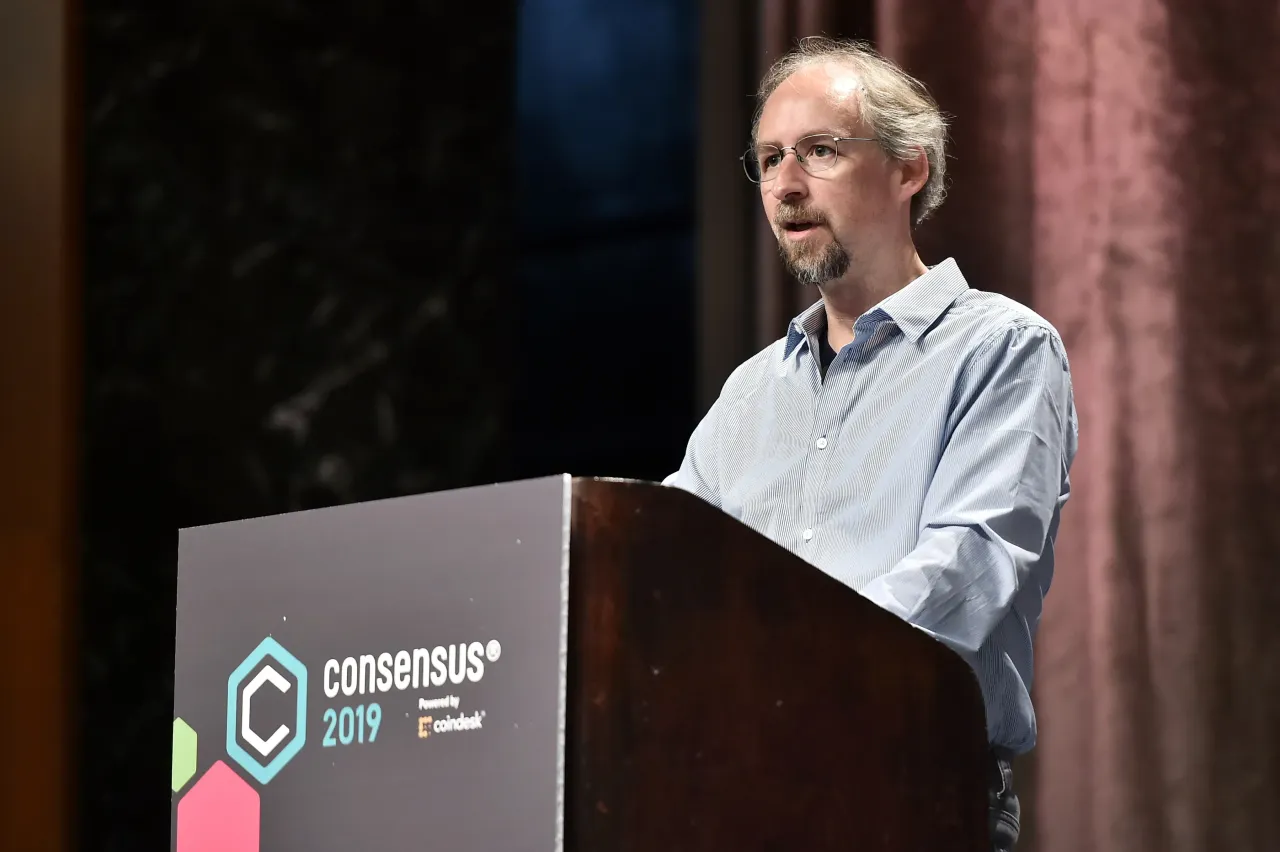


- Bitcoin cryptographer Adam Back said Google’s quantum computing paper misidentified a vulnerability and misunderstood how Bitcoin’s security worked.
- He argued that Bitcoin’s Taproot upgrade already included a built-in path to switch to quantum-resistant cryptography if needed.
- Bitcoin was trading near the $ 67,000 level as it failed to gain momentum over the past week.
Advertisement|Remove ads.
Adam Back, CEO of Blockstream and inventor of the proof-of-work system that underpins Bitcoin (BTC) mining, said on Saturday that the recent Google Quantum AI paper misidentified a vulnerability in Bitcoin that does not exist.
Back's comments are a direct response to the paper published by Google Quantum AI, an initiative by Google Research, that raised concerns about Bitcoin's Schnorr signatures being vulnerable to quantum computers. Schnorr signatures are the mathematical method Bitcoin uses to verify that a transaction was authorized by the rightful owner.

Bitcoin’s price was trading at $67,288, up 0.4% over the past 24 hours. On Stocktwits, the retail sentiment around BTC remained in the ‘bearish’ territory, while chatter levels around it remained ‘low’ over the past day.
Advertisement|Remove ads.
Back Disputes Google’s Technical Claims
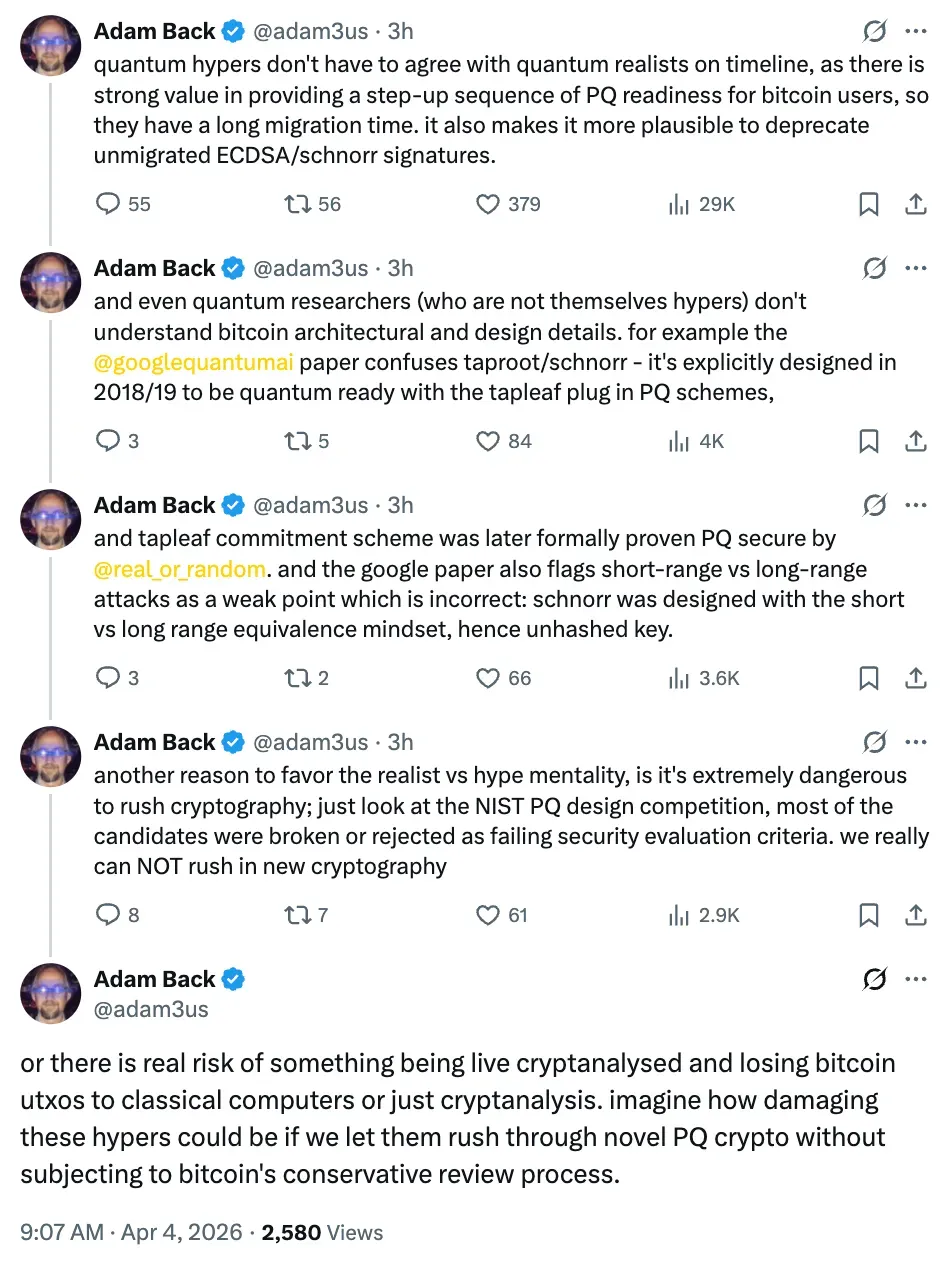
Back, who is best known for inventing Hashcash in 1997, an early proof-of-work system that later inspired Bitcoin’s mining algorithm and was cited in Satoshi Nakamoto’s whitepaper, explained the Google paper "confuses Taproot/Schnorr," pointing out that Bitcoin's Taproot upgrade, activated in 2021 but designed between 2018 and 2019. He said it included a mechanism called a “tapleaf” built specifically to allow future compatibility with post-quantum cryptography.
Simply put, even if quantum computers eventually break Bitcoin's current signature system, there is already a built-in pathway in the protocol to switch to a quantum-safe alternative without losing access to funds.
To substantiate his claim, Back cited an academic proof by Tim Ruffing, a cryptographer and blockchain researcher, which mathematically demonstrated that Taproot's commitment scheme is post-quantum secure. A commitment scheme is a part of Bitcoin that locks funds to a set of spending conditions, like a sealed envelope that can only be opened one specific way.
Advertisement|Remove ads.
Bitcoin Developers Are Not Rushing A Fix
Back warned that rushing new cryptography into Bitcoin would be more dangerous than the quantum threat itself, pointing to the history of post-quantum cryptography competitions, where most candidates were broken or rejected before standards were finalized.
Back’s criticism followed Elon Musk's quip about the Google quantum paper published on Monday.
Read also: Strategy’s Michael Saylor Says ‘Bitcoin Has Won,’ Declares End of Four-Year Cycle
Advertisement|Remove ads.
For updates and corrections, email newsroom[at]stocktwits[dot]com.
Comments posted here will also appear on symbol pages.

Latest News
/filters:format(webp)https://news.stocktwits-cdn.com/large_kroger_resized_jpg_df58ccdaf5.webp)
/filters:format(webp)https://news.stocktwits-cdn.com/1707726834303_jpg_11f20a9aa9.webp) Shashank Nayar·33m ago
Shashank Nayar·33m ago/filters:format(webp)https://news.stocktwits-cdn.com/large_Getty_Images_2271872828_24a8400504.jpg)
/filters:format(webp)https://news.stocktwits-cdn.com/unnamed_jpg_9dff551b50.webp) Anan Ashraf·35m ago
Anan Ashraf·35m ago/filters:format(webp)https://news.stocktwits-cdn.com/large_Seagate_jpg_50a56724b4.webp) Shashank Nayar·2h ago
Shashank Nayar·2h ago/filters:format(webp)https://news.stocktwits-cdn.com/large_Getty_Images_2128530471_1b79e1b428.jpg) Anan Ashraf·2h ago
Anan Ashraf·2h ago/filters:format(webp)https://news.stocktwits-cdn.com/large_qualcomm_jpg_bf257cee94.webp) Shashank Nayar·2h ago
Shashank Nayar·2h ago/filters:format(webp)https://news.stocktwits-cdn.com/large_Getty_Images_1321754803_jpg_a6258004b8.webp)
/filters:format(webp)https://news.stocktwits-cdn.com/Anushka_Basu_make_me_smile_in_the_picture_b92832aa_af59_4141_aacc_4180d2241ba8_1_2_png_1086e0ed8c.webp) Anushka Basu·3h ago
Anushka Basu·3h ago