


Advertisement|Remove ads.
EXCLUSIVE: A Former Goldman Sachs Executive Thinks Nvidia’s China Story Isn’t Over
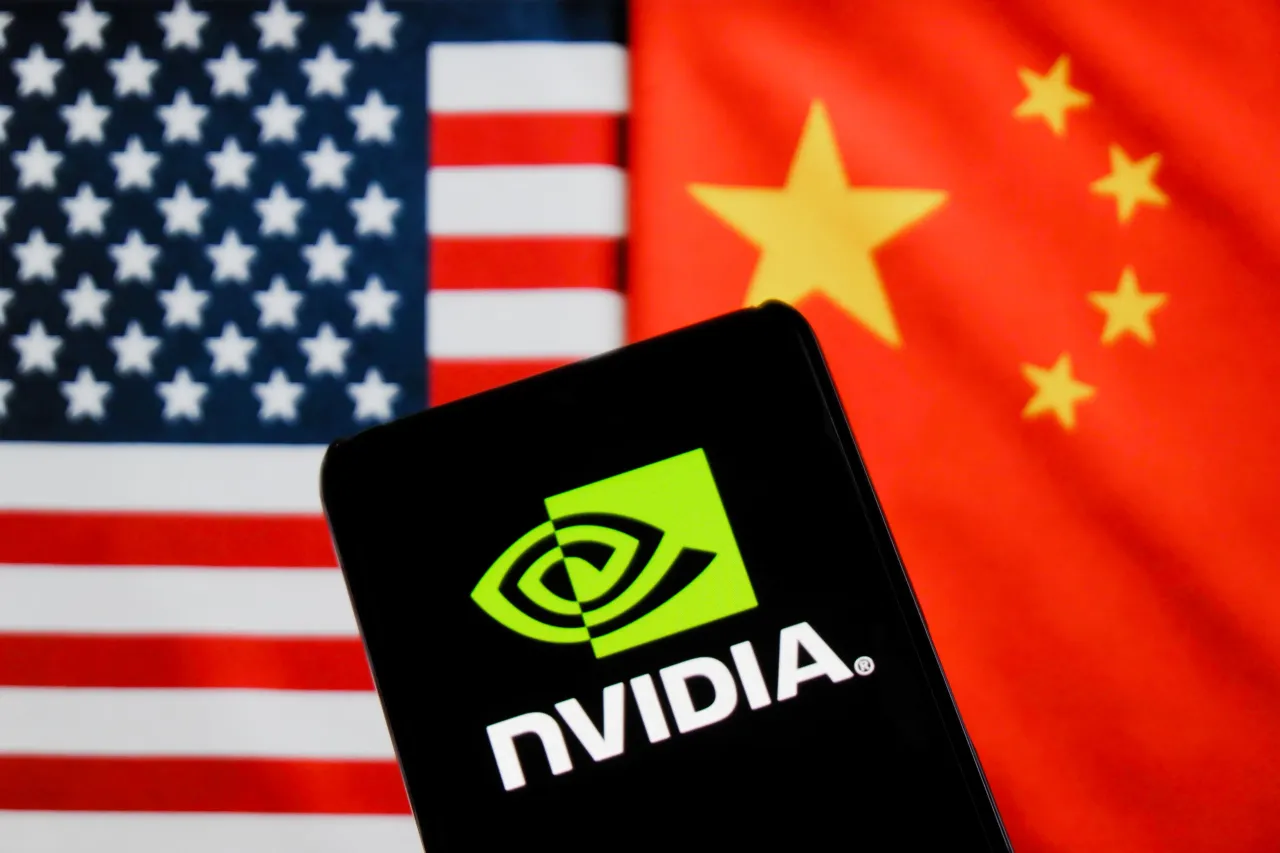


- In an exclusive interview with Stocktwits, former Goldman Sachs partner Michael Parekh said Nvidia’s official China revenue figures do not reflect the company’s full exposure to Chinese AI demand.
- Parekh estimated Nvidia could potentially add another $10 billion in revenue if China sales normalized.
- Nvidia currently excludes China revenue from forward guidance following U.S. restrictions on H20 chip sales.
Advertisement|Remove ads.
Nvidia’s (NVDA) revenue from China remained at zero during the first quarter, but Michael Parekh, a former Goldman Sachs executive who now runs the AI: Return to Zero Substack and has covered every major technology wave since the internet era, told Stocktwits that the number is not the whole story.
According to him, if a September White House meeting between Chinese President Xi Jinping and President Donald Trump results in an official green light for Nvidia chip sales to China, analysts who currently model China revenue at zero would be forced to rebuild their forecasts from scratch.
"If there is an official green light from Xi and China and Trump that Nvidia can trade their chips, then yes, the stock will be re-rated," Parekh told Stocktwits in an exclusive interview with Michele Steele. "People will now officially put more numbers on Nvidia's side for China, because the market is huge."
Advertisement|Remove ads.
Nvidia has been excluding China from its forward guidance entirely since the H20 export restrictions. Any formal resumption of official sales would require analysts to rebuild a revenue line from a stated baseline of zero, Parekh said. He added that the re-rating wouldn’t be gradual, but immediate and considerably higher.
"Having said that, I'm not expecting it," Parekh said. "And Jensen's being very careful to just take those expectations down to zero."
China Revenue Could Add $10 Billion To Nvidia’s Revenue
“If things were like they were a couple of years ago, there would probably be another $10 billion in here from China,” Parekh told Stocktwits. “China is the second largest market for AI, and right now Nvidia is shut out.”
Advertisement|Remove ads.
However, he noted that zero revenue directly from China doesn’t mean that the country doesn’t have access to Nvidia’s chips. “China is getting a lot of Nvidia chips through a lot of sources. These are porous markets. There is an indirect Nvidia China revenue line — it’s just not the official one. And that’s what we’re talking about here,” Parekh stated.
He added that Chinese AI companies have been establishing subsidiaries across Singapore, Malaysia, and other Asian markets where access to Nvidia compute is less restricted. The firms legally purchase chips within their jurisdictions and make them available to Chinese companies.
The Huawei Alternative Thesis Will Take Time
China has been pushing Huawei to build its own chips so the country can decouple entirely and no longer need Nvidia. In a recent interview with CNBC, chief executive Jensen Huang even said that Nvidia has “largely conceded” China’s artificial intelligence chip market to Huawei. However, according to Parekh, the ground reality is that Huawei's domestically produced chips are one to three generations behind Nvidia's current products.
Advertisement|Remove ads.
Moreover, CUDA, Nvidia's open-source software framework, built and refined over 19 years, is used by millions of engineers globally and is compatible with virtually every major AI model. Parekh said an engineer working with Nvidia chips can have a model running within days or weeks. "If I want to use Huawei chips to do this, I will probably need another 6, 8, 12 months to build the software framework for those chips to work with my applications," he said.
Parekh estimated that China won’t be able to shed its reliance on Nvidia for at least another five years. "They don't have access to the chip-making equipment, they're behind, and that will take five to ten years. The reality is both countries will need to work with each other for at least the next three to five years, because they need each other,” he said.
NVDA’s stock closed Friday nearly 2% lower, but slipped 6% over the past week. Retail sentiment around the tech giant on Stocktwits trended in ‘extremely bullish’ territory over the past week, accompanied by ‘extremely high’ levels of chatter.
Advertisement|Remove ads.
For updates and corrections, email newsroom[at]stocktwits[dot]com
Comments posted here will also appear on symbol pages.

Latest News
/filters:format(webp)https://news.stocktwits-cdn.com/large_Getty_Images_2221649488_jpg_87acced093.webp)
/filters:format(webp)https://news.stocktwits-cdn.com/Heera_1_1c30cb0170.PNG) Heera Hari·14m ago
Heera Hari·14m ago/filters:format(webp)https://st-everywhere-cms-prod.s3.us-east-1.amazonaws.com/large_Venture_Global_resized_4f4a356f52.jpg)
/filters:format(webp)https://news.stocktwits-cdn.com/vivekkrishnanphotography_58_jpg_0e45f66a62.webp) Arnab Paul·26m ago
Arnab Paul·26m ago/filters:format(webp)https://st-everywhere-cms-prod.s3.us-east-1.amazonaws.com/large_cybersecurity_representative_image_resized_d3ac164504.jpg)
/filters:format(webp)https://news.stocktwits-cdn.com/Harshita_3cfe02022c.jpg) Harshita Tyagi·30m ago
Harshita Tyagi·30m ago/filters:format(webp)https://news.stocktwits-cdn.com/large_coreweave_logo_original_jpg_d5b88ecdd9.webp)
/filters:format(webp)https://news.stocktwits-cdn.com/Prabhjote_DP_67623a9828.jpg) Prabhjote Gill·42m ago
Prabhjote Gill·42m ago/filters:format(webp)https://st-everywhere-cms-prod.s3.us-east-1.amazonaws.com/Walmart_store_exterior_5266815680_wc_cef072d1c7.jpg) Heera Hari·2h ago
Heera Hari·2h ago/filters:format(webp)https://st-everywhere-cms-prod.s3.us-east-1.amazonaws.com/large_Representative_Chip_image_601ac8ff55.jpg) Harshita Tyagi·2h ago
Harshita Tyagi·2h ago