


Advertisement|Remove ads.
ASTS, RKLB, SIDU, RDW Reverse Losses As Blue Origin CEO Vows New Glenn Return This Year — Retail Fears Ease


- Blue Origin CEO Dave Limp said New Glenn will return to flight before the end of 2026.
- Limp said key infrastructure at Launch Complex 36 survived the explosion, including fuel storage systems and a New Glenn booster.
- NASA Administrator Jared Isaacman clarified that his earlier comments in 2028 referred to lunar initiatives, not a forecast for New Glenn's return.
Advertisement|Remove ads.
Space stocks rebounded in overnight trading ahead of Tuesday after Blue Origin CEO Dave Limp said New Glenn would return to flight before year-end, helping calm investor fears that last week's launchpad explosion could delay the recovery timeline into 2028.
The rebound was led by Rocket One (RKTO), which surged 18% overnight. AST SpaceMobile (ASTS) gained 3%, while Rocket Lab USA (RKLB), Sidus Space (SIDU) and Intuitive Machines (LUNR) each rose 2%. Redwire (RDW) added 1%.

New Glenn Recovery Update
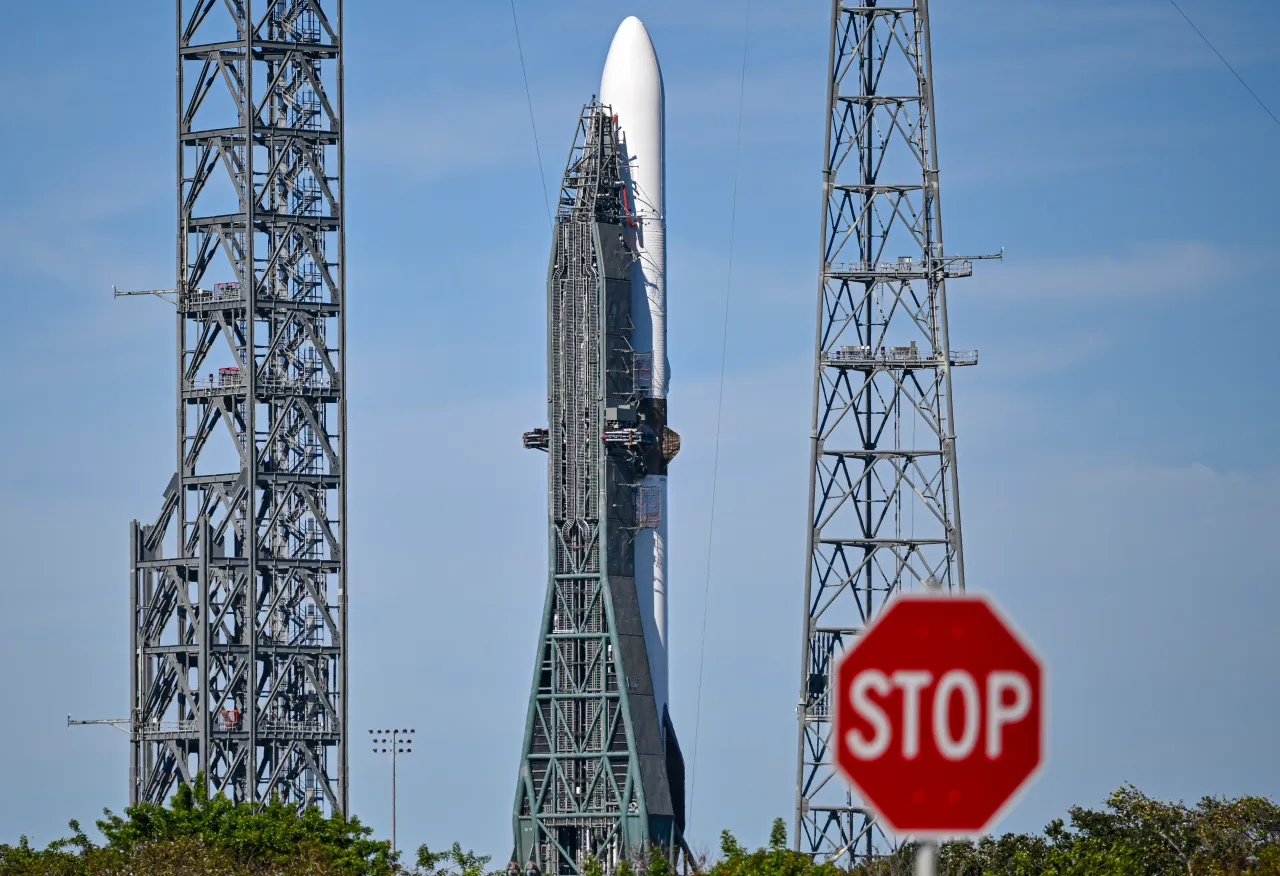
Investors digested Limp's latest update on the condition of Blue Origin's Launch Complex 36 in Cape Canaveral, Florida, which was damaged during a New Glenn hot-fire test explosion last week. Limp shared the company's first detailed assessment of the site since the incident, saying that several critical pieces of launch infrastructure survived the blast. He added that the propellant farm, oxygen, liquid hydrogen and LNG storage tanks remain in good condition. The site's water tower also escaped damage, he said. "The big support tower is damaged, but it can be repaired in place rather than torn down and replaced," Limp said on X.
Advertisement|Remove ads.
The company also found that the New Glenn booster, known as "Never Tell Me The Odds," and three GS-2 upper stages stored inside the integration facility appeared undamaged. Limp said Blue Origin would continue manufacturing its 7x2 vehicle configuration and shift away from its current transporter-erector system.
Most importantly for investors, the CEO said that New Glenn's return-to-flight timeline remains measured in months rather than years: "We will fly again before the end of this year," Limp said.
NASA Clarifies Recovery Timeline
Investor concerns eased after NASA chief Jared Isaacman clarified on X that his earlier reference to a 2028 recovery timeline pertained to future Moon Base and lunar missions, not a forecast for New Glenn's return to service. The NASA administrator said Blue Origin had responded "incredibly quickly" to the incident and that NASA would assist with root-cause analysis and recovery efforts.
Advertisement|Remove ads.
His clarification came after CNBC reported that Isaacman said launchpad restoration would take "some serious time" and that a 2028 recovery timeframe was "within the realm" of possibility, which fueled fears of a prolonged disruption at Blue Origin's only New Glenn launch site.
Why Space Stocks Are Watching New Glenn
The recovery timeline is particularly important for AST SpaceMobile, which relies on launch providers to deploy its BlueBird direct-to-cell satellites. While the company has future launch agreements with Blue Origin, AST has repeatedly stressed that it is not dependent on a single launch provider and maintains launch relationships with multiple providers, including SpaceX, with New Glenn intended to complement Falcon 9 missions. Investor attention remains elevated after New Glenn's upper-stage anomaly last month resulted in the loss of AST's BlueBird 7 satellite.
Meanwhile, Rocket Lab could benefit if customers seek alternative launch capacity during any disruption at Blue Origin, while Sidus Space and Redwire remain sensitive to changes in launch schedules and mission timelines across their satellite, manufacturing, and space infrastructure businesses. RKTO, which develops radiation-tolerant AI chips and computing hardware for satellites and defense applications, could benefit from growth in satellite deployments.
Advertisement|Remove ads.
The latest incident marked the second major setback for New Glenn in less than two months. Despite the issues, the rocket remains a key part of Amazon's Project Kuiper broadband constellation, NASA's Artemis lunar program and Blue Origin's effort to compete with SpaceX in the heavy-lift launch market. The FAA had only recently cleared New Glenn to resume flights following its investigation into the BlueBird 7 mission anomaly.
How Do Retail Traders Feel About Space Stocks?
On Stocktwits, ASTS, SIDU and RDW had 'extremely bullish' retail sentiment, with SIDU and RDW drawing 'extremely high' message volumes and ASTS seeing 'high' chatter. RKLB, meanwhile, saw 'neutral' sentiment despite 'high' message volumes.
ASTS and RKLB have surged 358% and 357%, respectively, over the past year, while SIDU has gained 217% and RDW is up 45%.
Advertisement|Remove ads.
For updates and corrections, email newsroom[at]stocktwits[dot]com.
Comments posted here will also appear on symbol pages.

Latest News
/filters:format(webp)https://news.stocktwits-cdn.com/large_chips_ai_4770ebc76c.jpg)
/filters:format(webp)https://st-everywhere-cms-prod.s3.us-east-1.amazonaws.com/i_OS_App_Icon_1_8054f2a2fe.png) Stocktwits News Desk·25m ago
Stocktwits News Desk·25m ago/filters:format(webp)https://news.stocktwits-cdn.com/large_btc_bear_crash_93b71a2ed3.webp)
/filters:format(webp)https://news.stocktwits-cdn.com/Anushka_Basu_make_me_smile_in_the_picture_b92832aa_af59_4141_aacc_4180d2241ba8_1_2_png_1086e0ed8c.webp) Anushka Basu·2h ago
Anushka Basu·2h ago/filters:format(webp)https://news.stocktwits-cdn.com/large_michael_burry_cropped_b787ce89b4.jpg) Stocktwits News Desk·2h ago
Stocktwits News Desk·2h ago/filters:format(webp)https://news.stocktwits-cdn.com/large_musk_88257e3573.jpg) Stocktwits News Desk·3h ago
Stocktwits News Desk·3h ago/filters:format(webp)https://news.stocktwits-cdn.com/large_Getty_Images_2294264991_a1d08b075d.jpg) Anushka Basu·19h ago
Anushka Basu·19h ago/filters:format(webp)https://news.stocktwits-cdn.com/large_Getty_Images_1925090359_f160f05588.jpg) Anushka Basu·20h ago
Anushka Basu·20h ago