


Advertisement|Remove ads.
ASTS Stock Jumps Overnight: Analyst Estimates $50M Each For 3 Early BlueBirds — Retail Bulls Defend Spending



- Analyst Tim Farrar estimated BlueBirds 8, 9, and 10 cost $50 million each.
- AST reported a $271.2 million increase in the value of its satellites in orbit but did not disclose individual costs.
- The space firm is developing its own reusable rocket, Blacklift, to gain more control over its launch schedule.
Advertisement|Remove ads.
Shares of AST SpaceMobile (ASTS) rose nearly 3% overnight heading into Wednesday as investors debated the cost of three early BlueBird satellites. Analyst Tim Farrar estimated they cost about $50 million each, while retail bulls expect costs to fall as AST launches more satellites per flight.
ASTS stock tumbled 9% on Tuesday to $33.69, snapping two straight sessions of gains.

Why Farrar Put 3 Early BlueBirds At $50M Each
The estimate traces back to a figure in AST’s quarterly filings. The gross value of its “satellites in orbit” rose by $271.2 million between June 30 and Sept. 30, reaching $506.6 million. AST began depreciating four BlueBirds on Sept. 1 after determining they were ready for use.
Advertisement|Remove ads.
On X, a user attributed the increase to those four satellites. He worked backward from an assumed value for BlueBird 6 to estimate what AST had spent on BlueBirds 8, 9 and 10. “Assuming BB6 is valued around 130m, this puts the cost of the other satellites closer to 47m per satellite,” the user said.
Farrar, who runs satellite and telecom research firm TMF Associates, suggested a slightly different split based on what it cost to launch them. “Perhaps a bit lower for BB6 and higher for BB8-10 since the Indian rocket is a lot cheaper than New Glenn. Let’s say $50M each for BB8-10 as a round number...” Farrar said.
How AST Aims To Bring Down Cost Per BlueBird
AST’s own estimate covers a much larger group of satellites. The company expects direct materials and launch costs to average $21 million to $23 million per satellite across more than 90 Block 2 BlueBirds.
Advertisement|Remove ads.
AST expects its early flights to be more expensive. By putting more BlueBirds on each rocket, it can spread the cost of a launch across more satellites. The company also expects better terms on future flights.
For now, AST relies on outside launch providers. BlueBirds 14, 15 and 16 had already reached Cape Canaveral by the time of Monday’s quarterly update and were awaiting a SpaceX launch date. AST expects Blue Origin to launch the next three in early 2027. It aims to have about 45 BlueBirds in orbit by mid-2027.
Last week, AST unveiled Blacklift, a reusable rocket designed to carry up to five BlueBirds per flight starting in late 2028. Having its own rocket would give AST more say over when its satellites fly.
Advertisement|Remove ads.
AST’s deal with Firefly Aerospace (FLY), worth more than $1.3 billion in cash and shares, covers 36 engines for the first three rockets. AST also gets the right to manufacture the engines itself and three years of engineering support.
How Do Retail Traders Feel About ASTS?
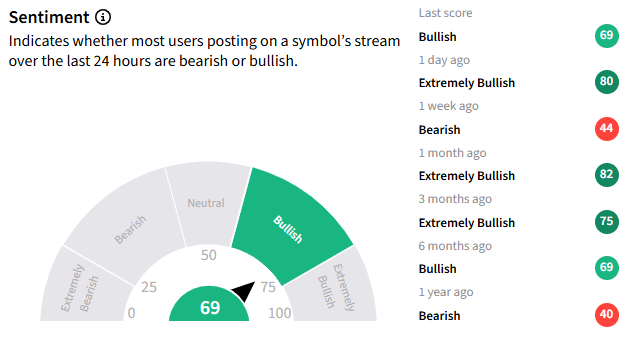
On Stocktwits, retail sentiment for ASTS slipped to ‘bullish’ from ‘extremely bullish’ levels a day ago amid ‘high’ message volume.
One investor on X said:“We know the initial satellites will be more expensive, they said it on the call.”
Advertisement|Remove ads.
Blacklift drew a more divided response. One user said Rocket Lab’s $8-billion acquisition of Iridium is considered a great deal, while AST SpaceMobile’s $1.3-billion acquisition of rocket technology to “massively reduce launch costs in the long term” is viewed negatively. The user questioned this reaction, calling it “market logic.”
Another user focused on what shareholders might have to pay before Blacklift ever flies. “Math just does not work. Between Launch Pads, Engines, Shells, Fuel, testing, personnel, applications, permits, rent, land, trucks or tracks, list goes on.”
Advertisement|Remove ads.
ASTS stock has declined 54% year-to-date.
For updates and corrections, email newsroom[at]stocktwits[dot]com.
Advertisement|Remove ads.
Read Next: RKLB Vs. SPCX: Which Space Stock Has More Upside As Rocket Lab’s Iridium Deal Deepens Spectrum Feud?
Comments posted here will also appear on symbol pages.

Latest News

 Deepti Sri·13m ago

 Aashika Suresh·35m ago

 Anushka Basu·42m ago
 Deepti Sri·47m ago
 Aashika Suresh·1h ago

 Shivani Kumaresan·1h ago