


Advertisement|Remove ads.
BlackRock’s Larry Fink Warns That AI Could Make The Rich Richer – Unless This Key Factor Changes
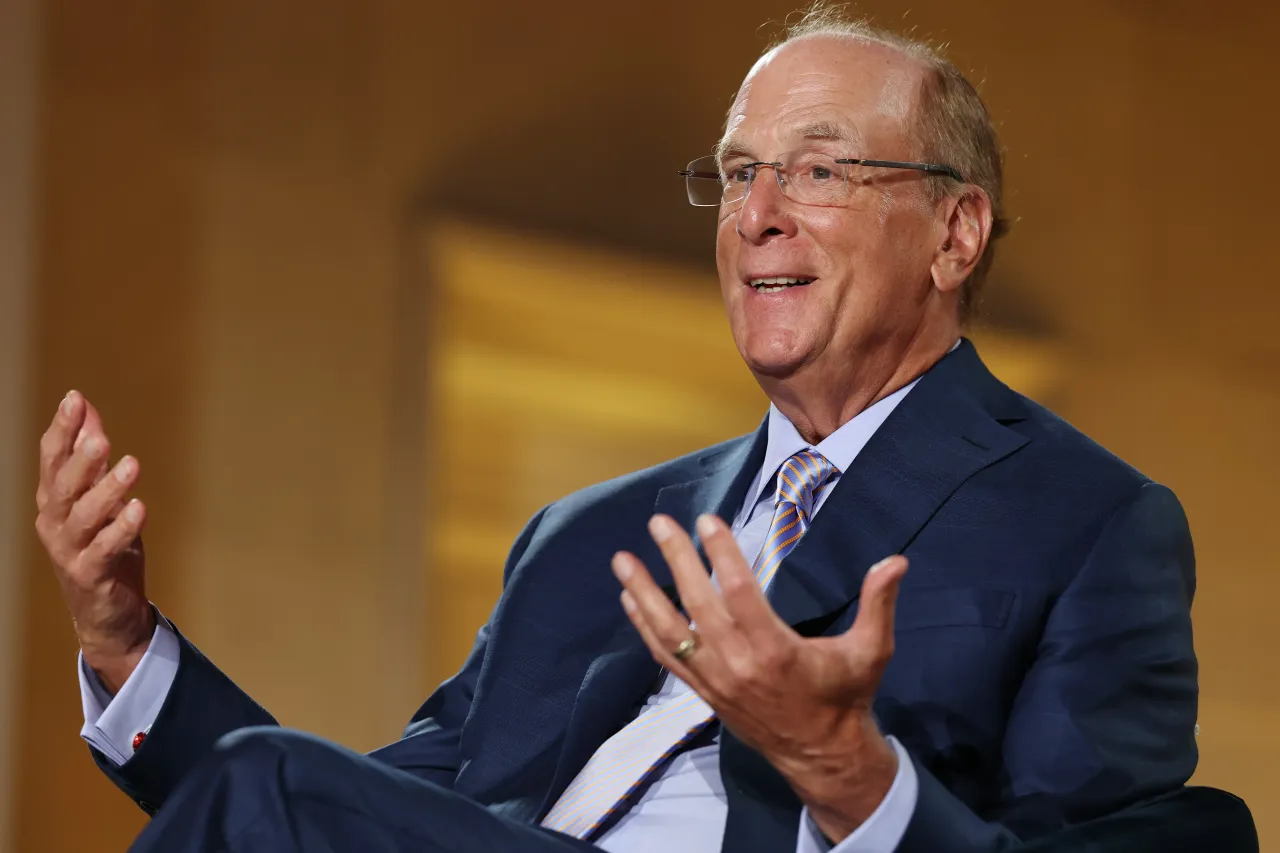


- In his 2026 letter to investors, Fink emphasized that AI’s impact depends more on who owns the gains than on job losses.
- Fink warns that concentrated ownership may exclude many from AI’s economic gains.
- He noted that some of the market’s strongest surges have happened amid high uncertainty.
Advertisement|Remove ads.
BlackRock Inc. (BLK) CEO Larry Fink has raised fresh concerns about the long-term consequences of artificial intelligence, warning that the technology could deepen economic inequality unless more investors gain access to the markets.
In his 2026 annual chairman’s letter, Fink shifts focus from job disruption to ownership, stating that who benefits from AI may matter more than who is displaced.
The Next Wealth Gap May Be Built On AI
According to Fink, technological revolutions typically reward scale, allowing dominant firms to extend their lead over competitors. He points to widening gaps across industries, where top-performing companies surge ahead while weaker players fall behind, creating uneven economic outcomes.
Advertisement|Remove ads.
“AI may accelerate this trend further. The companies with the data, infrastructure, and capital to deploy AI at scale are positioned to benefit disproportionately.”
-Larry Fink, CEO, BlackRock
The broader concern, Fink said, lies in participation. When market valuations climb, but ownership remains concentrated, many individuals may feel excluded from economic progress. Expanding access to investing is essential to ensuring that more people share in the benefits generated by AI, Fink added.
BlackRock stock traded over 2% higher in Monday’s premarket. On Stocktwits, retail sentiment around the stock remained in ‘bearish’ territory amid ‘normal’ message volume levels.

Long-Term Investing Still Wins
Fink emphasized that patience has historically delivered stronger returns than attempting to time the market. He pointed to long-term performance trends showing that consistent investment in broad indices like the S&P 500 has multiplied wealth over decades.
Advertisement|Remove ads.
“Over the past two decades, every dollar invested in the S&P 500 grew more than eightfold,” Fink said.
According to him, some of the market’s biggest rallies have occurred during periods of intense uncertainty. Fink also pointed to digital tools and innovations, such as tokenization, as potential catalysts for expanding market access.
Fink highlighted a structural shift as countries invest heavily in domestic industries to reduce dependence on global supply chains. While this push toward economic independence aims to strengthen resilience, it comes with higher costs and requires substantial capital investment.
Advertisement|Remove ads.
BLK stock has declined by more than 10% year to date.
Also See: VRT, LITE, COHR, SATS Set To Join S&P 500 As 'Physical AI' Trade Gains Momentum
For updates and corrections, email newsroom[at]stocktwits[dot]com.
Advertisement|Remove ads.
Comments posted here will also appear on symbol pages.

Latest News
/filters:format(webp)https://st-everywhere-cms-prod.s3.us-east-1.amazonaws.com/boeing_777x_6236952182.jpeg)
/filters:format(webp)https://news.stocktwits-cdn.com/Heera_1_1c30cb0170.PNG) Heera Hari·12m ago
Heera Hari·12m ago/filters:format(webp)https://st-everywhere-cms-prod.s3.us-east-1.amazonaws.com/large_regeneron_logo_resized_ff9d5819f7.jpg)
/filters:format(webp)https://news.stocktwits-cdn.com/vivekkrishnanphotography_58_jpg_0e45f66a62.webp) Arnab Paul·18m ago
Arnab Paul·18m ago/filters:format(webp)https://news.stocktwits-cdn.com/large_Getty_Images_2279844042_ca48b68602.jpg)
/filters:format(webp)https://news.stocktwits-cdn.com/Anushka_Basu_make_me_smile_in_the_picture_b92832aa_af59_4141_aacc_4180d2241ba8_1_2_png_1086e0ed8c.webp) Anushka Basu·22m ago
Anushka Basu·22m ago/filters:format(webp)https://news.stocktwits-cdn.com/large_Getty_Images_2262118761_6832fc85c4.jpg) Arnab Paul·24m ago
Arnab Paul·24m ago/filters:format(webp)https://news.stocktwits-cdn.com/large_Getty_Images_2049058934_jpg_c3bac923f1.webp)
/filters:format(webp)https://news.stocktwits-cdn.com/unnamed_jpg_9dff551b50.webp) Anan Ashraf·40m ago
Anan Ashraf·40m ago/filters:format(webp)https://news.stocktwits-cdn.com/large_Getty_Images_2176869101_6777d7b201.jpg) Anushka Basu·1h ago
Anushka Basu·1h ago