


Advertisement|Remove ads.
China Mulls Up To $70 Billion Chip Incentives Amid Growing US Rivalry: Report
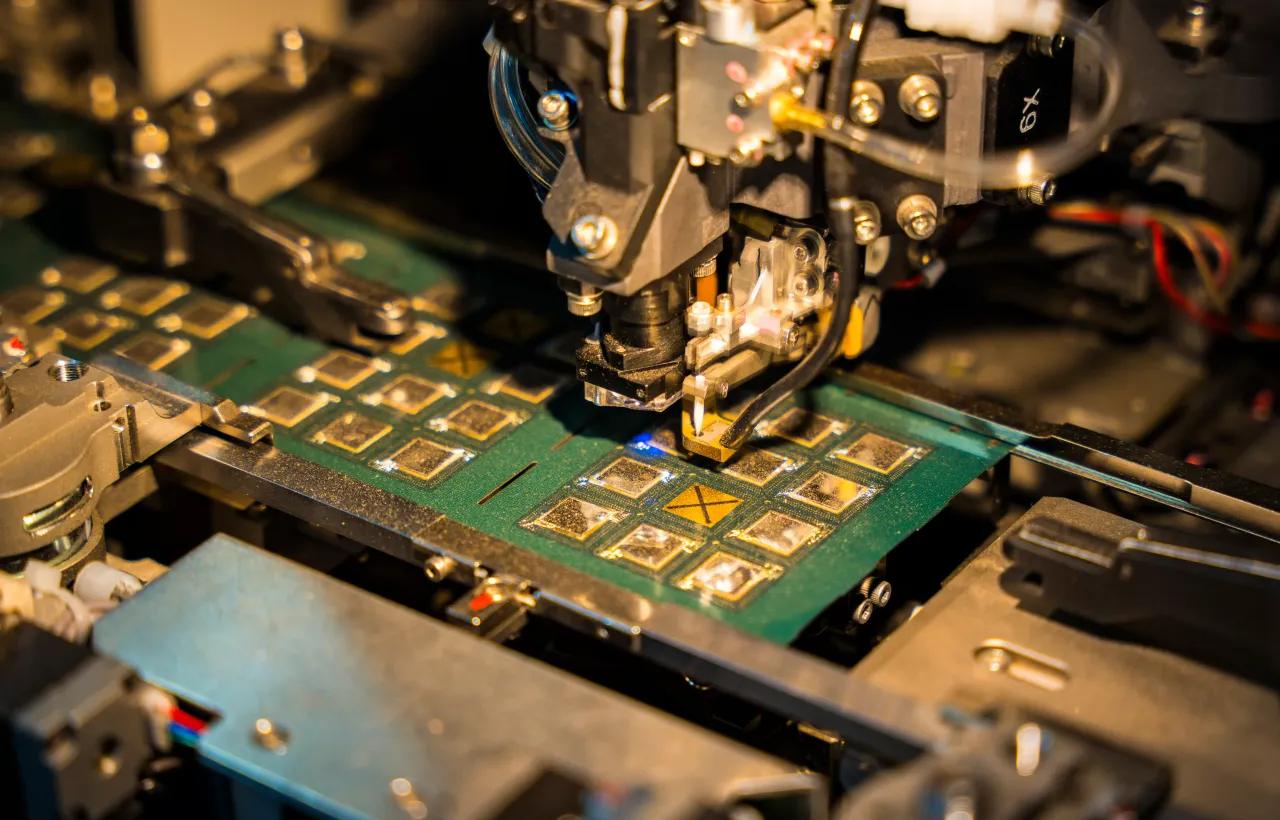


- The proposals under consideration could range from 200 billion yuan ($28 billion) to 500 billion yuan ($70 billion), reported Bloomberg.
- While the details of the plan are yet to be finalized, the incentives will be in addition to all other existing financial support.
- The push comes as U.S. investors grow increasingly concerned over high AI valuations.
Advertisement|Remove ads.
China is reportedly considering incentive packages of up to $70 billion for chipmakers to boost its domestic industry amid its intensifying rivalry with the U.S. in the artificial intelligence race.
According to a Bloomberg report, the country’s officials are considering a package of subsidies and other financial assistance that could range from 200 billion yuan ($28 billion) to 500 billion yuan ($70 billion), the report said.
While final details, including exact amounts and companies likely to receive them are still being debated, the new plan will be in addition to and function separately from already-existing plans like the $50 billion Big Fund III equity-investment vehicle, Bloomberg reported.
Advertisement|Remove ads.
The Chip War
The battle over advanced semiconductor chips for AI has become a key point of rivalry between the U.S. and China as both countries race to outdo each other. Beijing’s push is an indicator to reduce its reliance on non-domestic chipmakers such as Nvidia Corp. (NVDA).
President Xi Jinping is seeking to ramp up China’s domestic semiconductor capabilities following multiple export bans from the U.S. that have left the country on uncertain terrain. Although Trump recently announced that he would allow the export of Nvidia’s H200 chips, an older version compared to its latest Blackwell chips, to China under certain conditions, Chinese officials are allegedly discussing if this should be permitted.
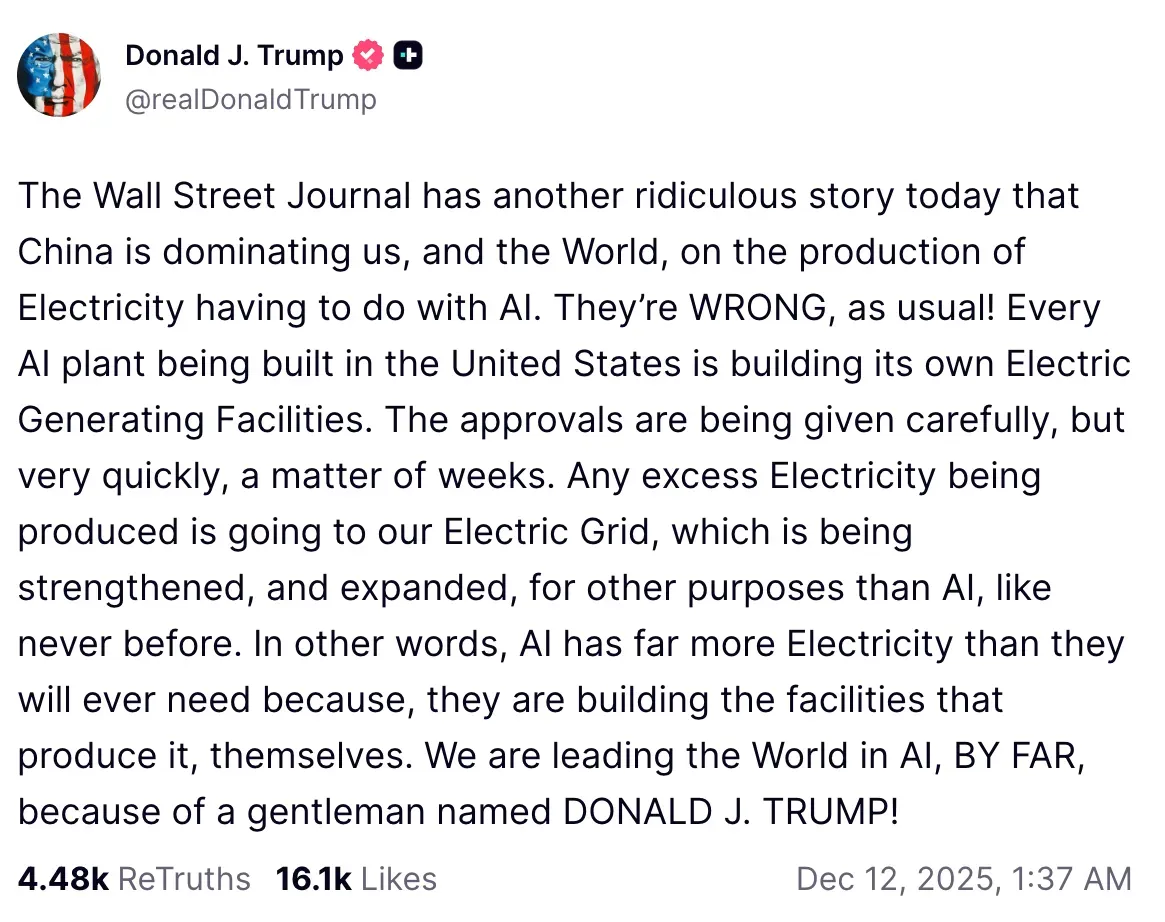
Meanwhile, Trump stated on his Truth Social account that the U.S. is leading in the AI race, pushing back on a report from The Wall Street Journal about China’s cheap electricity as a competitive advantage.
Advertisement|Remove ads.
How Does The Market Feel?
As the two governments push AI growth heavily, U.S. markets are concerned about high AI valuations and aggressive capex plans.
On Wednesday, Oracle (ORCL) shares plunged over 11% as investors grew concerned following the company’s revelation of high debt and whopping 438% growth in remaining performance obligations (RPO) for AI projects. The announcement triggered a sell-off in related AI stocks including Nvidia and Advanced Micro Devices (AMD).
The companies’ shares continued to drop further after comments from Broadcom’s (AVGO) CEO Hock Tan revealed a $73 billion backlog of AI product orders for the company. The Nasdaq 100 index as well as the Dow Jones U.S. Technology Index closed lower on Thursday.
Advertisement|Remove ads.
NVDA shares closed 1.55% lower on Thursday at market close while ORCL shares declined 10.8%.
On Stocktwits, retail sentiment for NVDA stock was in the ‘neutral’ territory, while for ORCL shares, it was in the ‘extremely bullish’ territory.
1 Chinese yuan = $0.14
Advertisement|Remove ads.
For updates and corrections, email newsroom[at]stocktwits[dot]com.
Comments posted here will also appear on symbol pages.

Latest News
/filters:format(webp)https://news.stocktwits-cdn.com/large_Getty_Images_2294264991_a1d08b075d.jpg)
/filters:format(webp)https://news.stocktwits-cdn.com/Anushka_Basu_make_me_smile_in_the_picture_b92832aa_af59_4141_aacc_4180d2241ba8_1_2_png_1086e0ed8c.webp) Anushka Basu·13h ago
Anushka Basu·13h ago/filters:format(webp)https://news.stocktwits-cdn.com/large_Getty_Images_1925090359_f160f05588.jpg) Anushka Basu·13h ago
Anushka Basu·13h ago/filters:format(webp)https://news.stocktwits-cdn.com/large_Getty_Images_2213700296_87303c323b.jpg) Anushka Basu·14h ago
Anushka Basu·14h ago/filters:format(webp)https://news.stocktwits-cdn.com/large_franklin_templeton_OG_jpg_4b3a7330d9.webp) Anushka Basu·16h ago
Anushka Basu·16h ago/filters:format(webp)https://news.stocktwits-cdn.com/large_Getty_Images_1445160636_5780a5fdde.jpg) Anushka Basu·17h ago
Anushka Basu·17h ago/filters:format(webp)https://news.stocktwits-cdn.com/Getty_Images_540198451_jpg_3e5f3d8ee7.webp) Anushka Basu·18h ago
Anushka Basu·18h ago