


Advertisement|Remove ads.
DoorDash Moat Under Threat? Citrini Research Warns Consumer AI Agents Could Bypass Delivery Apps Altogether
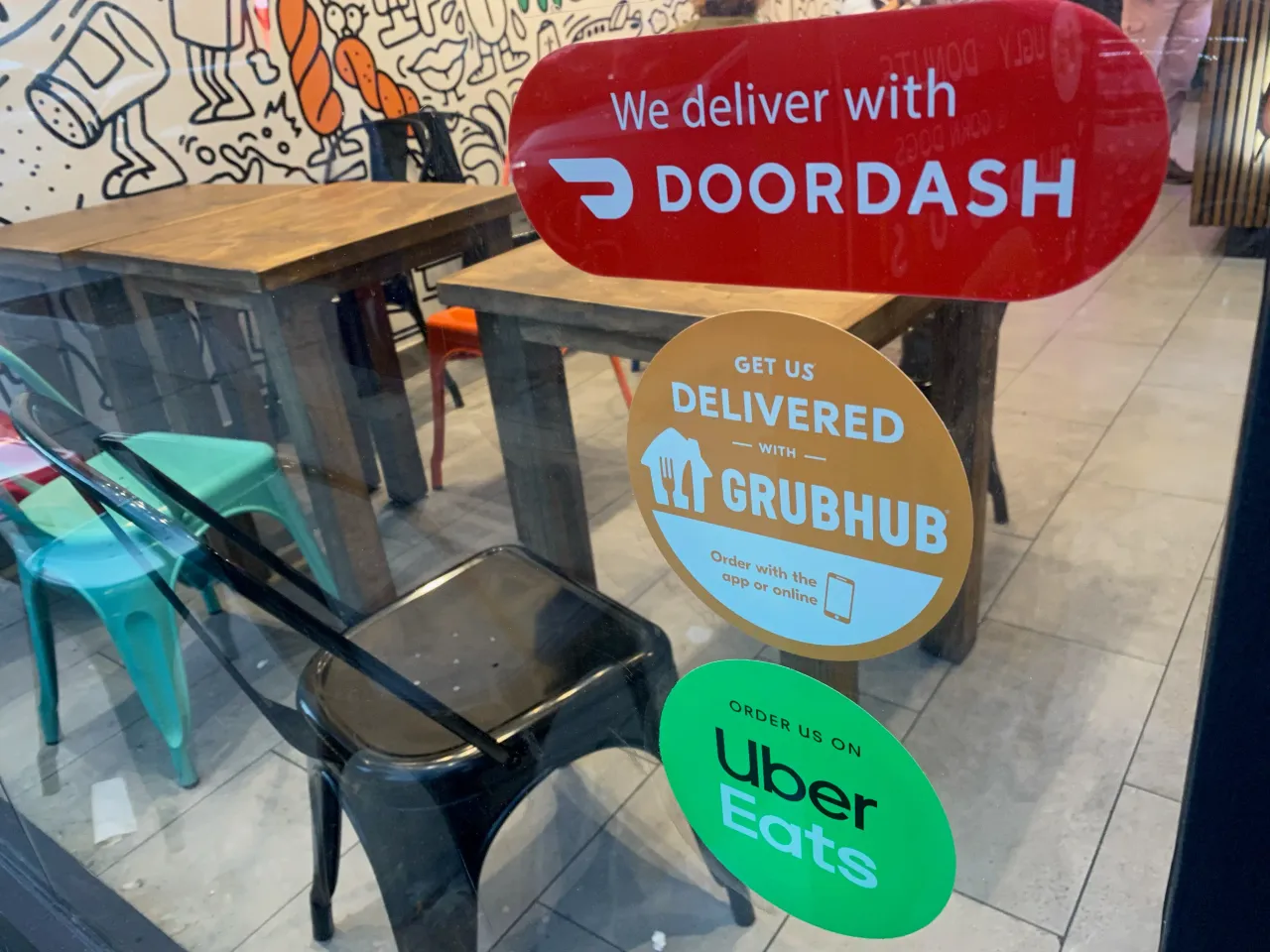


- The research noted that a "competent developer" could deploy a functional competitor in weeks, and many would, taking drivers away from DoorDash and Uber Eats.
- Alap Shah, in a post on X, said that DoorDash takes 25% of the total order today, charging both the customer and restaurant.
- Shah said that ChatGPT could run a second auction with delivery drivers for fulfillment, eliminating food delivery firms.
Advertisement|Remove ads.
Citrini Research's warning that AI could prove more of an economic pandemic than a panacea has cast a spotlight on DoorDash, Inc., whose shares fell tumbled 7% on Monday. The firm argued that the rise of artificial intelligence, particularly agentic tools, could strip away "friction," effectively removing intermediaries between consumers and their purchases.
That dynamic could pose a challenge for DoorDash, which captures a meaningful portion of the value from orders placed on its platform. As "consumer agents" begin reshaping how transactions are executed, the research suggests, traditional marketplace models could come under pressure.
Can AI Stall DASH's Growth?
Citrini, in a note titled "The 2028 Global Intelligence Crisis," outlined that by 2027, machines optimizing for price and fit would not care about a consumer's favourite app or the websites they been habitually opening for the last four years, nor feel the pull of a well-designed checkout experience.
Advertisement|Remove ads.
The firm said that they would not get tired and accept the easiest option or default to "I always just order from here," but rather destroy a particular kind of moat: "habitual intermediation."
The research noted that a "competent developer" could deploy a functional competitor in weeks, and many would, which would take away drivers from DoorDash and Uber Eats by passing 90% to 95% of the delivery fee through to the driver. "Multi-app dashboards let gig workers track incoming jobs from twenty or thirty platforms at once, eliminating the lock-in that the incumbents depended on. The market fragmented overnight and margins compressed to nearly nothing," Citrini Research said.
The DoorDash moat was literally "you're hungry, you're lazy, this is the app on your home screen," but an agent doesn't have a home screen and scans through DoorDash, Uber Eats, the restaurant's own site, and twenty new vibe-coded alternatives so it can pick the lowest fee and fastest delivery every time.
Advertisement|Remove ads.
"Habitual app loyalty, the entire basis of the business model, simply didn't exist for a machine," the firm said.
Alap Shah's View On Dash
The research note was co-authored by Alap Shah, chief investment officer at Lotus Technology Management. Shah, in a post on X, said that DoorDash takes 25% of the total order today, charging both the customer and the restaurant. "So instead the ChatGPT agent could transact with the restaurant's bid, with ChatGPT taking a 7% cut, restaurant only paying 7% (vs typical 15%) and the consumer saving 11% vs buying through DoorDash," he said.
Shah said that ChatGPT could run a second auction with delivery drivers for fulfillment, but noted this works when AI apps have sufficient volume of orders, which is likely a 2027 event.
Advertisement|Remove ads.
How Are Stocktwits Users Reacting?
Retail sentiment on DoorDash jumped to 'extremely bullish' from 'bullish' a week ago, with message volumes at 'extremely high' levels, according to data from Stocktwits.
In the last 24 hours, the retail message volume on the stock jumped 1,800% on Stocktwits, and over the past year, the stock has added more than 9% in followers on the platform.
Shares of DoorDash have declined nearly 16% in the last 12 months.
Advertisement|Remove ads.
For updates and corrections, email newsroom[at]stocktwits[dot]com.
Comments posted here will also appear on symbol pages.

Latest News
/filters:format(webp)https://news.stocktwits-cdn.com/gettyimages_1146874203_594x594_7ede4f0313.jpg)
/filters:format(webp)https://news.stocktwits-cdn.com/Harshita_3cfe02022c.jpg) Harshita Tyagi·17m ago
Harshita Tyagi·17m ago/filters:format(webp)https://news.stocktwits-cdn.com/large_Getty_Images_1308225398_b2be3e49f5.jpg)
/filters:format(webp)https://news.stocktwits-cdn.com/vivekkrishnanphotography_58_jpg_0e45f66a62.webp) Arnab Paul·19m ago
Arnab Paul·19m ago/filters:format(webp)https://news.stocktwits-cdn.com/Getty_Images_2202580632_jpg_9b97227b1a.webp)
/filters:format(webp)https://news.stocktwits-cdn.com/Prabhjote_DP_67623a9828.jpg) Prabhjote Gill·52m ago
Prabhjote Gill·52m ago/filters:format(webp)https://news.stocktwits-cdn.com/large_Delta_April_jpg_a516b2dbcc.webp)
/filters:format(webp)https://news.stocktwits-cdn.com/Heera_1_1c30cb0170.PNG) Heera Hari·55m ago
Heera Hari·55m ago/filters:format(webp)https://st-everywhere-cms-prod.s3.us-east-1.amazonaws.com/large_microchip_technology_logo_resized_5b36b1b22c.jpg) Harshita Tyagi·1h ago
Harshita Tyagi·1h ago/filters:format(webp)https://news.stocktwits-cdn.com/Getty_Images_2228901458_jpg_23b268ec62.webp) Prabhjote Gill·2h ago
Prabhjote Gill·2h ago