


Advertisement|Remove ads.
Ed Yardeni Says Jensen Huang’s Return To Nvidia Could Ease AI Financing Concerns But Intensify Regulatory Scrutiny
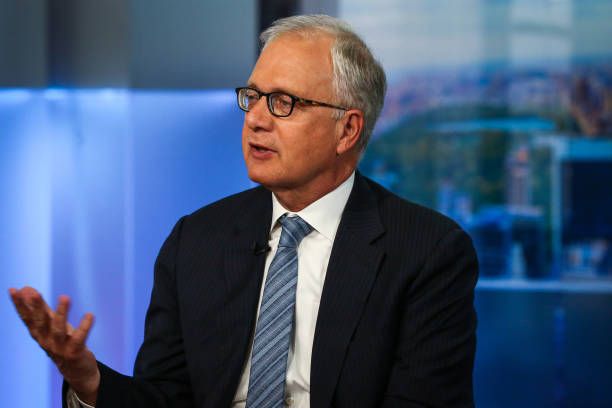


- Yardeni said Nvidia has eased financing constraints on the AI buildout through capital injections, financial backstops and Huang’s “votes of confidence.”
- Huang’s return may embolden China hawks to pursue tighter semiconductor export controls, he said.
- Yardeni said the U.S. economy continues to power ahead, and not merely on the strength of the AI investment boom.
Advertisement|Remove ads.
Yardeni Research president Ed Yardeni said Jensen Huang's return as CEO of Nvidia (NVDA) could ease financial constraints on the artificial intelligence (AI) infrastructure buildout, but warned that political and regulatory pressure could intensify.
In his QuickTakes note, Yardeni highlighted the contrasting market reactions following Huang's reinstatement. Nvidia surged 31.5% on Monday, its biggest daily percentage gain in 23 years, adding a record $950 billion to its market capitalization.
However, that enthusiasm has faded since NVDA shares declined 5.9% on Tuesday, and are down another 5% in today’s premarket.
Advertisement|Remove ads.
Huang's Return Could Bring More Regulatory Scrutiny
Yardeni noted that under Jensen's leadership, Nvidia has eased financial constraints on the AI buildout “directly through capital injections and financial backstops and indirectly through Jensen's votes of confidence”, which facilitate access to capital and reduce borrowing costs across the AI ecosystem.
However, the market veteran said, “Investors appeared to focus on the political ramifications of his return on Tuesday.” Yardeni said that Jensen's return could intensify the regulatory pressure on the AI buildout already unleashed by the Democrats' midterm sweep.
This may embolden “China hawks to pursue tighter semiconductor export controls” and invite greater congressional scrutiny of the AI ecosystem's business practices and financing arrangements.
“So while Jensen's return as Nvidia's CEO may have eased concerns about financial constraints on the AI buildout, political constraints could intensify,” he wrote.
Advertisement|Remove ads.
Yardeni Bullish On AI Investment Boom
Despite the concerns, Yardeni maintained his positive outlook on AI infrastructure spending. He continues to view financial, political, and physical constraints as speed bumps for the AI investment boom.
“They will slow the buildout but won't brake it, as we expect demand for compute to continue growing,” Yardeni said.
The economist further noted that while the stock market remains preoccupied with the “brouhaha surrounding the AI trade”, the US economy continues to power ahead, and not merely on the strength of the AI investment boom.
Advertisement|Remove ads.
Stock Futures Slide Amid Inflation, Tariff Concerns
U.S. stock futures fell early Wednesday as investors awaited fresh PCE inflation data and weighed reports of potential new White House tariffs on major trading partners, including China and the European Union. Dow futures dropped 391 points, or 0.8%, while S&P 500 and Nasdaq-100 futures declined 1.4% and 2.3%, respectively.
The SPDR S&P 500 ETF (SPY), Invesco QQQ Trust (QQQ) and SPDR Dow Jones Industrial Average ETF (DIA) traded lower in premarket. On Stocktwits, retail investors’ sentiment around SPY and DIA was ‘bearish’, while sentiment was 'bullish' for QQQ.
Semiconductor ETFs iShares Semiconductor ETF (SOXX) and VanEck Semiconductor ETF (SMH) fell over 4% each in premarket, on track to extend the previous session's losses. Retail sentiment was 'bearish' for SOXX but 'bullish' for SMH.
Advertisement|Remove ads.
For updates and corrections, email newsroom[at]stocktwits[dot]com.

Latest News
 Harshita Tyagi·11m ago
 Anushka Basu·52m ago

 Shivani Kumaresan·1h ago
 Shivani Kumaresan·2h ago

 Yuvraj Malik·2h ago
 Anushka Basu·2h ago
Comments posted here will also appear on symbol pages.