


Advertisement|Remove ads.
Fed Beige Book: US-Iran Conflict Leading To Higher Inflation, Squeezing Consumer Spending
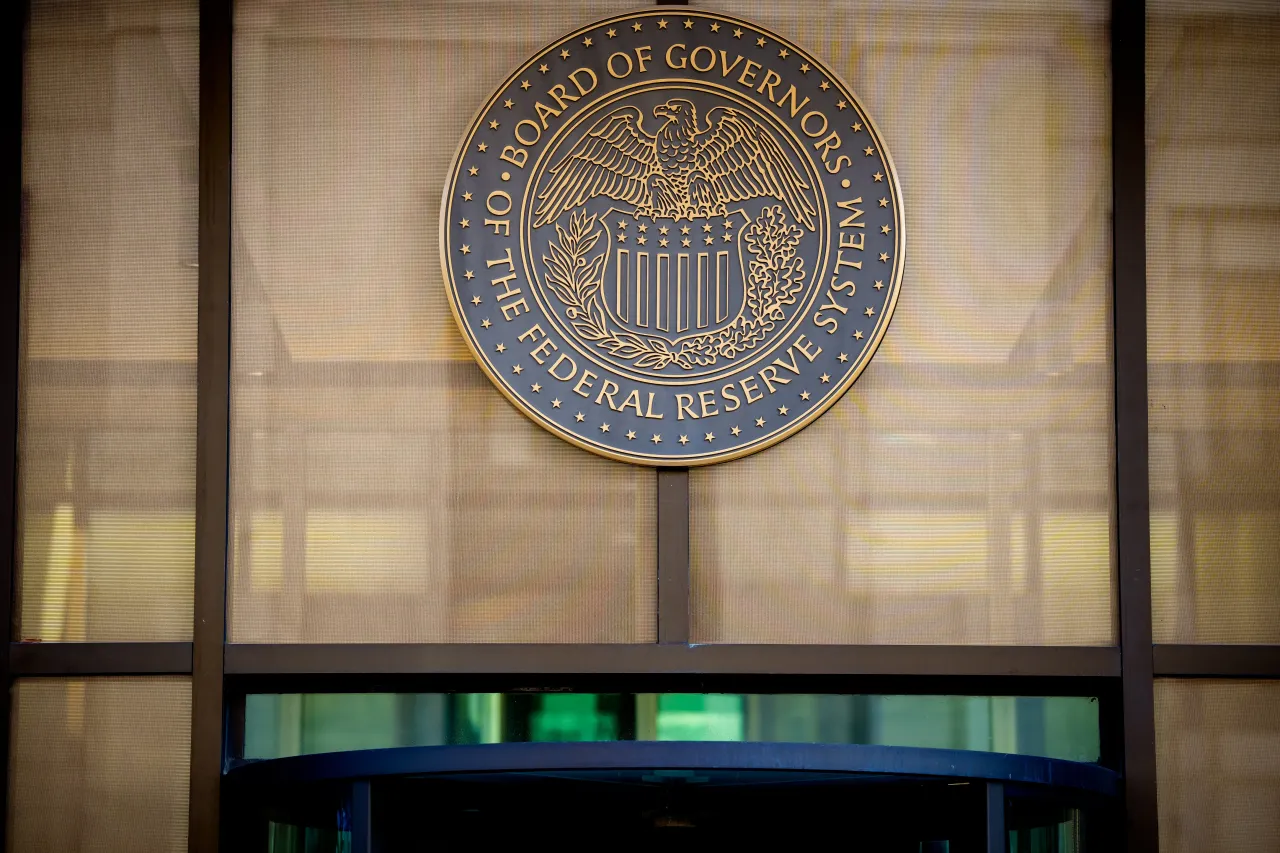


- The report was based on information collected by the Fed’s 12 regional banks.
- The Fed’s preferred inflation metric increased by 3.8% in the 12 months ending in April.
- Employment showed little to no change, with fresh employment data due for release on Friday.
Advertisement|Remove ads.
The Federal Reserve on Wednesday reported that the U.S. economy expanded at a slight-to-moderate pace through May, even as escalating geopolitical tensions in the Middle East drove up energy costs and fueled a sharp acceleration in inflation.
According to the latest Beige Book survey of regional economic conditions, business activity increased across 10 of the central bank's 12 districts. However, soaring costs due to spiking oil prices amid the war in the Middle East is reshaping consumer behavior and threatening corporate profit margins.
"Middle-income households are squeezing more life out of every dollar before deciding to spend it," the Federal Reserve Bank of Kansas City noted in the report.
Advertisement|Remove ads.
US Middle-Income Households Feeling The Heat
The report highlighted a starkly bifurcated consumer market. High-income households remained highly resilient, spending heavily on premium luxury goods and high-end travel. Meanwhile, lower- and middle-income Americans, facing persistent affordability pressures, shifted toward strict necessity spending and discount dining options.
Retail sentiment on the iShares Consumer Discretionary ETF (IYC) was “bullish” with “low” message volumes on Wednesday.
Widespread spikes in fuel and diesel prices acted as the primary catalyst for broader inflationary pressures. Spilling over into global shipping surcharges, packaging, and agricultural fertilizers, these rising non-labor inputs continued to outpace finalized selling prices, driving concerns over severe corporate margin compression.
Advertisement|Remove ads.
The Fed’s preferred inflation gauge The Personal Consumption Expenditures Index (PCE) rose 3.8% in April, highest since 2023, according to data released last week by the Bureau of Economic Analysis.
Despite these price pressures, labor markets remained highly stable, characterized by a "low-hire, low-fire" environment. Total employment showed little to no change across 11 districts as workers, wary of macroeconomic uncertainty, proved increasingly reluctant to change jobs.
The next job report is due upcoming Friday.
Advertisement|Remove ads.
Manufacturing served as a key economic bright spot, expanding modestly to strongly across nine districts. Factory demand was heavily anchored by robust defense spending and massive data center infrastructure buildouts.
Conversely, banking sectors noted emerging vulnerabilities, reporting a gradual uptick in delinquency rates for residential mortgages, consumer credit cards, and agricultural loans.
What is the Fed Beige Book
The Beige Book is a Federal Reserve System publication about current economic conditions across the 12 Federal Reserve Districts. It characterizes regional economic conditions and prospects based on a variety of mostly qualitative information, gathered directly from each District’s sources. Reports are published eight times per year.
Advertisement|Remove ads.
The 12 districts include Boston, New York, Philadelphia, Cleveland, Richmond, Atlanta, Chicago, St Louis, Minneapolis, Kansas City, Dallas and San Francisco.
Read More: META Forays Into Enterprise AI With New Global Business Agent
For updates and corrections, email newsroom[at]stocktwits[dot]com.
Advertisement|Remove ads.
Comments posted here will also appear on symbol pages.

Latest News
/filters:format(webp)https://st-everywhere-cms-prod.s3.us-east-1.amazonaws.com/large_Bio_N_Tech_m_RNA_based_vaccine_manufacturing_site_in_Kigali_2_4fd2e38342.jpg)
/filters:format(webp)https://news.stocktwits-cdn.com/vivekkrishnanphotography_58_jpg_0e45f66a62.webp) Arnab Paul·29m ago
Arnab Paul·29m ago/filters:format(webp)https://news.stocktwits-cdn.com/large_arthur_hayes_2026_OG_jpg_9f3524f8b1.webp)
/filters:format(webp)https://news.stocktwits-cdn.com/Anushka_Basu_make_me_smile_in_the_picture_b92832aa_af59_4141_aacc_4180d2241ba8_1_2_png_1086e0ed8c.webp) Anushka Basu·1h ago
Anushka Basu·1h ago/filters:format(webp)https://news.stocktwits-cdn.com/large_Getty_Images_2280392602_jpg_36718c4342.webp)
/filters:format(webp)https://news.stocktwits-cdn.com/Heera_1_1c30cb0170.PNG) Heera Hari·1h ago
Heera Hari·1h ago/filters:format(webp)https://news.stocktwits-cdn.com/large_oracle_logo_jpg_47f75657e7.webp)
/filters:format(webp)https://news.stocktwits-cdn.com/Harshita_3cfe02022c.jpg) Harshita Tyagi·1h ago
Harshita Tyagi·1h ago/filters:format(webp)https://news.stocktwits-cdn.com/large_Getty_Images_2285958555_jpg_3b020b5c3e.webp)
/filters:format(webp)https://news.stocktwits-cdn.com/Prabhjote_DP_67623a9828.jpg) Prabhjote Gill·1h ago
Prabhjote Gill·1h ago/filters:format(webp)https://st-everywhere-cms-prod.s3.us-east-1.amazonaws.com/large_Microsoft_logo_788317f118.jpg) Heera Hari·2h ago
Heera Hari·2h ago