


Advertisement|Remove ads.
Gold And Bitcoin Are 2026's Worst Assets Despite Active War — Market Strategist Says It's 'Something We Haven't Seen Before'
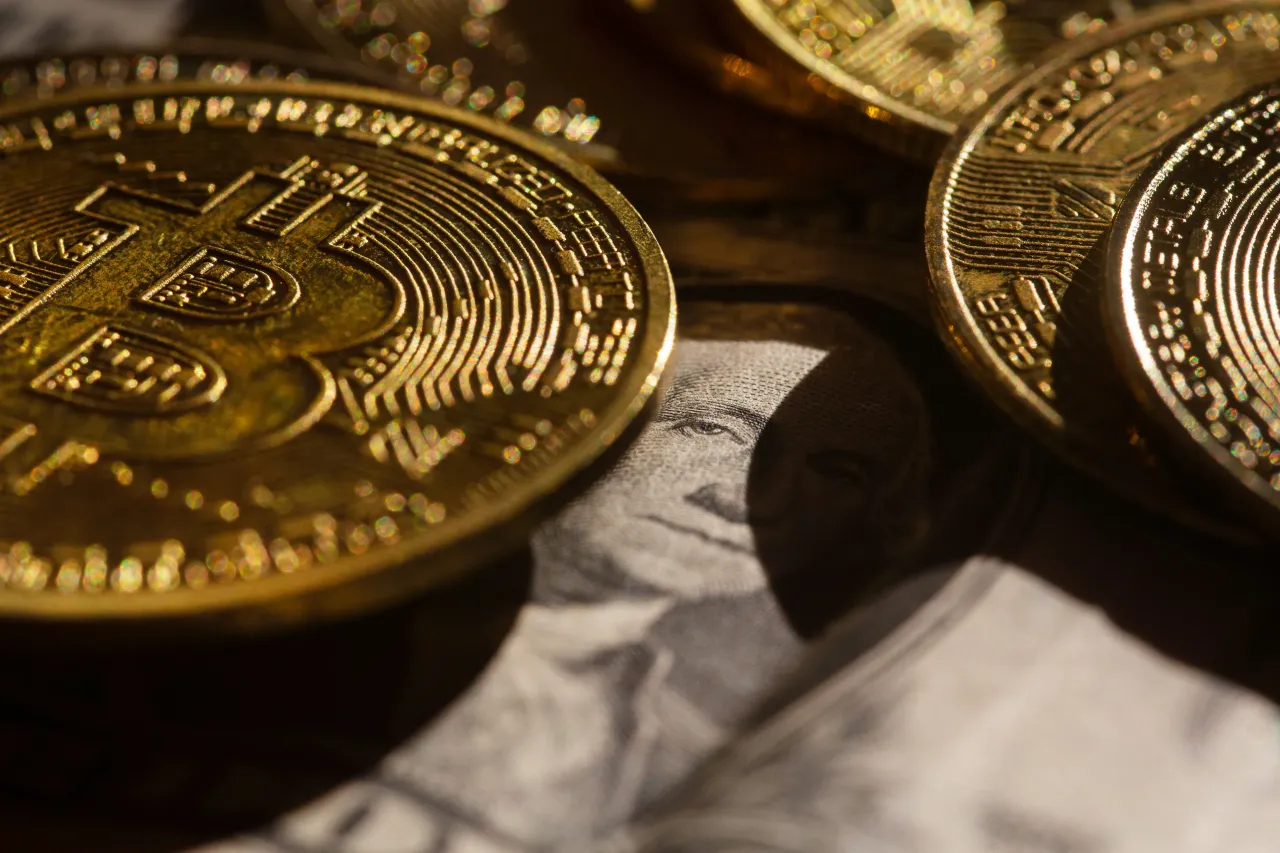


- Bitcoin is down nearly 27% this year, while gold is down 7%.
- Bitcoin traders are reportedly betting that its price will climb to $72,000 by the end of the month, according to a report from CoinDesk.
- Meanwhile, Bank of America reduced its 2026 average gold forecast by 14% to $4,360 an ounce, according to a report from Reuters earlier this month.
Advertisement|Remove ads.
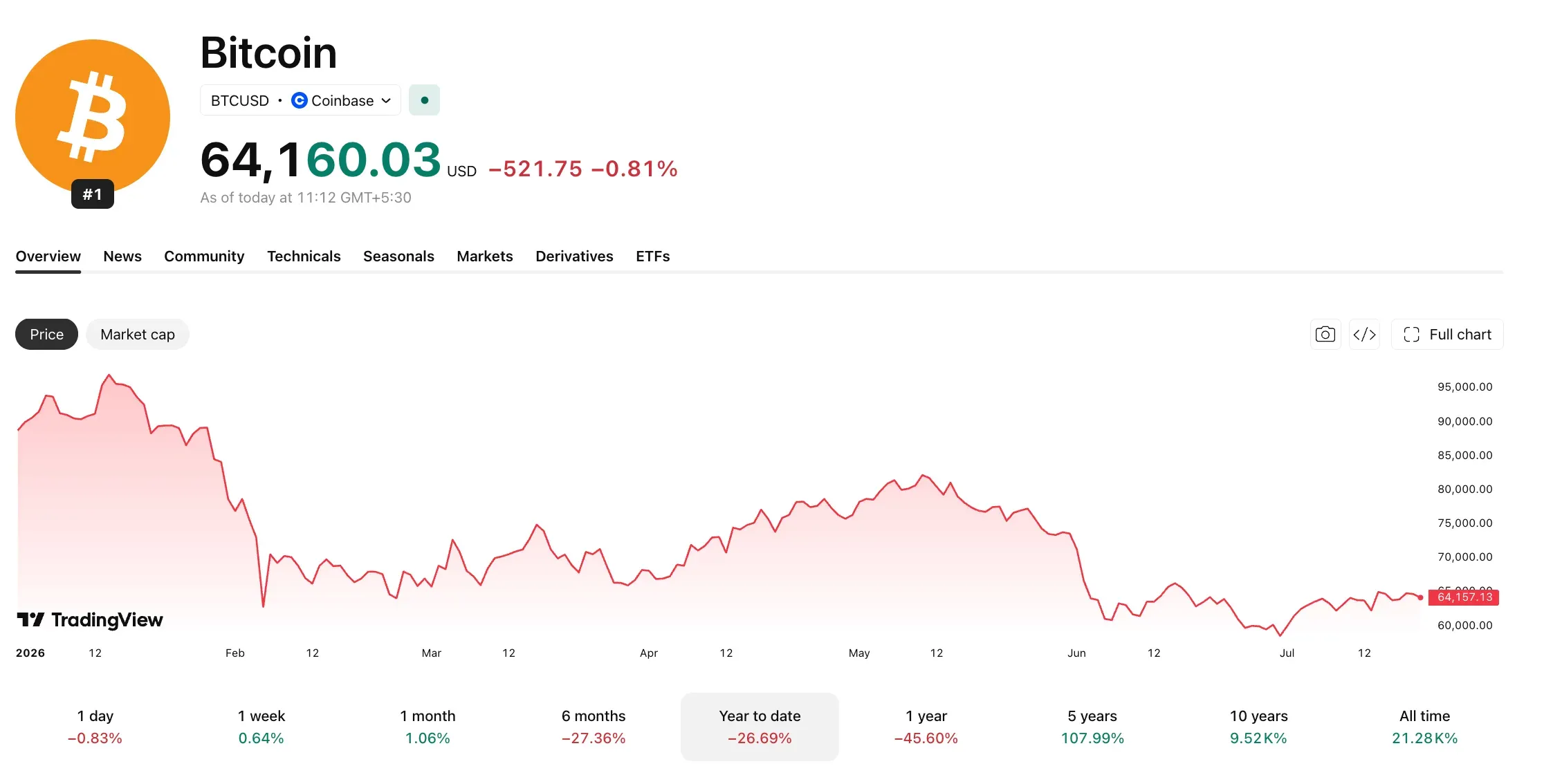
Among all major asset classes, Bitcoin and gold have been the worst performers so far in 2026, declining nearly 27% and more than 7%, respectively.
Charlie Bilello, Chief Market Strategist at Creative Planning, noted the decline in a post on X, saying, “This is something we haven't seen before in any calendar year.”
Bitcoin prices have declined this year amid growing macroeconomic uncertainty amid the U.S.-Iran war, as well as capital rotation into high-upside AI investments.
Advertisement|Remove ads.
Meanwhile, gold prices also fell from their first-quarter highs as tensions with Iran temporarily cooled off earlier this month.
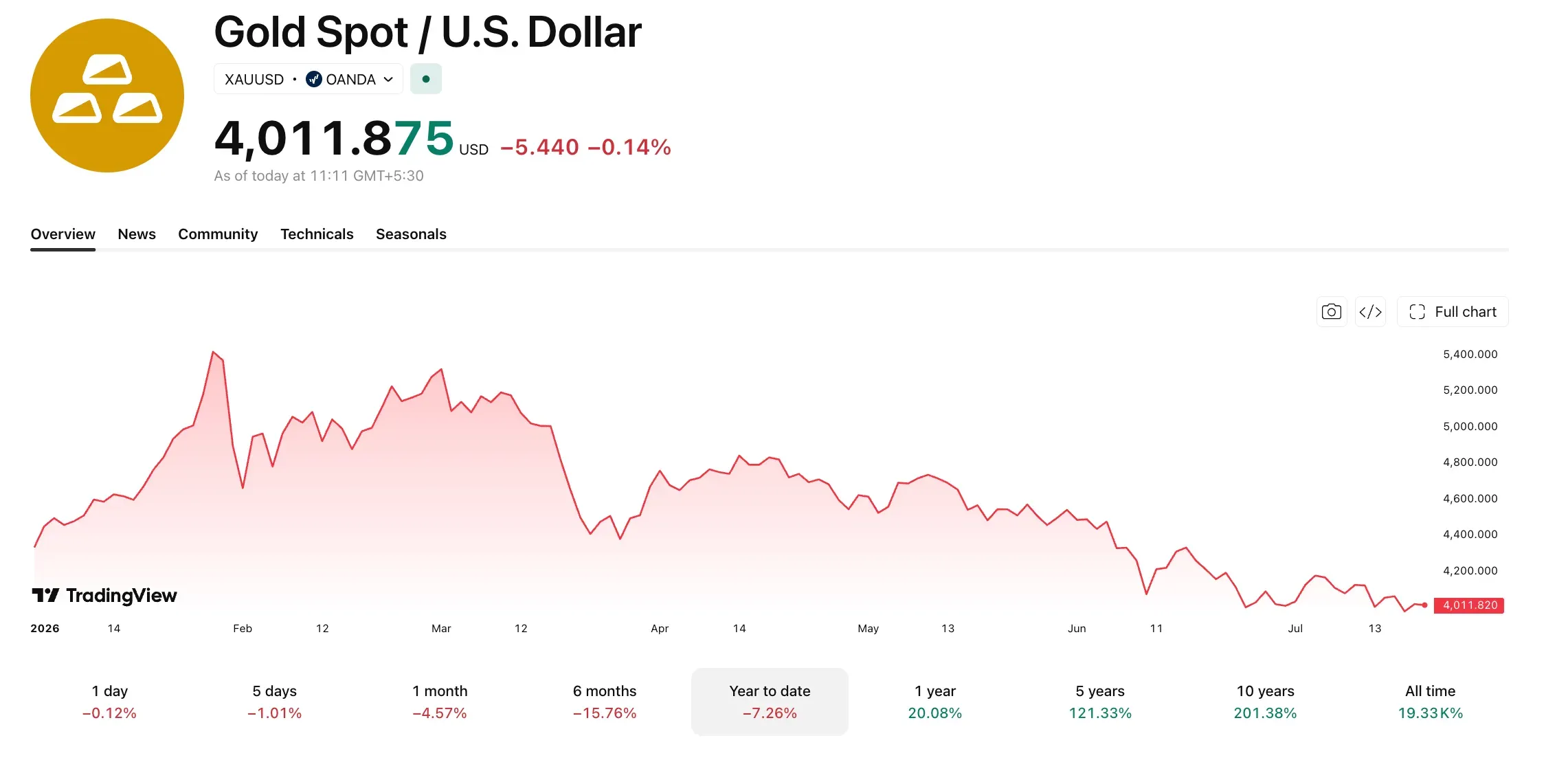
At the time of writing, Bitcoin was trading at $64,405.60, while spot gold prices were at around $4,020.19.
Where Is Bitcoin Headed?
Despite the recent decline in Bitcoin, traders are reportedly betting that the world’s largest cryptocurrency will climb to $72,000 by the end of the month.
Advertisement|Remove ads.
According to a report from CoinDesk, large options positions signal that an upward trend is likely around the Federal Reserve’s interest-rate decision later this month.
James Thorne, chief market strategist at Wellington-Altus Private Wealth, said in a post on X that volatility is less of a problem for the currency and that regulatory uncertainty was the bigger barrier.
“The Clarity Act changes that: by explicitly recognizing and regulating digital assets, it gives committees the legal and political scaffolding to treat Bitcoin as a legitimate portfolio building block rather than a compliance headache,” he said, adding that the digital currency’s fixed supply of 21 million coins could eventually support prices of around $240,000 to $250,000 per coin if it reaches Nvidia's (NVDA) current market value, or as high as $1.5 million to $1.8 million if it ultimately matches gold's market capitalization.
Advertisement|Remove ads.
What’s The Consensus On Gold?
Meanwhile, gold prices have traded in a narrow range around $4,000 in recent weeks despite increasing geopolitical uncertainty and soaring oil prices. Usually, the yellow metal’s prices rise during times of high tensions as it is seen as a safe-haven asset.
“Gold is showing a relatively muted reaction to the spike in oil prices, which to me reflects some investor apathy around geopolitics,” Justin Lin, an analyst at Global X ETFs, reportedly told Bloomberg.
“Yields are only marginally higher over the weekend despite the significant escalation in the Middle East, which is probably why gold has been quite stable.” U.S. 10-year treasury yields were around 4.551% at the time of writing, down from its highs of 4.69% earlier in May this year.
Advertisement|Remove ads.
The U.S. Central Command said late Sunday that it had completed a ninth consecutive night of attacks against Iran. The tensions between the two countries are in their fifth month, even as a fragile peace negotiation broke down earlier this month amidst the escalating conflict.
“The weekend escalations increase the risk of a potential full-scale offensive by both sides, which potentially threatens gold prices as the opportunity cost for holding the metal gets higher if this ongoing stagflation fear starts to take hold,” Kelvin Wong, a senior market analyst at OANDA, reportedly told CNBC.
“On the longer term, I’m more cautious on gold and looking at the key $3,886 level, which if taken out on the downside, could potentially unleash further weakness towards $3,500,” Wong added.
Advertisement|Remove ads.
Meanwhile, Bank of America reduced its 2026 average gold forecast by 14% to $4,360 an ounce, according to a report from Reuters earlier this month. The bank cited a more hawkish outlook from the Federal Reserve for the cut. JPMorgan also cut its forecast for gold prices to $4,300 per ounce in the third quarter and $4,500 per ounce in the fourth quarter of 2026, saying demand for gold from key sectors would not be as strong as it had expected.
How Have Markets Performed This Year?
U.S. benchmark indexes have gained in 2026, with the Nasdaq Composite leading the gains, up nearly 10% year-to-date. The S&P 500 has gained nearly 9%, while the Dow Jones Industrial Average has risen nearly 8% this year. All three have significantly outperformed gold and Bitcoin.
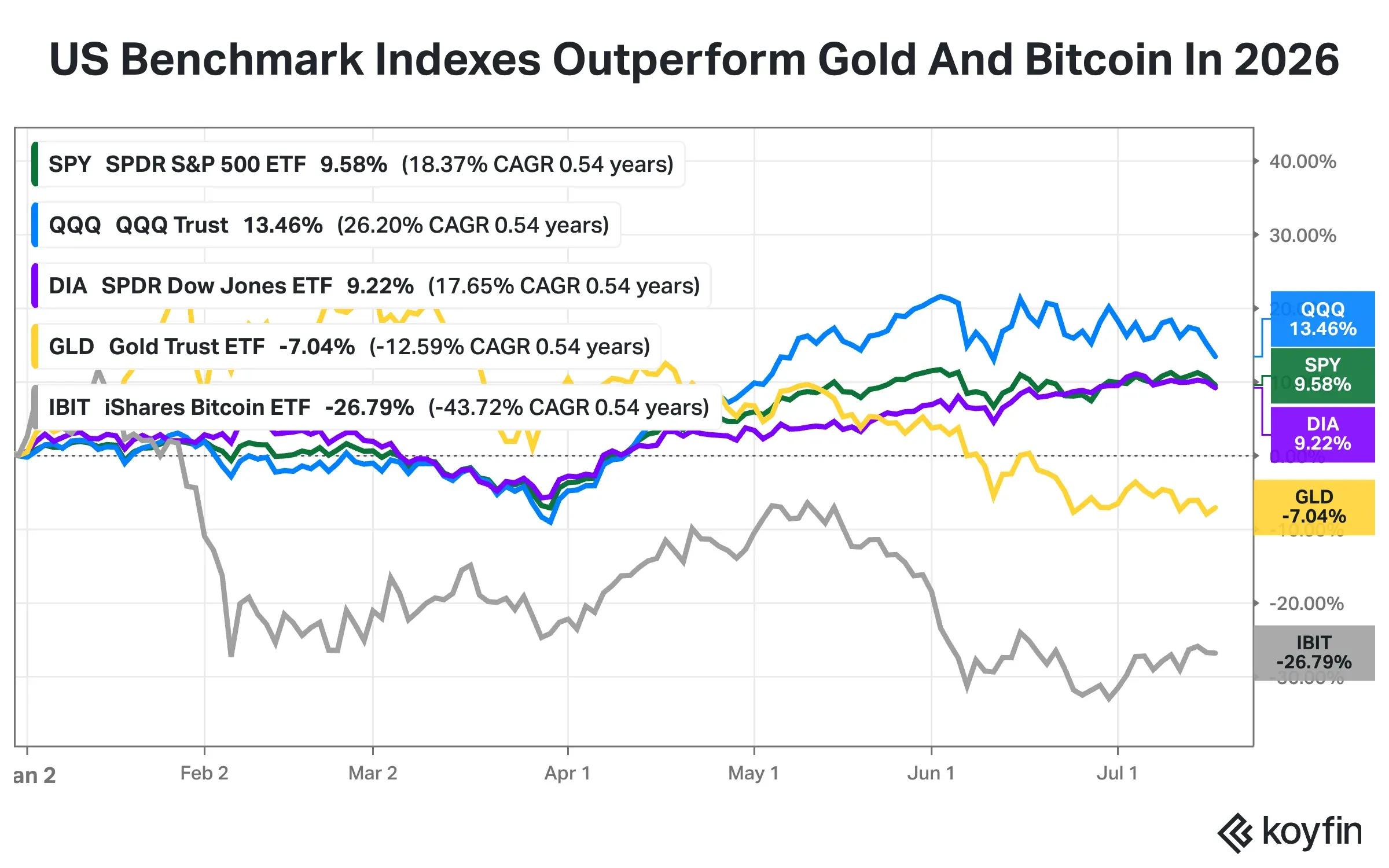
At the time of writing, the SPDR S&P 500 ETF (SPY), which tracks the S&P 500 index, was up marginally by 0.04% amid ‘neutral’ sentiment. The Invesco QQQ Trust ETF (QQQ) was up 0.28%, while the SPDR Dow Jones Industrial Average ETF Trust (DIA) fell 0.04%. The iShares 20+ Year Treasury Bond ETF (TLT) was also declining.
Advertisement|Remove ads.
Meanwhile, the SPDR Gold Shares ETF (GLD) was down 0.12% in the overnight session late Sunday amid ‘bullish’ sentiment, and the iShares Bitcoin ETF (IBIT) was down 0.06% amid ‘neutral’ sentiment.
For updates and corrections, email newsroom[at]stocktwits[dot]com.
Comments posted here will also appear on symbol pages.

Latest News
/filters:format(webp)https://news.stocktwits-cdn.com/large_Getty_Images_2289911964_0fec3a471a.jpg)
/filters:format(webp)https://news.stocktwits-cdn.com/shivani_photo_jpg_dd6e01afa4.webp) Shivani Kumaresan·46m ago
Shivani Kumaresan·46m ago/filters:format(webp)https://news.stocktwits-cdn.com/large_nvidia_OG_Jun26_860ee43e02.jpg)
/filters:format(webp)https://news.stocktwits-cdn.com/IMG_9209_1_d9c1acde92.jpeg) Yuvraj Malik·1h ago
Yuvraj Malik·1h ago/filters:format(webp)https://news.stocktwits-cdn.com/large_Getty_Images_2290038559_c6f6528203.jpg)
/filters:format(webp)https://news.stocktwits-cdn.com/Revised_Profile_JPG_0e0afdf5e2.webp) Preeti Ayyathurai·1h ago
Preeti Ayyathurai·1h ago/filters:format(webp)https://news.stocktwits-cdn.com/large_Getty_Images_2245498821_jpg_a630ddc6e3.webp) Yuvraj Malik·2h ago
Yuvraj Malik·2h ago/filters:format(webp)https://news.stocktwits-cdn.com/large_Alcoa_jpg_4f9b08e044.webp) Shivani Kumaresan·2h ago
Shivani Kumaresan·2h ago/filters:format(webp)https://news.stocktwits-cdn.com/large_Getty_Images_2220967996_jpg_b5dd23b15f.webp) Yuvraj Malik·2h ago
Yuvraj Malik·2h ago