


Advertisement|Remove ads.
Goldman Cuts US Growth Outlook Over Iran War, Warns Of 25% Recession Odds Over Next 12 Months: Report
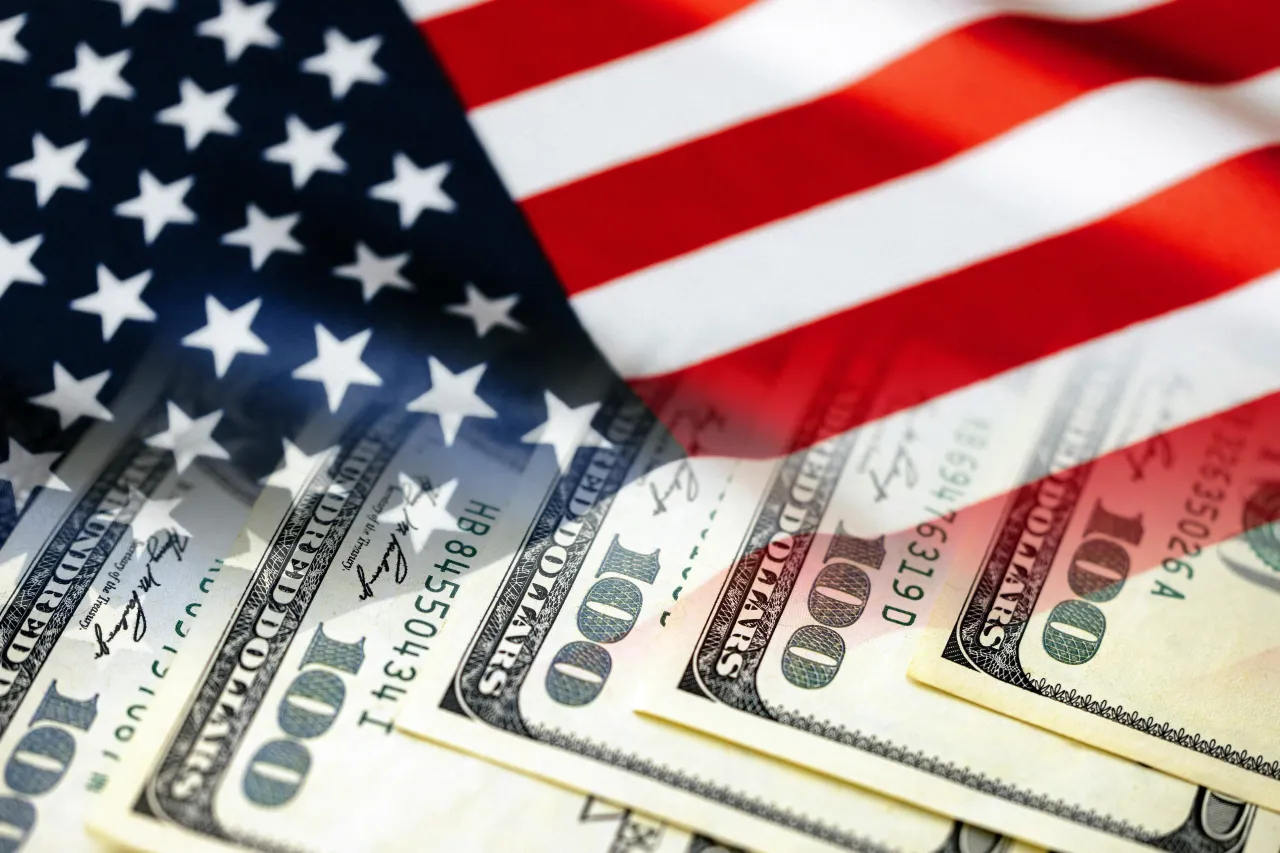


- Goldman expects the December 2026 headline Personal Consumption Expenditure index at 2.9%, up from its previous forecast of 2.1%.
- This comes amid a reported rise in Iranian attacks on oil tankers in the Middle East and the Strait of Hormuz, including one near Iraq on a tanker owned by the U.S.
- Analysts at ING Think explained why crude oil prices have continued to rise despite a record release of 400 million barrels coordinated with the International Energy Agency.
Advertisement|Remove ads.
Goldman Sachs on Wednesday reportedly trimmed the U.S. economic outlook for the fourth quarter (Q4), expecting a gross domestic product (GDP) growth of 2.2% year-on-year due to the ongoing Iran war, down from its previous estimate of 2.5%.
According to a MarketWatch report citing a recent Goldman note, the firm sees a 25% risk of a recession over the next 12 months.
Goldman warned that the spike in crude oil prices due to the disruption in oil flow through the Strait of Hormuz is now the primary channel of economic risk to the U.S.
Advertisement|Remove ads.
Inflation Expected To Rise
The firm also sees inflation worsening due to the Iran war. It expects the December 2026 headline Personal Consumption Expenditure (PCE) index at 2.9%, up from its previous forecast of 2.1%. Core PCE, which excludes food and energy prices, is expected to be at 2.4%, up by 20 basis points.
“Our rules of thumb are that a sustained 10% increase in oil prices boosts headline and core PCE inflation by 0.2pp and 0.04pp, respectively, while lowering GDP growth by around 0.1pp,” the firm stated.
Goldman expects the unemployment rate to peak at 4.6% in December 2026.
Advertisement|Remove ads.
Worsening Iran War
Goldman’s note comes at a time when the Iran war is escalating, with the country’s Parliament Speaker Mohammad Bagher Ghalibaf warning against any aggression toward Iran’s islands on Thursday.
This comes amid a reported rise in Iranian attacks on oil tankers in the Middle East and the Strait of Hormuz, including one near Iraq on a tanker owned by the U.S.
Analysts at ING Think explained why crude oil prices have continued to rise despite a record release of 400 million barrels coordinated with the International Energy Agency.
Advertisement|Remove ads.
The firm stated in its note that there are concerns about the speed at which this oil will reach the market and whether it will be enough to tie up the market until oil starts flowing through the Strait of Hormuz again.
Crude oil prices have soared past the $100 per barrel mark once again. U.S. West Texas Intermediate (WTI) crude futures maturing in April soared nearly 10%, rising to $95.26 per barrel before shedding some of the gains. Brent crude futures expiring in May surged more than 10% to $101.53 before losing some steam to hover around $98 a barrel.
The United States Oil Fund ETF (USO) gained 7%, while the ProShares Ultra Bloomberg Crude Oil ETF (UCO) was up about 6% at the time of writing.
Advertisement|Remove ads.
Meanwhile, U.S. equities declined in Thursday’s opening trade. At the time of writing, the SPDR S&P 500 ETF (SPY), which tracks the S&P 500 index, was down 0.79%; the Invesco QQQ Trust ETF (QQQ) fell 0.75%; and the SPDR Dow Jones Industrial Average ETF Trust (DIA) declined 1.15%. Retail sentiment on Stocktwits regarding the S&P 500 ETF was in the ‘bearish’ territory.
For updates and corrections, email newsroom[at]stocktwits[dot]com.
Advertisement|Remove ads.
Comments posted here will also appear on symbol pages.

Latest News
/filters:format(webp)https://news.stocktwits-cdn.com/large_Getty_Images_2245341683_0cb2bc89f5.jpg)
/filters:format(webp)https://news.stocktwits-cdn.com/1707726834303_jpg_11f20a9aa9.webp) Shashank Nayar·2h ago
Shashank Nayar·2h ago/filters:format(webp)https://news.stocktwits-cdn.com/large_Getty_Images_2269282844_jpg_933bcaa49e.webp) Shashank Nayar·2h ago
Shashank Nayar·2h ago/filters:format(webp)https://news.stocktwits-cdn.com/large_chips_ai_4770ebc76c.jpg) Shashank Nayar·3h ago
Shashank Nayar·3h ago/filters:format(webp)https://news.stocktwits-cdn.com/large_Anthropic_ec1c7b5ee9.jpg) Shashank Nayar·5h ago
Shashank Nayar·5h ago/filters:format(webp)https://st-everywhere-cms-prod.s3.us-east-1.amazonaws.com/large_bloom_energy_resized_d69c98fd7a.jpg) Shashank Nayar·5h ago
Shashank Nayar·5h ago/filters:format(webp)https://news.stocktwits-cdn.com/gettyimages_2257971883_594x594_1606ccd0ba.jpg)
/filters:format(webp)https://news.stocktwits-cdn.com/Heera_1_1c30cb0170.PNG) Heera Hari·7h ago
Heera Hari·7h ago