


Advertisement|Remove ads.
Inside the Airbus A320 Recall This Weekend: What Airlines Are Saying About Safety And Disruptions
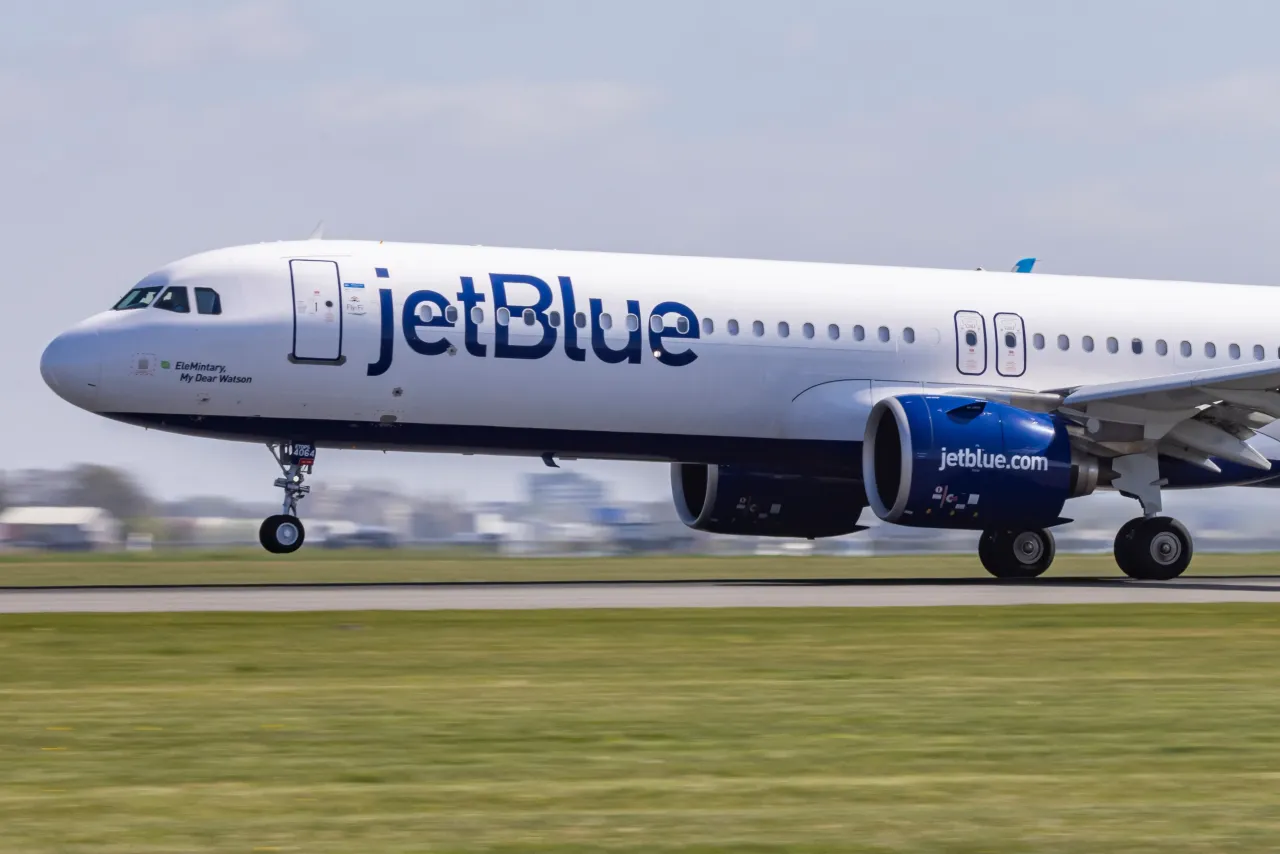


- The European Union Aviation Safety Agency on Friday issued an Emergency Airworthiness Directive for the Airbus A320 family to address a susceptibility introduced by a software update in one of its onboard computers.
- CEO Guillaume Faury said in a LinkedIn post that the fix required on some A320 aircraft has been causing significant logistical challenges and delays since Friday.
- American Airlines said that no aircraft remained to be updated among the 209 impacted.
Advertisement|Remove ads.
Over the weekend, Airbus announced the recall of about 6,000 A320 Family aircraft, prompting several airlines to ground flights and causing a brief, widespread disruption, putting the European company in a tight spot.
While its rival Boeing has faced several operational issues, Airbus has, by far, stayed clear of any technical issues or disruptions. This recall, however, is one of aviation’s biggest, with airlines globally scrambling to use the European aircraft makers' flights to find a solution.

The move followed the discovery of a vulnerability that was introduced by a software update, and it was found that solar radiation could compromise key flight systems. This set of “Analysis of a recent event involving an A320 Family aircraft has revealed that intense solar radiation may corrupt data critical to the functioning of flight controls,” Airbus said.
Advertisement|Remove ads.
European Union Aviation Safety Agency’s Notice
The European Union Aviation Safety Agency on Friday issued an Emergency Airworthiness Directive (EAD) for the Airbus A320 family to address a susceptibility introduced by a software update in one of its onboard computers.
“The EAD addresses an issue which manifested itself in an event on JetBlue flight 1230 on October 30, 2025,” the agency said.
Airbus said it has worked with operators through an Alert Operators Transmission (AOT) to implement available software or hardware protections and ensure the fleet is safe to fly.
Advertisement|Remove ads.
Airbus CEO Faury On The Recall
CEO Guillaume Faury said in a LinkedIn post that the fix required on some A320 aircraft has been causing significant logistical challenges and delays since Friday.
“I want to sincerely apologise to our airline customers and passengers who are impacted now. But we consider that nothing is more important than safety when people fly on one of our Airbus Aircraft - like millions do every day,” Faury said.
Retail sentiment on Airbus remained unchanged in the ‘bullish’ territory, with message volumes at ‘extremely high’ levels, according to data from Stocktwits.
U.S.-listed shares of Airbus have gained nearly 47% in the last 12 months.
Advertisement|Remove ads.
What Did U.S. Airline Operators Say?
American Airlines
The airline operator said that no aircraft were left to be updated of the 209 impacted and that it expects no further operational impact related to the EAD.
Delta Air Lines
Advertisement|Remove ads.
The company said that the impact of the software bug was limited to less than 50 of its Airbus A320 fleet.
United Airlines
United Airlines said over the weekend that six aircraft in its fleet were affected. The company has said that it sees minor disruption to a few flights. According to Reuters, United Airlines said all affected aircraft had been updated.
Advertisement|Remove ads.
JetBlue
In a statement, JetBlue noted that it expects to complete software updates on 120 planes by Sunday morning. Reuters, citing the company, reported that the airline cancelled about 70 flights scheduled for Sunday.
Global Airlines And Their Stance
Air New Zealand
Advertisement|Remove ads.
The airline was still working on the software update. “Our Airbus A320 fleet is safe to operate; however, as a precaution, all A320 aircraft in our fleet were temporarily grounded,” Air New Zealand said.
ANA Holdings
According to a CNBC report, Japan’s All Nippon Airways Holdings canceled 95 domestic flights on Saturday, affecting around 13,200 passengers.
Advertisement|Remove ads.
Jetstar
Jetstar reportedly said its flights are ready to return to service and that engineers have now completed software updates across 34 aircraft.
Delays And Cancellations Data
Advertisement|Remove ads.
The total delays within, into, or out of the United States on Saturday were around 9,015, while on Sunday they were 12,575, according to FlightAware.
American Airlines on Saturday saw 5% cancellation rate, Delta witnessed zero cancellations, and JetBlue saw 3% of the flights canceled.
For updates and corrections, email newsroom[at]stocktwits[dot]com.
Advertisement|Remove ads.
Also See: Kohl’s Traders Just Got The CEO They Wanted — And the Stock’s Weekly Breakout Says It All
Comments posted here will also appear on symbol pages.

Latest News
/filters:format(webp)https://news.stocktwits-cdn.com/Getty_Images_2228900888_jpg_338103de79.webp)
/filters:format(webp)https://news.stocktwits-cdn.com/Anushka_Basu_make_me_smile_in_the_picture_b92832aa_af59_4141_aacc_4180d2241ba8_1_2_png_1086e0ed8c.webp) Anushka Basu·6h ago
Anushka Basu·6h ago/filters:format(webp)https://news.stocktwits-cdn.com/large_Getty_Images_1767602875_jpg_db2e050c08.webp) Anushka Basu·7h ago
Anushka Basu·7h ago/filters:format(webp)https://news.stocktwits-cdn.com/large_new_york_stock_exchange_jpg_e1f85c0d8c.webp)
/filters:format(webp)https://st-everywhere-cms-prod.s3.us-east-1.amazonaws.com/i_OS_App_Icon_1_8054f2a2fe.png) Stocktwits News Desk·8h ago
Stocktwits News Desk·8h ago/filters:format(webp)https://news.stocktwits-cdn.com/large_grayscale_OG_jpg_c35dc5b1a2.webp) Anushka Basu·8h ago
Anushka Basu·8h ago/filters:format(webp)https://news.stocktwits-cdn.com/large_Google_Office_in_New_York_City_2ff844002a.jpg) Stocktwits News Desk·8h ago
Stocktwits News Desk·8h ago/filters:format(webp)https://news.stocktwits-cdn.com/large_mark_rubio_original_jpg_1e75e0c7f2.webp) Stocktwits News Desk·9h ago
Stocktwits News Desk·9h ago