


Advertisement|Remove ads.
Is The $4B Treasury Buyback A Policy Mistake? Bessent’s Mentor Thinks Yes, But Some Say ‘Don't Fight The Treasury’
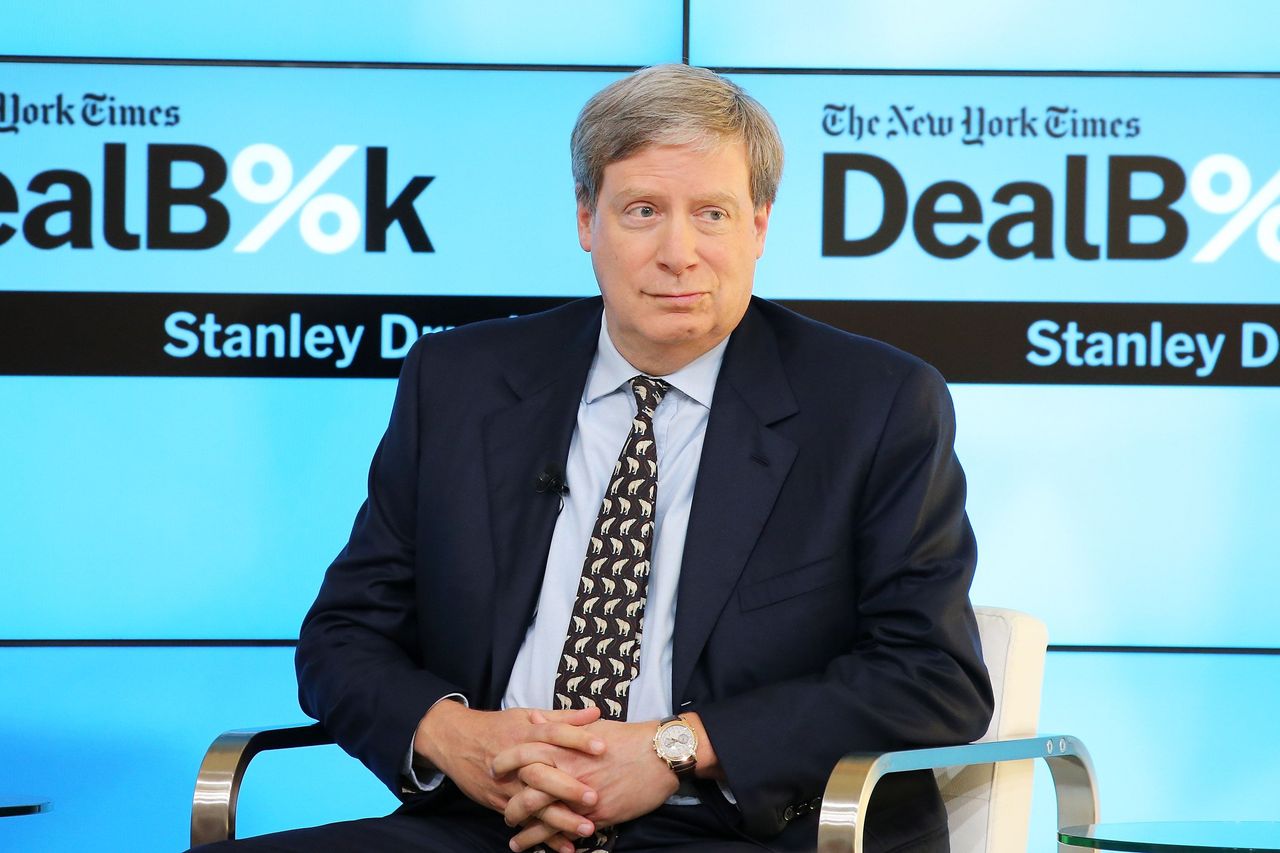


- The billionaire investor argued that the move didn’t justify the market’s reaction, which was simply “doing its job.”
- Mohamed El-Erian, Chief Economic Advisor at Allianz, called the buyback strategy ‘Operation Twist’ in an interview with CNBC, which would likely produce “collateral damage.”
- Meanwhile, The Kobeissi Letter, which provides commentary on global capital markets, justified the Treasury’s decision as a “historic intervention” amid rising bond yields.
Advertisement|Remove ads.
Last week, the U.S. Treasury announced that it would double long-dated bond buybacks to at least $4 billion per operation, after the 30-year Treasury yield hit a 19-year high.
While the announcement briefly sent yields lower, they quickly reversed, climbing above pre-announcement levels by Aug. 20.
Stanley Druckenmiller, the American investor who also mentored Treasury Secretary Scott Bessent in his early career, suggested in an opinion piece in The Wall Street Journal that the move was a policy error.
Advertisement|Remove ads.
“The market’s verdict was swift and correct: This wasn’t liquidity management, it was price management—and a mistake far larger than $4 billion suggests,” he said.
Druckenmiller: Treasury Is Managing Prices, Not Liquidity
The billionaire investor and one of the most valued voices on Wall Street argued that the move didn’t justify the market’s reaction, which was simply “doing its job” even as “volatility was contained and trading was orderly.”
Druckenmiller said that the bond market’s recent weakness reflects an economy with 3%–4% inflation, 4.1% unemployment, a roughly 6% fiscal deficit and $40 trillion in debt, while the 10-year yield remains around the economy’s nominal growth rate. The bond market was only starting to push back against fiscal and inflationary pressures, he noted.
Advertisement|Remove ads.
“I have spent five decades trading on a simple premise: Markets aggregate information no committee possesses, and prices are how that information reaches decision makers. The long-term Treasury yield is the most important price in the world. It is also the only fiscal disciplinarian the U.S. has left,” Druckenmiller said.
“Once markets believe Treasury is defending a price, every rise in yields becomes a test of official resolve, and the operations must grow to survive the tests,” he added.
Why Treasury Is Buying Long-Dated Bonds
The U.S. Treasury announced the purchase of long-dated bonds on Aug. 19 as borrowing costs soared and long-term interest rates, especially the 30-Year Treasury Yields hit their highest levels since 2007.
Advertisement|Remove ads.
The Treasury department justified the move to support liquidity in the market. “This increase in buyback operation sizes reflects Treasury’s desire to provide greater liquidity support in longer-dated nominal sectors where there is consistent strong sponsorship from market participants, as evidenced by the significant volume of high-quality offers Treasury routinely receives in longer-dated buyback operations,” it said in a statement.
El-Erian Sees ‘Operation Twist’ Risks
Mohamed El-Erian, Chief Economic Advisor at Allianz, called the buyback strategy ‘Operation Twist’ in an interview with CNBC, which would likely produce “collateral damage.”
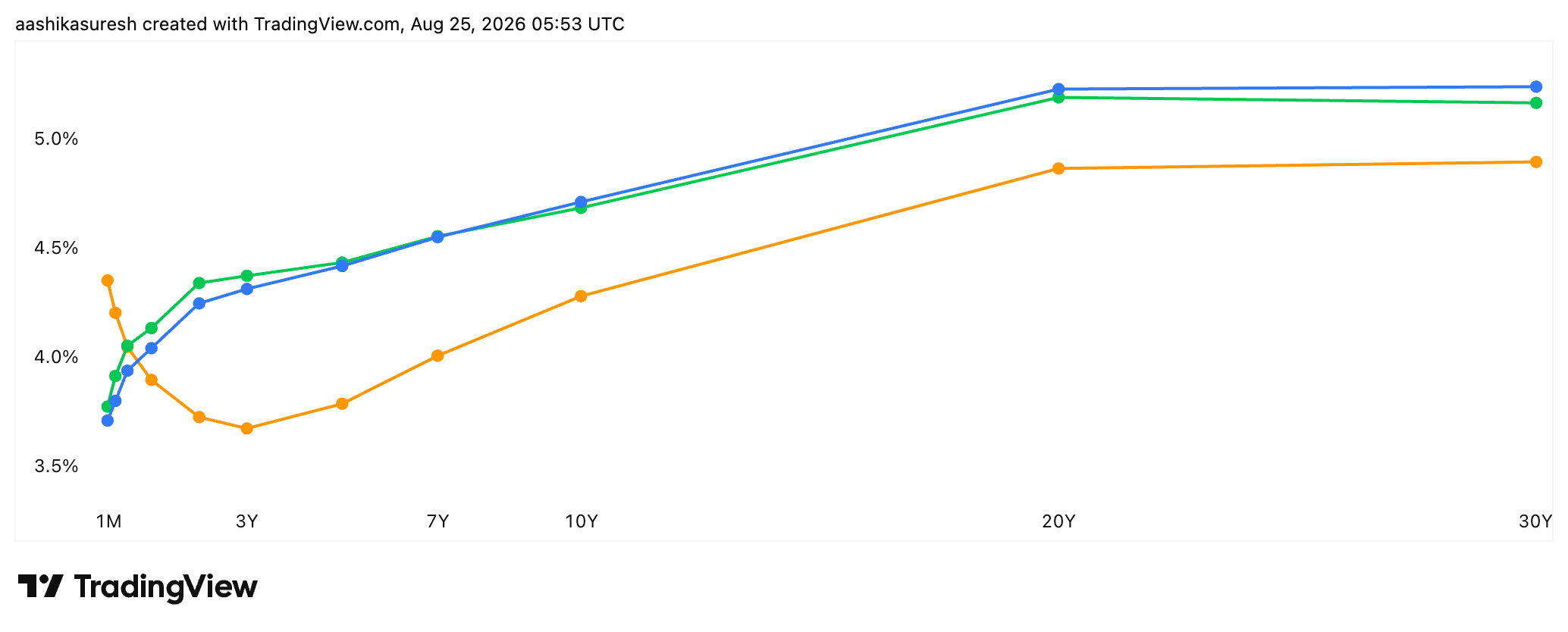
El-Erian said Treasury’s move was tantamount to buying the long end while issuing more debt at the short end to influence yields. “So you end up messing up the short end of the curve because you want to protect the long end of the curve. That's one thing you do,” he said.
Advertisement|Remove ads.
He also said that the move was driven less by economic concerns and more by political and social pressures, particularly rising mortgage and credit-card costs for lower-income households.
While yield-curve control (YCC) can provide short-term relief, he warned it would carry “collateral damage and unintended consequences,” that cannot resolve the longer-term tension between economic growth, AI investment and rising funding costs.
“So whichever way you look, these YCC measures are not a free lunch at all,” he added.
Advertisement|Remove ads.
One Market Commentator Says ‘Don't Fight The Treasury’
Meanwhile, The Kobeissi Letter, which provides commentary on global capital markets, justified the Treasury’s decision as a “historic intervention” amid rising bond yields.
In a post on X, the commentary service noted that despite several announcements by the U.S. Treasury intervention, yields have stayed stubborn.
“The reality is that the Fed cannot cut rates in this environment and the Trump Administration knows this. So, direct bond market intervention is the only solution to drive interest rates and yields lower over the short-run,” it said.
Advertisement|Remove ads.
“Our view? Don't fight the Treasury,” it added.
Bond Markets Did Not Stay Convinced
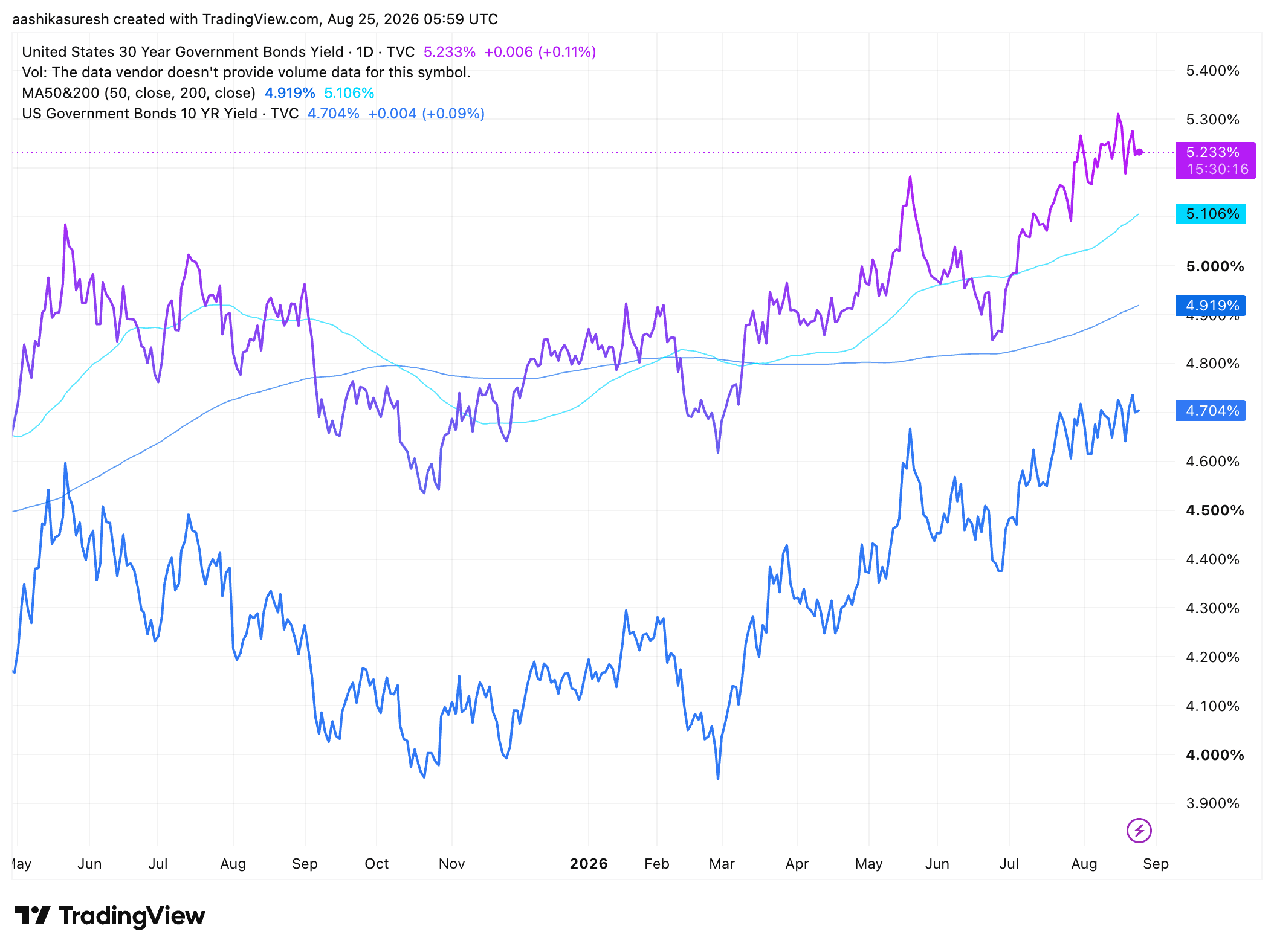
The U.S. 30-Year Treasury yields were trading at 5.238% at the time of writing, edging closer to last week’s highs when it hit 5.34%. Meanwhile, the 10-year Treasury yields were trading at 4.71%, compared to a high of 4.74% last week.
The iShares 10-20 Year Treasury Bond ETF (TLH), that tracks U.S. government bonds with maturity dates between 10 and 20 years, was up 0.04% overnight amid ‘bearish’ sentiment.
Advertisement|Remove ads.
The iShares 20+ Year Treasury Bond ETF (TLT) was down 0.07% amid ‘bullish’ sentiment, while iShares U.S. Treasury Bond ETF (GOVT), which is a basket of debt multiple-term securities issued by the U.S. government, was up 0.27% amid ‘neutral’ sentiment.
Meanwhile, the SPDR S&P 500 ETF (SPY), the Invesco QQQ Trust (QQQ) and the SPDR Dow Jones Industrial Average ETF Trust (DIA) were all edging higher at the time of writing.
Retail Traders Debate Next Move
One user said, “The idea bonds can continue selling off & equities will remain unaffected is delusional. From what I've studied this period does closely resemble the late 90s. Rates can keep going up with stocks for a while but when AI bubble deflates they'll be a huge reversal. $SPY $TLT”
Advertisement|Remove ads.
Another user said, “The federal government won’t be able to do anything about rising yields. I still believe we see the 30 year touch 6+%. Waiting patiently before I begin accumulating TLT again.”
For updates and corrections, email newsroom[at]stocktwits[dot]com.
Comments posted here will also appear on symbol pages.

Latest News
/filters:format(webp)https://news.stocktwits-cdn.com/large_Getty_Images_2189656779_67c7623e40.jpg)
/filters:format(webp)https://news.stocktwits-cdn.com/1707726834303_jpg_11f20a9aa9.webp) Shashank Nayar·40m ago
Shashank Nayar·40m ago/filters:format(webp)https://news.stocktwits-cdn.com/large_Getty_Images_2297721755_0c25dde0a2.jpg) Shashank Nayar·55m ago
Shashank Nayar·55m ago/filters:format(webp)https://news.stocktwits-cdn.com/large_Getty_Images_2300036453_92aab951e8.jpg)
/filters:format(webp)https://news.stocktwits-cdn.com/unnamed_jpg_9dff551b50.webp) Anan Ashraf·1h ago
Anan Ashraf·1h ago/filters:format(webp)https://news.stocktwits-cdn.com/gettyimages_2268540678_612x612_61ca3b12d2.jpg) Anan Ashraf·2h ago
Anan Ashraf·2h ago/filters:format(webp)https://news.stocktwits-cdn.com/large_Getty_Images_2235057703_bae034bb09.jpg) Shashank Nayar·3h ago
Shashank Nayar·3h ago/filters:format(webp)https://news.stocktwits-cdn.com/large_Getty_Images_2231540141_5eb15e6197.jpg) Anan Ashraf·3h ago
Anan Ashraf·3h ago