


Advertisement|Remove ads.
Jamie Dimon Warns Of High Inflation And Interest Rates If US-Israel-Iran War Continues
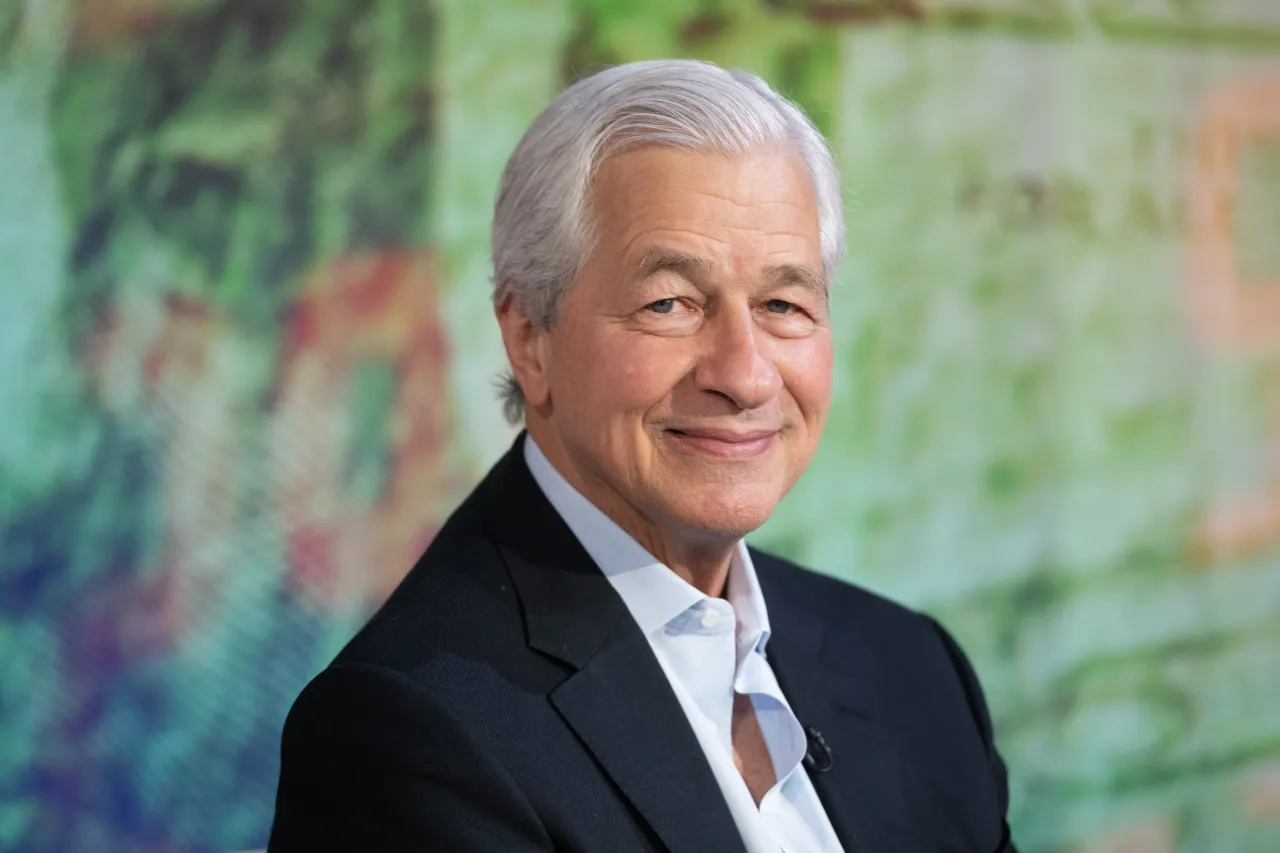


- Higher oil prices are already affecting countries that rely on imports, while disruptions are spreading to sectors like food and agriculture, Dimon said.
- Government debt levels remain high globally and could become a major issue if left unchecked, he added.
- This comes after Donald Trump threatened strikes on Iran’s energy and civilian infrastructure if the Strait of Hormuz was not reopened by Tuesday.
Advertisement|Remove ads.
The escalating U.S.-Israel conflict with Iran could trigger prolonged oil and commodity shocks, keeping inflation elevated and pushing interest rates higher than markets currently expect, warned JPMorgan Chairman and CEO Jamie Dimon in a letter to shareholders on Monday.
The conflict is threatening to reshape global supply chains and intensify existing trade tensions, adding another layer of uncertainty to an already fragile geopolitical environment, Dimon said.
“It is important to note that our economy has been fueled by large amounts of government deficit spending and past stimulus, and that increased expenditure on infrastructure remains a growing need. Now, because of the war in Iran, we additionally face the potential for significant ongoing oil and commodity price shocks, along with the reshaping of global supply chains, which may lead to stickier inflation and ultimately higher interest rates than markets currently expect,” he stated.
Advertisement|Remove ads.
Trump’s New Threat
Dimon’s warning follows U.S. President Donald Trump’s latest warning to Iran, threatening strikes on its energy and civilian infrastructure if the Strait of Hormuz is not reopened by Tuesday.
In an expletive-laden post on Truth Social on Sunday, Trump said “Tuesday will be Power Plant Day, and Bridge Day” in Iran, adding that there would be “nothing like it” if Iran didn’t open the Strait of Hormuz.
However, the U.S. President later told U.S. media that negotiations were underway and a deal could be reached by Monday.
Advertisement|Remove ads.
Global Headwinds Are Rising
Dimon said global risks are rising, driven by geopolitical tensions such as the wars in Ukraine and Iran, which are fueling uncertainty across energy, commodities, and supply chains. Higher oil prices are already affecting countries that rely on imports, and disruptions are spreading to sectors such as food and agriculture.
At the same time, government debt levels remain high globally, he added. While consumer and corporate debt are manageable, rising public debt could become a major issue if left unchecked.
Brent crude futures have surged nearly 54% since the attacks began on Feb. 28, 2026, driven largely by the closure of the Strait of Hormuz, a key route that handles about 20% of global oil shipments.
Advertisement|Remove ads.
“Oil prices are now crossing above $115/barrel in the US. As a result, our models indicate that if current levels are sustained another seven weeks, U.S. CPI inflation will rise to 3.7%,” The Kobeissi Letter said in an X post on Sunday. That would mark the highest inflation level in the U.S. since September 2023.
Last month, the Organization for Economic Co-operation and Development (OECD) said U.S. inflation could rise to about 4.2% in 2026, mainly due to higher energy prices linked to the war in Iran and the impact of tariffs. The group also expects core inflation to come in around 3% in 2026 and ease to about 2.4% in 2027.
Advertisement|Remove ads.
For updates and corrections, email newsroom[at]stocktwits[dot]com.
Comments posted here will also appear on symbol pages.

Latest News
/filters:format(webp)https://news.stocktwits-cdn.com/large_Getty_Images_2187781361_2f00b8c65a.jpg)
/filters:format(webp)https://news.stocktwits-cdn.com/Anushka_Basu_make_me_smile_in_the_picture_b92832aa_af59_4141_aacc_4180d2241ba8_1_2_png_1086e0ed8c.webp) Anushka Basu·24m ago
Anushka Basu·24m ago/filters:format(webp)https://news.stocktwits-cdn.com/large_arthur_hayes_2026_OG_jpg_9f3524f8b1.webp) Anushka Basu·1h ago
Anushka Basu·1h ago/filters:format(webp)https://news.stocktwits-cdn.com/large_Tom_Lee_BMNR_64157a5786.webp) Anushka Basu·3h ago
Anushka Basu·3h ago/filters:format(webp)https://news.stocktwits-cdn.com/large_Getty_Images_2194650023_jpg_2af2244b5a.webp)
/filters:format(webp)https://st-everywhere-cms-prod.s3.us-east-1.amazonaws.com/i_OS_App_Icon_1_8054f2a2fe.png) Stocktwits News Desk·3h ago
Stocktwits News Desk·3h ago/filters:format(webp)https://news.stocktwits-cdn.com/large_Getty_Images_1569415620_1ad6cfc5c6.jpg) Anushka Basu·5h ago
Anushka Basu·5h ago/filters:format(webp)https://news.stocktwits-cdn.com/large_Getty_Images_2295245703_1237d2403d.jpg) Stocktwits News Desk·5h ago
Stocktwits News Desk·5h ago