


Advertisement|Remove ads.
Hassett Says Fed Can Watch Inflation Numbers And Wait Before Rate Action: 'This Is About The Strongest Market Of My Lifetime'
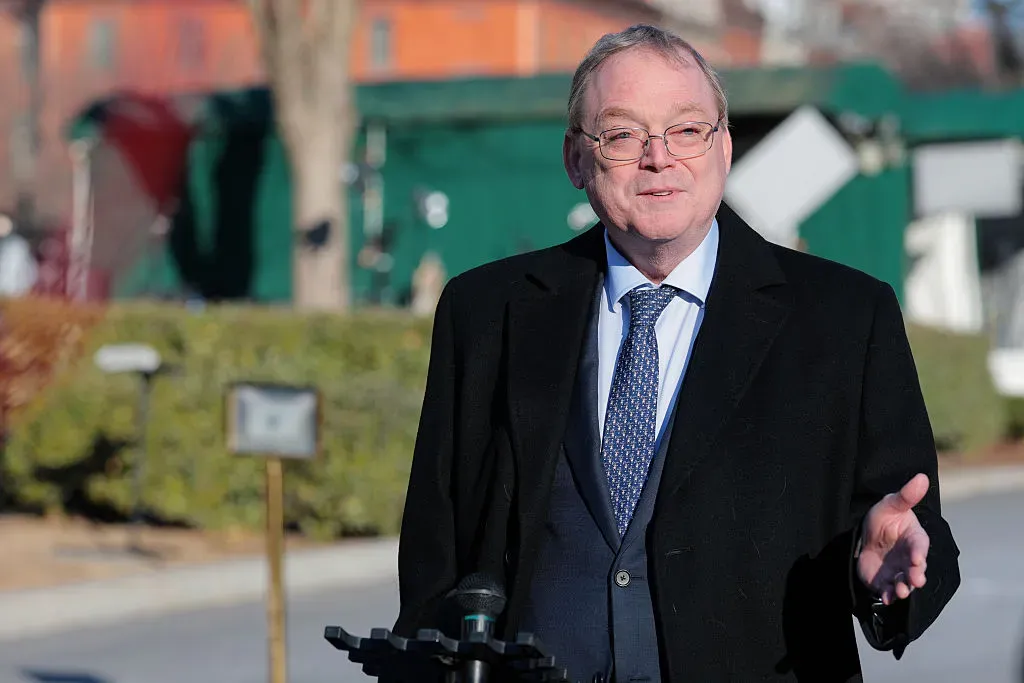


- Hassett expressed optimism about the state of the U.S. economy following the release of the May jobs report.
- His comments come after the Bureau of Labor Statistics released data showing that the U.S. economy added 172,000 jobs in May, blowing past Wall Street estimates of 80,000 additions.
- Hassett also reassured that the U.S. has ample oil reserves amid concerns from executives of Chevron and Exxon Mobil about crude oil prices topping $150 a barrel.
Advertisement|Remove ads.
White House National Economic Council Director Kevin Hassett on Friday argued that the Federal Reserve can watch inflation and wait before taking a call on the policy direction ahead.
During an interview with CNBC, Hassett said that the second consecutive month of over 170,000 nonfarm jobs additions shows that President Donald Trump’s supply-side policies are working well.
“It’s a supply-side driven job market boom, which I think means the Fed can watch the inflation numbers and wait a while before it does anything about it,” he said.
Advertisement|Remove ads.
Hassett added that the current job growth is not the result of an inflation-driven surge. “This is about the strongest market of my lifetime,” he said.
The NEC Director’s comments come after the Bureau of Labor Statistics released data showing that the U.S. economy added 172,000 jobs in May, blowing past Wall Street estimates of 80,000 additions, according to Dow Jones data cited by MarketWatch.
May Jobs Report ‘Great News’ For Ordinary Workers, Says Hassett
Hassett expressed optimism about the state of the U.S. economy following the release of the May jobs report.
Advertisement|Remove ads.
“The aggregate number is through-the-roof good. When you get growth like this, GDP, we’re now at 4%, jobs… 170,000, unemployment rate not going up, then that’s great news for ordinary workers,” he said.
Hassett defended his statement that the Fed should wait and watch before deciding its policy direction, stating that the new Fed Chair, Kevin Warsh, will have to convince his colleagues with a sound macroeconomic argument before taking the call.
Hassett Says US Has Ample Oil Reserves
Hassett also reassured that the U.S. has ample oil reserves amid concerns from executives of Chevron Corp. (CVX) and Exxon Mobil Corp. (XOM) about crude oil prices topping $150 a barrel.
Advertisement|Remove ads.
“I’d say we’re about a billion barrels short compared to where we should have been if the straits had been open the whole time, but that’s something that can be refilled if we can get the strait to open,” he added.
Hassett noted that the oil inventory problem won’t arise in June, while stating that it is further down the road.
U.S. West Texas Intermediate (WTI) crude futures expiring in July were down 1.91%, hovering around $91.26 a barrel. Brent crude futures expiring in August fell 1.39% to hover around $93.71 a barrel.
Advertisement|Remove ads.
The United States Oil Fund ETF (USO) was down about 2% at the time of writing, while the ProShares Ultra Bloomberg Crude Oil ETF (UCO) fell over 3%.
U.S. equities declined in Friday’s opening trade. At the time of writing, the SPDR S&P 500 ETF (SPY), which tracks the S&P 500 index, was down 0.95%; the Invesco QQQ Trust ETF (QQQ) fell 2.03%; and the SPDR Dow Jones Industrial Average ETF Trust (DIA) declined 0.19%. Retail sentiment on Stocktwits regarding the S&P 500 ETF was in the ‘bullish’ territory.
Advertisement|Remove ads.
For updates and corrections, email newsroom[at]stocktwits[dot]com.
Comments posted here will also appear on symbol pages.

Latest News
/filters:format(webp)https://news.stocktwits-cdn.com/large_cathiewood_OG_jpg_a3c8fddb3f.webp)
/filters:format(webp)https://st-everywhere-cms-prod.s3.us-east-1.amazonaws.com/i_OS_App_Icon_1_8054f2a2fe.png) Stocktwits News Desk·5m ago
Stocktwits News Desk·5m ago/filters:format(webp)https://news.stocktwits-cdn.com/Getty_Images_2237643016_jpg_17a9a7eb9d.webp) Stocktwits News Desk·2h ago
Stocktwits News Desk·2h ago/filters:format(webp)https://news.stocktwits-cdn.com/large_trump_putin_jpg_eb42a46830.webp) Stocktwits News Desk·2h ago
Stocktwits News Desk·2h ago/filters:format(webp)https://news.stocktwits-cdn.com/large_Getty_Images_2286326398_84fc8215c8.jpg)
/filters:format(webp)https://news.stocktwits-cdn.com/Prabhjote_DP_67623a9828.jpg) Prabhjote Gill·3h ago
Prabhjote Gill·3h ago/filters:format(webp)https://news.stocktwits-cdn.com/large_Getty_Images_2162497795_jpg_c07f3aa255.webp)
/filters:format(webp)https://news.stocktwits-cdn.com/vivekkrishnanphotography_58_jpg_0e45f66a62.webp) Arnab Paul·4h ago
Arnab Paul·4h ago/filters:format(webp)https://news.stocktwits-cdn.com/large_Getty_Images_2250139725_0ccee3701a.jpg)
/filters:format(webp)https://news.stocktwits-cdn.com/unnamed_jpg_9dff551b50.webp) Anan Ashraf·5h ago
Anan Ashraf·5h ago