


Advertisement|Remove ads.
Moffett Says SpaceX Won’t Threaten AT&T, Verizon Or T-Mobile—It’s Competing With CoreWeave Instead


- “The obvious question is why,” Moffett continued.
- Moffett noted SpaceX’s present business is more focused on renting compute.
- The company’s rival now is “arguably somebody like CoreWeave” and not telecom operators, he added.
Advertisement|Remove ads.
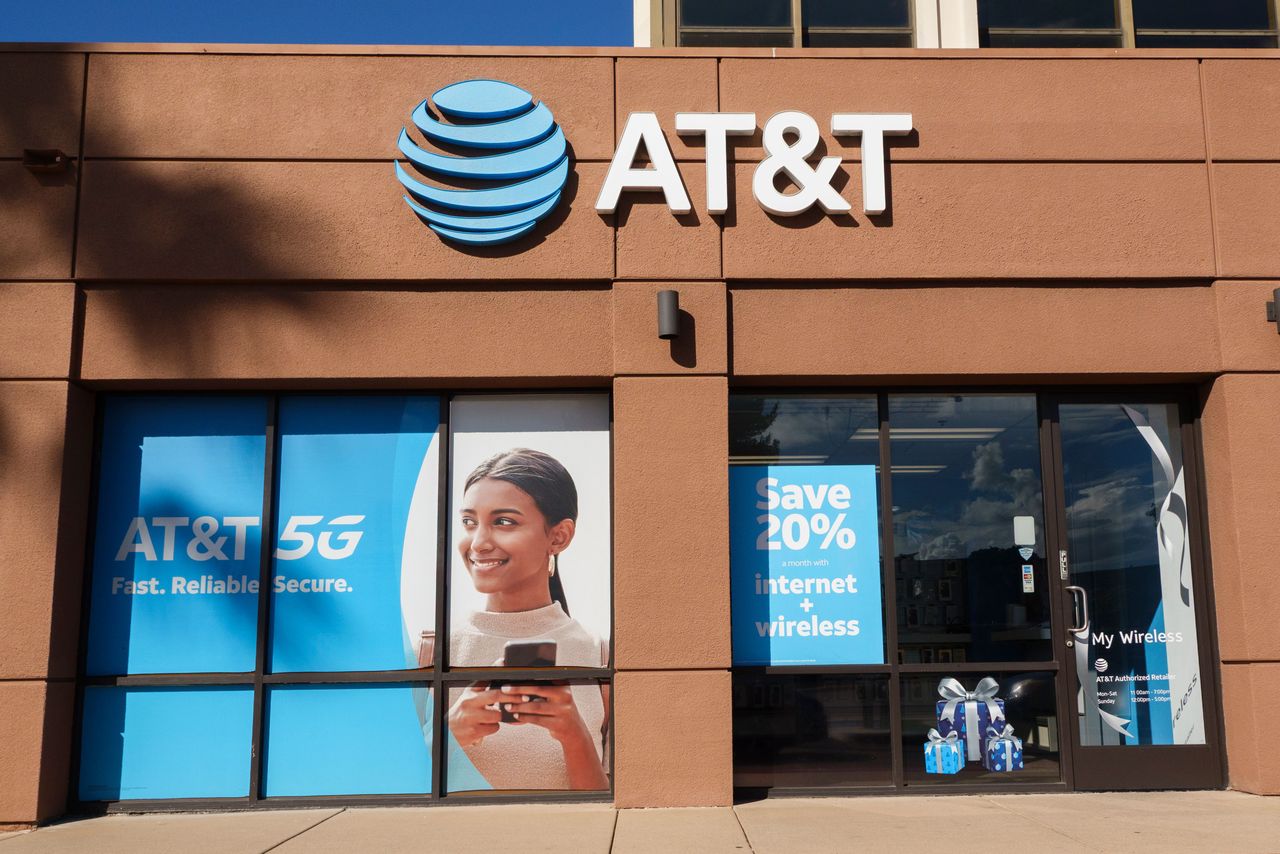
Craig Moffett of MoffettNathanson on Friday pushed back against the idea that SpaceX poses a meaningful competitive threat to AT&T, Verizon, and T-Mobile in terrestrial wireless, instead framing the company as more of a rival to CoreWeave (CRWV), given its current focus on renting compute.
“I really struggle with the narrative that SpaceX is going to be a player in the terrestrial wireless business,” he said in an appearance on CNBC. Moffett argued that the company’s satellite advantage “isn’t really worth that much,” so any serious push would require building a ground network—an effort he thinks will give “much lower returns on capital” as compared to SpaceX’s efforts into sectors such as building out terrestrial data centers.

“The obvious question is why,” Moffett continued. “It’s not [a] business that generates particularly good returns.” He noted SpaceX already faces “close to a trillion dollars of capital projects,” including orbital and terrestrial data centers and a Starbase in Louisiana for Starship development. Inserting a “me-too terrestrial network” into that list, he said, makes little sense to him.
Advertisement|Remove ads.
“I don’t see them as terribly threatening, but I also don’t see it as terribly attractive,” he said.
The Real Competition Is In Cloud Compute, He Says
Moffett noted SpaceX’s present business as more focused on renting compute. “SpaceX is not really a space company today. Space is a really important potential business for them, but the core business they’re in is a neo cloud. They are simply a neo cloud. Their closest competitor is arguably somebody like CoreWeave,” he said.
Revenue growth is currently driven by renting compute capacity rather than by proprietary space or wireless services, he noted. SpaceX’s AI efforts such as its chatbot Grok “hasn’t gotten enough traction,” he said, forcing the company to rent its compute outside.
Advertisement|Remove ads.
“Is faster growth actually a sign of a good thing or a bad thing for SpaceX? Because it's great to be able to rent your capacity, but it only means that you're not able to use it yourself, and that's probably a sign that Grok is not getting traction with users yet,” he said.
Musk’s Own Concerns About Renting Compute
In its third-quarter (Q3) 2026 results reported in late October, SpaceX’s Super Intelligence (AI) segment generated $7.56 billion in revenue, up roughly 830% year-over-year and accounting for about 52% of the company’s total $14.6 billion in sales, overtaking Starlink for the first time. A bulk of that revenue came from the company renting compute capacity to rivals such as Claude parent Anthropic (ANT) and Alphabet (GOOG, GOOGL), with smaller contributions from X advertising, Grok usage, and others.
The New York Times reported on Monday that Musk told employees that SpaceX is falling behind in AI development and is frustrated by the same.
Advertisement|Remove ads.
Musk even reportedly changed the name of a group chat with employees temporarily to “Sell compute because we can’t compete” in August.
Meanwhile, Verizon Eyes Deal To Expand Network, SpaceX Eyes Anterix Licenses
Earlier today, Bloomberg reported that SpaceX is eyeing an acquisition of the New Jersey-based Anterix’s s 900 MHz licenses to support expansion of its direct-to-device satellite service. The company could also consider NextNav’s 900MHz licenses instead, the report noted.
The move is in sync with the company’s efforts at trying to put together its own retail wireless network and compete with big mobile network operators like Verizon (VZ), T-Mobile US (TMUS), and AT&T Mobility (T). The company previously acquired a significant tranche of spectrum from EchoStar Corp. in 2025 and 800 MHz licenses from Grain Management in October.
Advertisement|Remove ads.
Separately, The Financial Times reported that Verizon is in talks over a roughly $6 billion deal to buy fibre-optic broadband operator Fidium to boost its network availability. The deal talks are ongoing and come on the heels of the company buying Frontier Communications earlier this year. A potential deal may be agreed in coming weeks, the report said.
How Did SPCX Retail Traders React?
On Stocktwits, retail sentiment around SPCX stayed within the 'bullish' territory over the past 24 hours, while message volume fell from 'high' to 'normal' levels.
SPCX stock closed on Friday nearly 5% higher at about $134, below its June IPO price of $135.
Advertisement|Remove ads.
Read More: Tom Lee Says Market Tests Traders Vs. Investors: Now Is the Best Time In 18 Months To Buy Stocks
For updates and corrections, email newsroom[at]stocktwits[dot]com.

Latest News
 Anan Ashraf·11m ago

 Shashank Nayar·1h ago
 Anan Ashraf·1h ago
 Shashank Nayar·2h ago
 Anan Ashraf·3h ago
 Shashank Nayar·4h ago
Comments posted here will also appear on symbol pages.