


Advertisement|Remove ads.
MP, CRML, TMC, UAMY Stocks In Focus: Goldman Sachs Sees AI Driving A Global ‘Mine-To-Magnet’ Investment Cycle
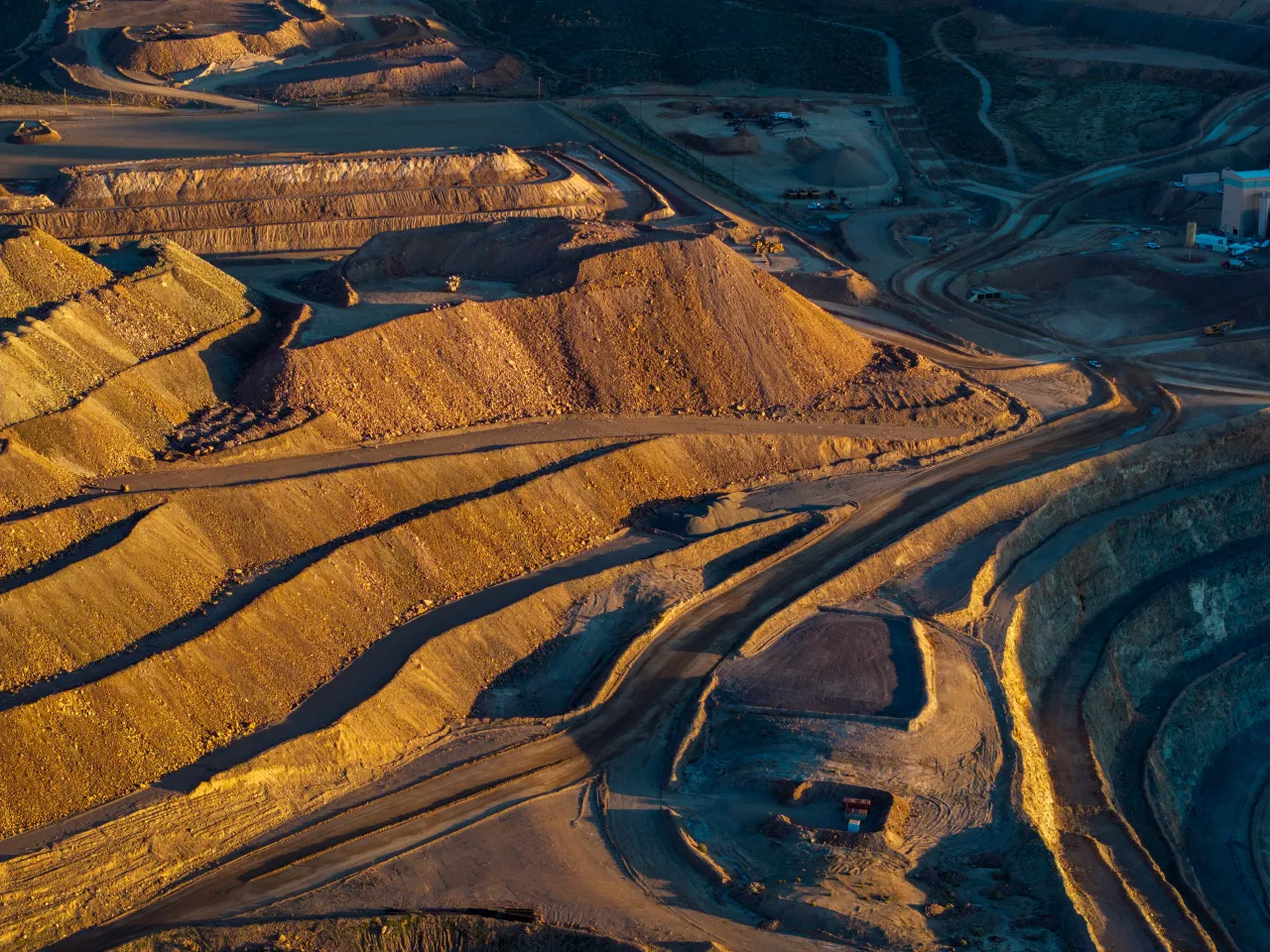


- Goldman Sachs said rising AI, EV and energy infrastructure demand is reshaping the mining sector, increasing interest in critical minerals.
- Companies are pursuing deals and investors are focusing on the resources as key assets for technology growth.
- Goldman Sachs said companies are adopting “mine-to-magnet” strategies to integrate mineral production and reduce supply chain risks.
Advertisement|Remove ads.
Critical minerals stocks, including MP Materials (MP), Critical Metals Corp. (CRML), TMC the metals company (TMC) and U.S. Antimony (UAMY), are in focus as Goldman Sachs highlights how surging demand for copper, rare earths and strategic materials driven by AI infrastructure expansion and energy security priorities is accelerating a new “mine-to-magnet” investment cycle.
The stocks edged higher between 0.02% and 1% in Friday’s premarket.

Critical Minerals Draw Corporate Buyers As AI Demand Balloons
In its latest research note, Goldman Sachs said the race to secure critical minerals is reshaping the mining industry as AI, electric vehicles and energy infrastructure projects drive demand for materials such as copper, lithium and rare earth elements.
Advertisement|Remove ads.
Companies and investors are increasingly viewing these resources as essential assets tied to technology growth and supply-chain security, the firm added.
Deal activity across the sector is increasing as mining companies pursue acquisitions, partnerships and new financing structures.
Andrew Timbers and Nicholas Smith, co-heads of metals and mining in the Americas at Goldman Sachs Banking & Markets, said critical minerals have become a strategic focus because they connect industrial growth, AI-related electricity demand and geopolitical concerns.
Advertisement|Remove ads.
“Institutional investors in the US now have much greater awareness and knowledge of mining companies,” said Smith. “There is a concentrated focus on unlocking tremendous value from these investments.”
Rare Earth Supply Chains Shift
Goldman Sachs said companies are moving toward a “mine-to-magnet” approach that combines mining, processing, refining and magnet production under one integrated system. The strategy aims to reduce dependence on concentrated supply chains and capture more value beyond raw material extraction. This is driving more mergers, partnerships and government-backed projects.
U.S. officials are becoming more active participants in the critical minerals market by offering financing support, strategic investments and other tools designed to encourage domestic production. This involvement is intended to reduce supply risks and attract private capital to expensive, long-term projects, Goldman Sachs added.
Advertisement|Remove ads.
The analysts said the government is not directly paying for these acquisitions. Instead, federal agencies are supporting companies by offering low-cost loans and other funding options to help finance expansion projects after deals are completed.
Last week, President Donald Trump signed a new defense supply chain order that encourages U.S. defense contractors to rely more on domestic and allied suppliers for key materials.
The policy aims to reduce dependence on foreign sources, especially China, which dominates the rare earth market. Right now, China is the world's leading supplier of rare earth minerals, producing about 70% of global output and handling around 90% of the world's rare earth processing and refining.
Advertisement|Remove ads.
U.S. Presses China On Rare Earth Commitments Ahead Of Trump-Xi Meeting
Also on Thursday, U.S. Treasury Secretary Scott Bessent said that he, along with the U.S. Trade Representative Jamieson Greer, has urged China to follow through on agreements involving rare earth supplies and agricultural purchases during trade talks ahead of Trump-Xi meeting in September.
“In our discussion, I emphasized that we expect Beijing to fully meet its commitments on rare earths and U.S. agricultural products. We also discussed implementation of the Trade and Investment Boards as a mechanism to secure concrete progress toward a more balanced, fair, and constructive U.S.-China economic relationship,” Bessent said in a X post.
Critical Metals has been expanding its position in the rare earth sector through its Tanbreez Project in Greenland, one of the company’s flagship assets. MP Materials, which operates a major U.S. rare earth production platform, continues expanding beyond mining into refining and magnet manufacturing.
Advertisement|Remove ads.
TMC the Metals Company focuses on extracting battery metals like nickel, copper, cobalt and manganese from deep-sea mineral deposits, while U.S. Antimony processes and supplies antimony products from land-based operations.
So far this year MP, CRML and TMC stocks have slumped between 17% and 41%, while UAMY stock has gained nearly 4%.
Advertisement|Remove ads.
For updates and corrections, email newsroom[at]stocktwits[dot]com.
Comments posted here will also appear on symbol pages.

Latest News
/filters:format(webp)https://news.stocktwits-cdn.com/large_Meta_jpg_0f17dacb20.webp)
/filters:format(webp)https://news.stocktwits-cdn.com/shivani_photo_jpg_dd6e01afa4.webp) Shivani Kumaresan·9m ago
Shivani Kumaresan·9m ago/filters:format(webp)https://news.stocktwits-cdn.com/large_Getty_Images_2301241048_efc5b32b0a.jpg)
/filters:format(webp)https://news.stocktwits-cdn.com/IMG_8805_JPG_6768aaedc3.webp) Deepti Sri·21m ago
Deepti Sri·21m ago/filters:format(webp)https://news.stocktwits-cdn.com/large_william_li_nio_jpg_c26eaad557.webp) Deepti Sri·34m ago
Deepti Sri·34m ago/filters:format(webp)https://news.stocktwits-cdn.com/large_Getty_Images_2206295289_jpg_ad3874bcd3.webp) Shivani Kumaresan·1h ago
Shivani Kumaresan·1h ago/filters:format(webp)https://news.stocktwits-cdn.com/large_rocket_lab_peter_beck_jpg_4d8fc790a1.webp) Deepti Sri·2h ago
Deepti Sri·2h ago/filters:format(webp)https://news.stocktwits-cdn.com/large_Getty_Images_2272104605_jpg_736f4d886d.webp) Shivani Kumaresan·3h ago
Shivani Kumaresan·3h ago