


Advertisement|Remove ads.
Nvidia’s Turbulent Week Exposes Bigger Risks For Markets, El-Erian Warns — ‘Incredible Volatility’
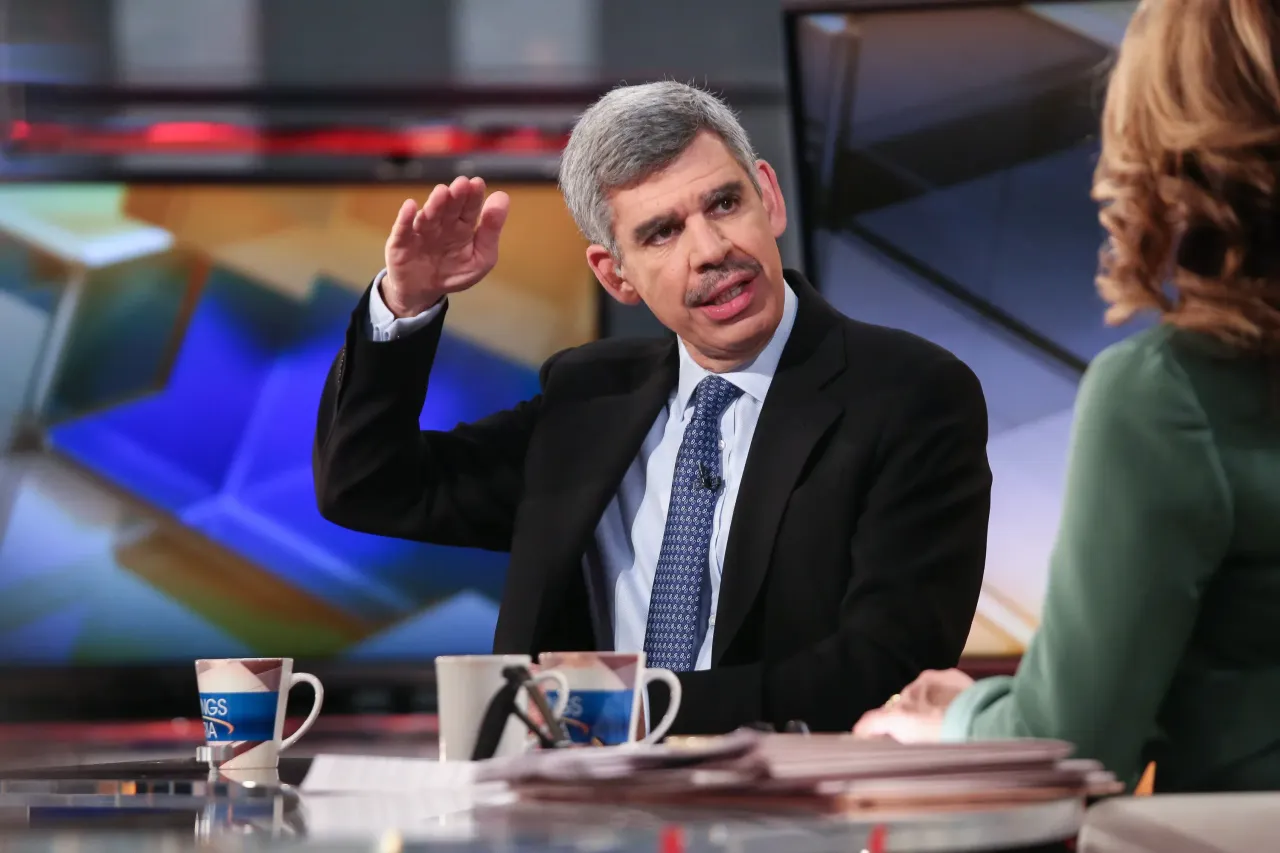


- El-Erian noted that including the previous Friday’s sell-off, the Nasdaq’s cumulative upward and downward movements over the brief period amounted to roughly 25%.
- He questioned whether such extreme price action represented healthy price discovery or an equity market struggling to find a stable valuation anchor.
- El-Erian also warned that the Nvidia episode raised questions extending well beyond executive and boardroom dynamics.
Advertisement|Remove ads.
Nvidia Corp.’s (NVDA) rebound last week may have helped Wall Street stage a comeback, but the market turbulence surrounding the AI chipmaker has raised bigger questions about corporate governance, the AI boom and the health of the global economy, according to economist and Allianz Chief Economic Adviser Mohamed El-Erian.
El-Erian said the latest bout of volatility offered a glimpse into several risks investors will have to navigate in the weeks and months ahead, with a packed economic calendar adding to the uncertainty.
Nvidia shares gained nearly 1% in Friday’s regular session, but edged lower by 0.5% during the after-hours trade.
Advertisement|Remove ads.
El-Erian Warns Nvidia Turmoil Is Exposing Bigger Market Risks
El-Erian said the dramatic developments surrounding Nvidia sent markets on a roller coaster, with the Nasdaq staging a sharp recovery following Jensen Huang’s return before experiencing further swings.
“This ultimately good week for tech should not mask the incredible volatility of the journey,” he added.
The index ultimately finished the week higher, but the journey was anything but smooth. El-Erian noted that including the previous Friday’s sell-off, the Nasdaq’s cumulative upward and downward movements over the brief period amounted to roughly 25%.
Advertisement|Remove ads.
He questioned whether such extreme price action represented healthy price discovery or an equity market struggling to find a stable valuation anchor.
El-Erian also warned that the Nvidia episode raised questions extending well beyond executive and boardroom dynamics. These include corporate governance, the relationship between the Trump administration and the technology industry, and whether Nvidia can sustain its unique position as the AI ecosystem's de facto central bank.
The economist also said that the sustainability of massive AI infrastructure spending plans also remains a major concern, particularly as national security considerations, export controls, geopolitics and U.S. industrial policy increasingly shape the sector.
Advertisement|Remove ads.
Meanwhile, other market indicators painted a more cautious picture. Sovereign bond yields declined, commodities came under pressure, and copper prices slid, while crude oil headed for its worst monthly performance since the pandemic era.
El-Erian warned that investors should pay attention to the possibility of negative market dynamics spilling over into the real economy, turning what he called "bad technicals" into "bad fundamentals."
Global Economy Faces A Critical Test, Cautions El-Erian
Despite the concerning market signals, U.S. economic data continued to show resilience, including an upward revision to third-quarter GDP growth to an annualized rate of 4.3% from the previous estimate of 3.4%.
Advertisement|Remove ads.
However, inflation remains a challenge, with October's personal consumption expenditures (PCE) report showing annual headline inflation at 3.8% and core inflation at 3.3%, reinforcing expectations of another 25-basis-point Federal Reserve rate hike at its upcoming meeting.
According to the CME FedWatch tool, the odds of a 25-basis-point rate hike in December stood at 98.4% at the time of writing.
Looking ahead, El-Erian identified labor market data as the biggest focus for investors, with November's nonfarm payrolls report due Friday.
Advertisement|Remove ads.
What Retail Investors Think About NVDA Stock
Retail sentiment on Stocktwits around Nvidia trended in the ‘bullish’ territory at the time of writing.
NVDA stock is down 19% year-to-date and 17% over the past 12 months. The S&P 500 ETF (SPY) is up 7% over the past 12 months, while the Invesco QQQ Trust (QQQ) is up 6%.
Also See: Iran Used SpaceX's Starlink To Help Attack US Forces, Says Report: Elon Musk Was 'Fuming'
Advertisement|Remove ads.
For updates and corrections, email newsroom[at]stocktwits[dot]com.

Latest News
 Stocktwits News Desk·9m ago
 Stocktwits News Desk·1h ago
 Stocktwits News Desk·2h ago

 Anushka Basu·2h ago
 Anushka Basu·17h ago

 Prabhjote Gill·18h ago
Comments posted here will also appear on symbol pages.