


Advertisement|Remove ads.
October Fed Rate Hike Odds Jump To Nearly 70% As Fed's Barr Says More Tightening Is 'Likely'
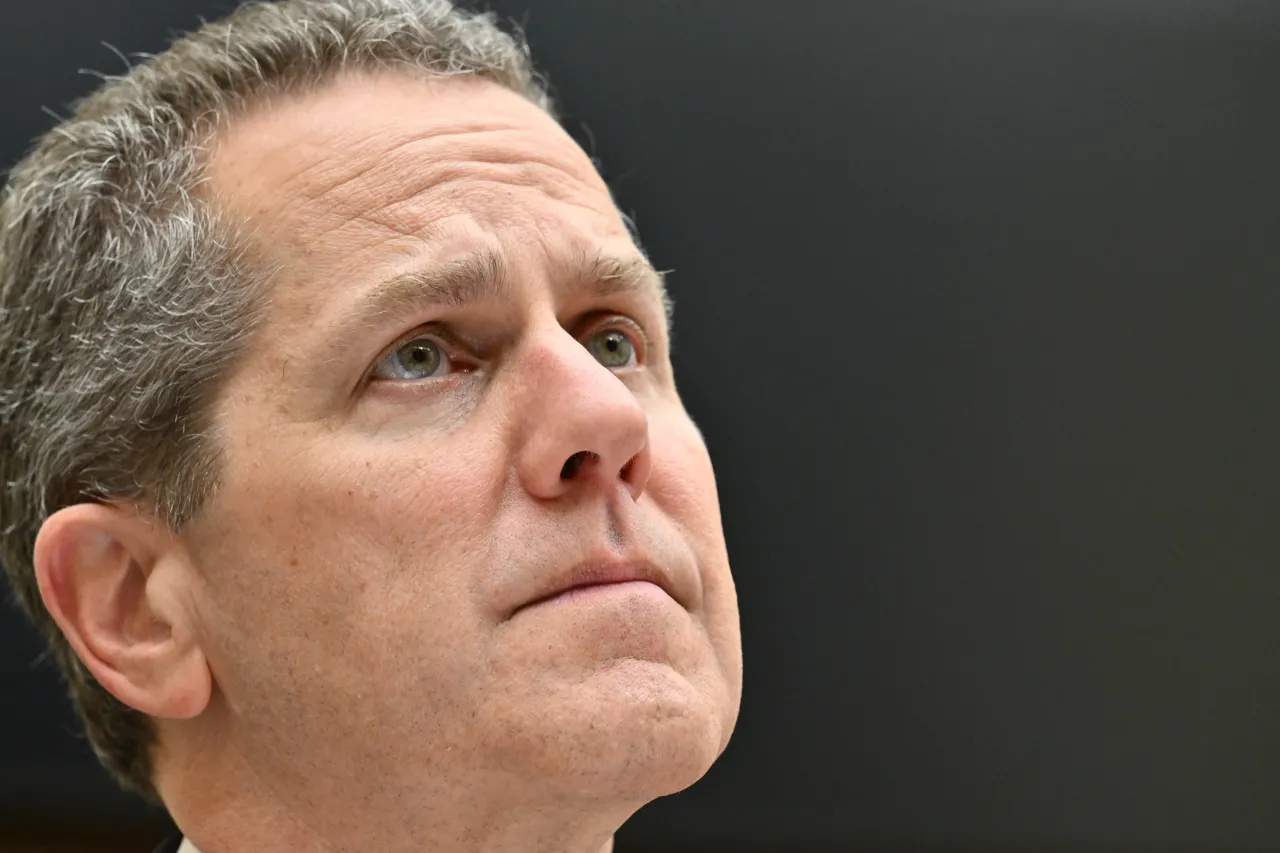


- Fed Governor Michael Barr noted that the U.S. economy has experienced “a series of shocks over the past year and a half,” including tariffs, the conflict in the Middle East and continued disruptions from Russia's war on Ukraine.
- He said that these shocks have contributed to upward price pressures.
- The S&P Global on Wednesday released its flash U.S. Composite PMI Output Index, which increased to 58.4 in Sept., the highest level since July 2021.
Advertisement|Remove ads.
Markets are anticipating another rate hike from the Federal Reserve in October after fresh economic data from S&P Global on Wednesday showed growing inflation pressures, while a top Fed official noted risks to achieving the 2% inflation target.
Fed Governor Michael Barr said at a housing conference in Chicago, "In my base case, further policy adjustments are likely to be needed to ensure inflation comes down to target in a timely fashion."
Barr Says Fed Was 'Out Of Position'
Meanwhile, according to data from the CME FedWatch tool, the probability of the central bank hiking benchmark interest rates by another 25 basis points has reached nearly 70%, up from 8.8% a month ago.
Advertisement|Remove ads.
Barr noted that the U.S. economy has experienced “a series of shocks over the past year and a half,” including tariffs, the conflict in the Middle East and continued disruptions from Russia's war on Ukraine. He also highlighted the recent surge in investment demand to support the artificial intelligence (AI) buildout. “These shocks have contributed to upward price pressures,” he said.
“Economic growth is strong and the labor market is solid, but inflation is above our 2 percent target and not clearly trending toward target in a timely way. Moreover, risks to achieving our inflation target have increased, while risks to the labor market have receded. We needed to recalibrate monetary policy to reflect the balance of risks to our mandate goals,” Barr added.
“The FOMC took important action to that end last week by increasing the policy rate, which I supported. In my view, given changes to the economy, we were out of position, and we made an adjustment in the right direction,” he said.
Advertisement|Remove ads.
The Fed hiked key interest rates to a target range of 3.75% to 4.00% in its September meeting, the first hike in over three years, citing inflation concerns.
Higher PMI Output Index Stokes Inflation Concerns
S&P Global released its flash U.S. Composite PMI Output Index on Wednesday, which tracks the manufacturing and services sectors. For September, it rose to 58.4, the highest level since July 2021, up from 56.0 in Aug.
Chris Williamson, chief business economist at S&P Global Market Intelligence, said the month's jump in business activity was the largest since early 2015. But he added that it came alongside some of the most severe supply chain bottlenecks in the survey's nearly two-decade history, excluding the pandemic.
Advertisement|Remove ads.
“Firms’ input costs have meanwhile jumped in September at the steepest rate for four years, with fuel and transport costs spiking higher thanks to the rise in oil prices seen during the month, which will add further to the upward pressure on selling prices and inflation in the coming months,” he said.
How Markets Are Reacting To Bond Yield Surge
On Wednesday, yields on 10-year Treasury bonds surged to close at 5.11%, clocking their highest level since July 2007, as inflation concerns continued to mount. At the time of writing, the 10-year Treasury Yield was trading at 5.112%.
Among ETFs tracking benchmark indexes, the SPDR S&P 500 ETF (SPY) was down 0.08%, and the Invesco QQQ Trust (QQQ) lost 0.07% amid ‘bullish’ sentiment.
Advertisement|Remove ads.
One user said, “$SPY will price in to many rate hikes soon.”
The SPDR Dow Jones Industrial Average ETF Trust (DIA) traded 0.10% lower amid ‘neutral’ sentiment.
Meanwhile, the iShares 20+ Year Treasury Bond ETF (TLT) was down 0.09% amid ‘neutral’ sentiment.
Advertisement|Remove ads.
Another user said, “$SPY $TLT Prepare for further rate hikes.”
For updates and corrections, email newsroom[at]stocktwits[dot]com.
Comments posted here will also appear on symbol pages.

Latest News
/filters:format(webp)https://news.stocktwits-cdn.com/large_verastem_jpg_8ed70d9d9a.webp)
/filters:format(webp)https://news.stocktwits-cdn.com/unnamed_jpg_9dff551b50.webp) Anan Ashraf·40m ago
Anan Ashraf·40m ago/filters:format(webp)https://news.stocktwits-cdn.com/large_Getty_Images_2296215726_e82f86b85a.jpg)
/filters:format(webp)https://news.stocktwits-cdn.com/1707726834303_jpg_11f20a9aa9.webp) Shashank Nayar·1h ago
Shashank Nayar·1h ago/filters:format(webp)https://news.stocktwits-cdn.com/large_Getty_Images_2219723511_103fa4d061.jpg) Anan Ashraf·2h ago
Anan Ashraf·2h ago/filters:format(webp)https://news.stocktwits-cdn.com/large_Getty_Images_2277830109_jpg_8566757c70.webp) Shashank Nayar·3h ago
Shashank Nayar·3h ago/filters:format(webp)https://news.stocktwits-cdn.com/large_Getty_Images_1826874253_91fc8db60b.jpg)
/filters:format(webp)https://news.stocktwits-cdn.com/vivekkrishnanphotography_58_jpg_0e45f66a62.webp) Arnab Paul·4h ago
Arnab Paul·4h ago/filters:format(webp)https://news.stocktwits-cdn.com/large_Boeing_jpg_48e7f3f6e3.webp)
/filters:format(webp)https://news.stocktwits-cdn.com/Heera_1_1c30cb0170.PNG) Heera Hari·4h ago
Heera Hari·4h ago