


Advertisement|Remove ads.
OpenAI's First Hardware Product Is An AI Speaker? Report Reveals Details Amid Apple Lawsuit
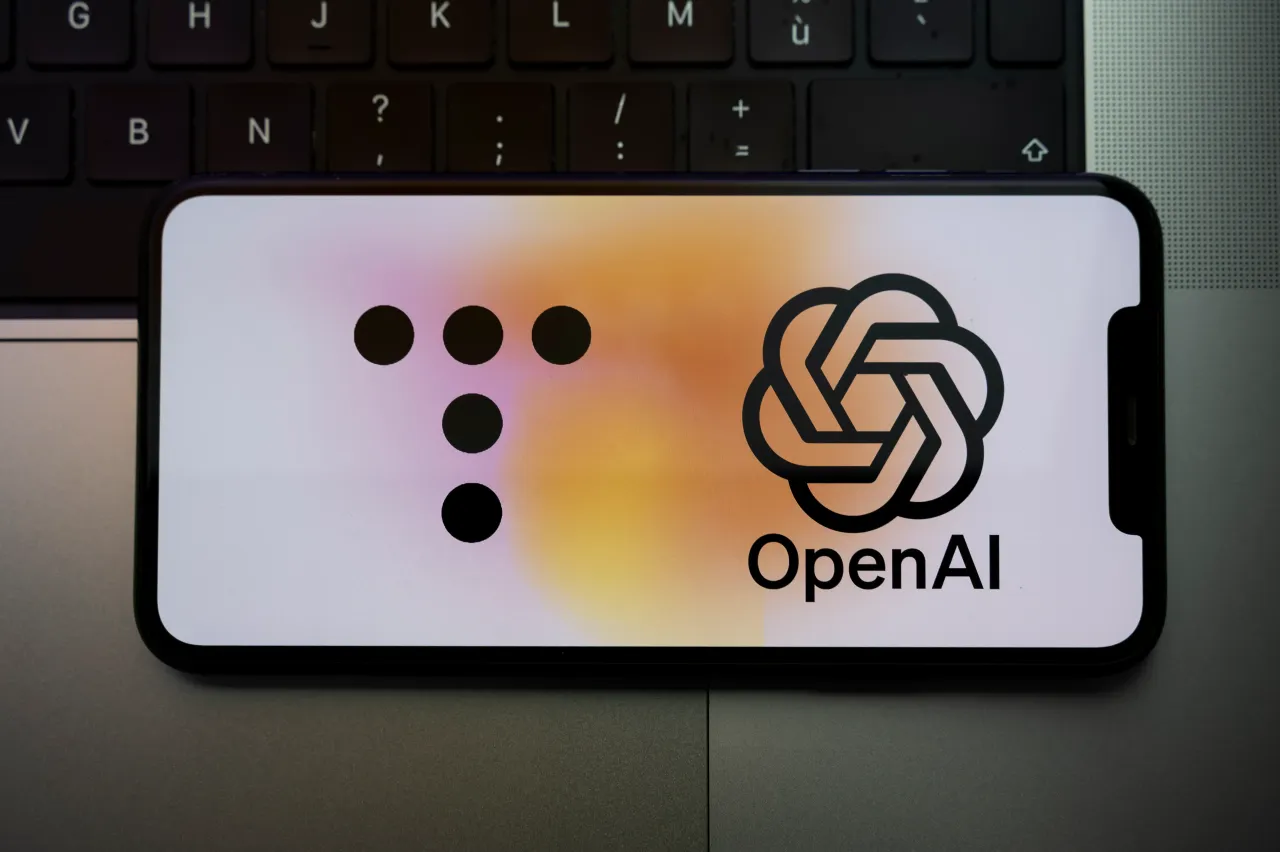


- Apple slapped OpenAI with a lawsuit last week, alleging that it used Apple’s trade secret to accelerate its hardware products business.
- Bloomberg reported that the rumored AI speaker would become increasingly personalized over time and also serve as a hub for controlling smart-home devices.
- OpenAI and its rival Anthropic confidentially filed paperwork for their IPO last month.
Advertisement|Remove ads.
OpenAI is reportedly building a smart speaker that would serve as an AI companion and hub for smart homes, Bloomberg reported on Tuesday, citing people familiar with the matter.
The product is expected to be OpenAI’s first physical AI device and a crucial milestone as the company moves forward with its plans for an initial public offering.
The report, which details capabilities and OpenAI’s hardware strategy, comes just as the company is hit with a major lawsuit from Apple.
Advertisement|Remove ads.
Apple Lawsuit
In a suit filed in California last week, Apple has alleged that OpenAI used trade secrets to accelerate development of devices as part of a co-ordinated campaign led by Tang Tan, a 25-year Apple veteran who joined OpenAI as its chief hardware officer last year.
OpenAI has hired more than 400 other people from Apple, according to the lawsuit. OpenAI has refuted the trade secrets theft claims, stating, “While we take these allegations seriously, we’re not aware of any evidence that this complaint has merit.”
It added that it believes “in fair competition and allowing people the freedom to work wherever they choose” and that it is “focused on building innovative technology that empowers people everywhere.”
Advertisement|Remove ads.
OpenAI AI Device’s Details
The AI speaker is designed to become increasingly personalized and proactive as it gains a deeper understanding of its owner over time, and its defining feature will be its personality and ability to connect on a humanlike level with users, according to the report.
It will help control smart-home appliances, play media, answer questions, respond to messages and tap into the range of capabilities offered by OpenAI’s ChatGPT. Shares of speaker maker Sonos declined over 3% overnight after the report.
Though Apple sells the HomePod and HomePod mini smart speakers, OpenAI doesn’t see them as comparable to what it is building, according to the report.
Advertisement|Remove ads.
Bloomberg reported that OpenAI is exploring features and form factors that would make the devices unlike anything currently on the market. It would include a camera and other sensors that help it understand a user’s surroundings and context, as well as advanced AI models beyond those available on conventional smart speakers.
To build up its device business, OpenAI spent $6.5 billion last year to acquire io Products, a startup co-founded by Apple design veteran Jony Ive.
OpenAI IPO Watch
Investors are closely watching developments at OpenAI as it moves toward a public listing, setting up a potential IPO showdown with chief rival Anthropic.
Advertisement|Remove ads.
Both companies confidentially filed IPO paperwork with regulators last month, before reports emerged that OpenAI may delay its listing until next year rather than the previously expected fourth-quarter timeline.
OpenAI now broadly trails Anthropic, based on the most recently disclosed numbers. In April, Anthropic said it tripled its annual revenue run rate to $30 billion, surpassing OpenAI’s ARR of about $24 billion.
Anthropic is valued at $1.08 trillion, compared to OpenAI’s private market valuation of $868.4 billion, according to data from Nasdaq Private Market.
Advertisement|Remove ads.
For updates and corrections, email newsroom[at]stocktwits[dot]com.
Comments posted here will also appear on symbol pages.

Latest News
/filters:format(webp)https://news.stocktwits-cdn.com/large_verastem_jpg_8ed70d9d9a.webp)
/filters:format(webp)https://news.stocktwits-cdn.com/unnamed_jpg_9dff551b50.webp) Anan Ashraf·25m ago
Anan Ashraf·25m ago/filters:format(webp)https://news.stocktwits-cdn.com/large_Getty_Images_2296215726_e82f86b85a.jpg)
/filters:format(webp)https://news.stocktwits-cdn.com/1707726834303_jpg_11f20a9aa9.webp) Shashank Nayar·48m ago
Shashank Nayar·48m ago/filters:format(webp)https://news.stocktwits-cdn.com/large_Getty_Images_2219723511_103fa4d061.jpg) Anan Ashraf·2h ago
Anan Ashraf·2h ago/filters:format(webp)https://news.stocktwits-cdn.com/large_Getty_Images_2277830109_jpg_8566757c70.webp) Shashank Nayar·2h ago
Shashank Nayar·2h ago/filters:format(webp)https://news.stocktwits-cdn.com/large_Getty_Images_1826874253_91fc8db60b.jpg)
/filters:format(webp)https://news.stocktwits-cdn.com/vivekkrishnanphotography_58_jpg_0e45f66a62.webp) Arnab Paul·3h ago
Arnab Paul·3h ago/filters:format(webp)https://news.stocktwits-cdn.com/large_Boeing_jpg_48e7f3f6e3.webp)
/filters:format(webp)https://news.stocktwits-cdn.com/Heera_1_1c30cb0170.PNG) Heera Hari·3h ago
Heera Hari·3h ago