


Advertisement|Remove ads.
Paul Krugman Explains Why Americans Are Turning Against AI — Says Anthropic's Dario Amodei Helped Fuel 'Jobs Apocalypse' Fears
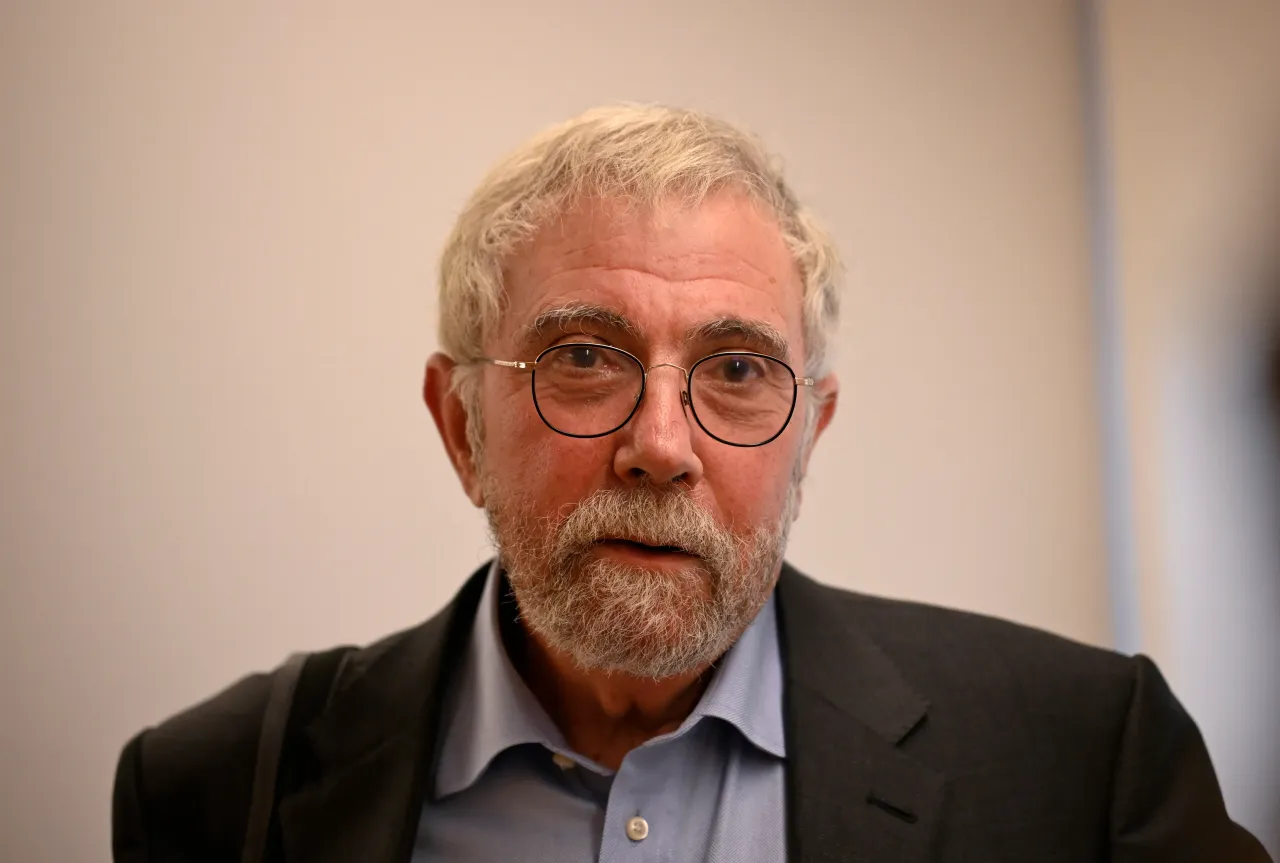


- Krugman argued that AI companies promoted apocalyptic predictions to attract Wall Street funding and pressure businesses to adopt the technology before being left behind.
- The economist also observed that while many people choose to use large language models for convenience or productivity, a growing share of AI adoption is no longer voluntary.
- Krugman argued that AI's growing unpopularity also reflects years of declining public trust in technology companies.
Advertisement|Remove ads.
Nobel Prize-winning economist Paul Krugman argued that Americans' growing skepticism toward artificial intelligence is not simply a case of the public resisting new technology.
Instead, the backlash stems from a combination of factors, including the AI industry's own warnings about mass job losses, the growing presence of AI in everyday products and workplaces, and broader distrust of Big Tech, he says.

Krugman Calls Out Fearmongering From Amodei
Krugman cited comments from Anthropic CEO Dario Amodei, who last year warned that AI could eliminate half of entry-level white-collar jobs and push unemployment to as high as 20% within one to five years.
Advertisement|Remove ads.
Krugman argued that AI companies promoted apocalyptic predictions to attract Wall Street funding and pressure businesses to adopt the technology before being left behind. But by portraying AI as a threat to jobs and the economy, he said, the industry also fueled the public backlash it is now facing, with criticism extending beyond consumers to major corporations.
He cited Microsoft Corp. (MSFT) CEO Satya Nadella’s pushback against the fearmongering as well as the dominance of frontier AI model developers.
“You can’t say, hey, all white-collar jobs are gone and this could even be a weapon and we will use all the power to build data centers,” Nadella said during an interview with The Wall Street Journal over the weekend.
Advertisement|Remove ads.
Krugman Says Americans Feel AI Is Being Forced On Them
Krugman argued that while many people choose to use large language models for convenience or productivity, a growing share of AI adoption is no longer voluntary.
He said companies are increasingly requiring employees to use AI tools, driven not only by expectations of higher productivity but also by pressure from financial markets rewarding rapid AI adoption.
“Why are companies doing this? Presumably, they believe that AI will raise productivity. But just as importantly, they’re responding to pressure from financial markets,” he said.
Advertisement|Remove ads.
Krugman pointed to Google's integration of AI into Search as an example, arguing that users are no longer offered a straightforward way to opt out of AI-driven results in favor of traditional search results.
As a result, he said, many Americans feel they are not being given a real choice about whether to use AI, either at work or in their daily lives.
Krugman Says AI Is Paying For Big Tech's Trust Problem
Krugman argued that AI's growing unpopularity also reflects years of declining public trust in technology companies. He pointed to Pew Research surveys showing Americans once viewed tech firms overwhelmingly positively, but said that goodwill had faded by the time ChatGPT was released.
Advertisement|Remove ads.
“According to a Reuters Ipsos poll, 57 percent of Americans — two-thirds of Democrats and half of Republicans — would oppose a datacenter in their neighborhood. Only 14 percent would support one,” he said.
Combined with opposition to data centers over their land, electricity, and water demands, Krugman argued these factors have reinforced public skepticism toward AI. He added that the industry's efforts to influence politics have largely failed and that association with AI is increasingly becoming a political liability.
The S&P 500 ETF (SPY) is up 21% over the past 12 months, while the Invesco QQQ Trust (QQQ) is up 32%.
Advertisement|Remove ads.
The Global X Artificial Intelligence & Technology ETF (AIQ) is up 47% over the past 12 months, while the iShares U.S. Technology ETF (IYW) is up 44%.
Also See: AI Is Experiencing Its First Deflationary Shock — The Token Economy Is Feeling The Pain
For updates and corrections, email newsroom[at]stocktwits[dot]com.
Advertisement|Remove ads.
Comments posted here will also appear on symbol pages.

Latest News
/filters:format(webp)https://news.stocktwits-cdn.com/large_Getty_Images_2270749487_f1ca9d4e57.jpg)
/filters:format(webp)https://news.stocktwits-cdn.com/unnamed_jpg_9dff551b50.webp) Anan Ashraf·8m ago
Anan Ashraf·8m ago/filters:format(webp)https://news.stocktwits-cdn.com/large_Getty_Images_2189656779_67c7623e40.jpg)
/filters:format(webp)https://news.stocktwits-cdn.com/1707726834303_jpg_11f20a9aa9.webp) Shashank Nayar·53m ago
Shashank Nayar·53m ago/filters:format(webp)https://news.stocktwits-cdn.com/large_Getty_Images_2297721755_0c25dde0a2.jpg) Shashank Nayar·1h ago
Shashank Nayar·1h ago/filters:format(webp)https://news.stocktwits-cdn.com/large_Getty_Images_2300036453_92aab951e8.jpg) Anan Ashraf·2h ago
Anan Ashraf·2h ago/filters:format(webp)https://news.stocktwits-cdn.com/gettyimages_2268540678_612x612_61ca3b12d2.jpg) Anan Ashraf·2h ago
Anan Ashraf·2h ago/filters:format(webp)https://news.stocktwits-cdn.com/large_Getty_Images_2235057703_bae034bb09.jpg) Shashank Nayar·3h ago
Shashank Nayar·3h ago