


Advertisement|Remove ads.
Roundhill CEO Dave Mazza Says Memory Trade Is Back To Fundamentals — Micron Earnings A ‘Real Tone Setter’
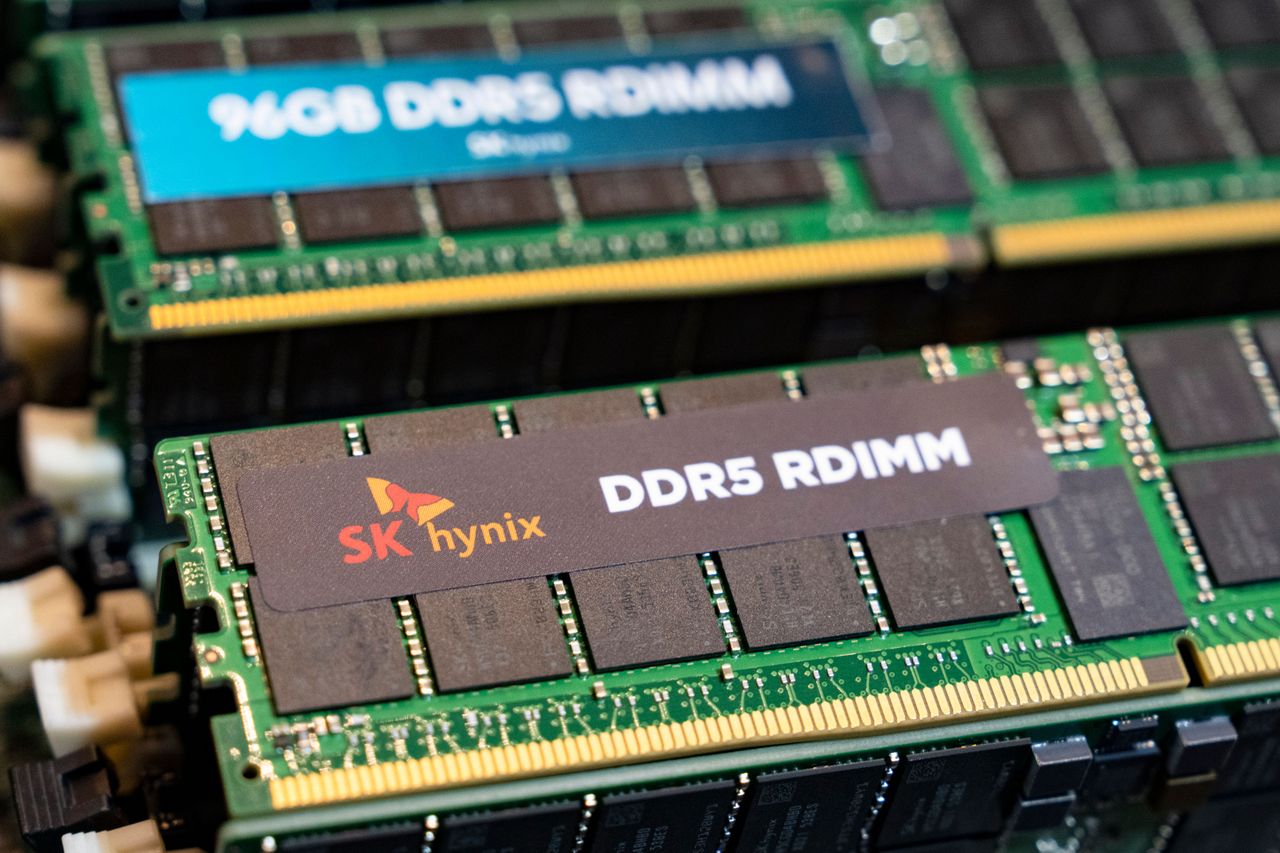


- A 25% to 35% drawdown “rung a lot” of leverage out of memory trades, said Mazza.
- He said memory demand remains whether investment in frontier AI models slows or continues.
- Investors are increasingly looking for more specific exposure to different parts of the AI trade, according to Mazza.
Advertisement|Remove ads.
Roundhill Investments CEO Dave Mazza reportedly said Wednesday that the recent reset in memory trades has shifted the focus back to fundamentals ahead of Micron Technology’s (MU) upcoming earnings, after a significant amount of leverage was flushed out of the trade.
In an interview with CNBC, Mazza said U.S.-listed memory ETFs offering two-times exposure had attracted activity from South Korean investors and hedge funds. A roughly 25%-35% drawdown “rung a lot of that out,” he said, adding that Micron’s report next week could be a “real tone setter” for where the market goes from here.
Memory Demand Remains In Focus
According to Mazza, semiconductors and memory recently broke out after roughly two months of range-bound trading, with DRAM up about 13% over the preceding few days.
Advertisement|Remove ads.
He said the market had absorbed earlier concerns about where AI was headed because demand for memory remains regardless of whether investment in frontier models slows or continues.
“At the end of the day, it doesn’t matter whether we’re slowing down frontier models, or continuing investing in them, there’s still demand and a need for memory,” Mazza said.
He added that memory stocks still trade “like commodities,” with multiples that remain “extremely low.”
Advertisement|Remove ads.
AI Trade Spreads Into More Areas
Mazza said investors are increasingly looking at more specific parts of the AI trade, including neoclouds, photonics and optics, rather than focusing mainly on companies such as OpenAI and Anthropic.
“Now it’s about all the different components that investors are looking for that are going to be rewarded at different times,” he said.
With Muse and Instinct bringing more attention to agentic AI, Mazza said he has recently been looking more closely at cybersecurity and AI inference.
Advertisement|Remove ads.
“If we’re going to be freely giving our bank accounts and other personal information, we’re going to need a lot more cybersecurity and a lot more ability for inference to actually make all this work,” he told CNBC.
Magnificent Seven Seen Differently
Mazza also said investors have started returning to the Magnificent Seven after concerns earlier in the year over heavy capital spending and whether that investment would be debt-funded.
He argued that the group may increasingly be viewed as a different kind of defensive trade, not in the traditional sense of utilities or consumer staples, but because of the consistency of their revenue growth even with the 10-year Treasury yield above 5%.
Advertisement|Remove ads.
Capital Risk From Large AI Listings
The Roundhill CEO also raised concerns about the capital required if generative AI companies such as OpenAI and Anthropic eventually go public at trillion-dollar valuations.
“It’s not the fundamentals; those are actually quite strong,” Mazza said, questioning whether such listings could “suck the air out of the rest of the market” as investors fund them.
He added that there is “not an infinite amount of money” available and said an OpenAI listing being pushed further out could be “beneficial for the smoothness of the trade.”
Advertisement|Remove ads.
Retail Sentiment Around DRAM, CHAT and MAGS
On Stocktwits, retail investor sentiment surrounding the Roundhill Memory ETF (DRAM), Magnificent Seven ETF (MAGS), and Generative AI & Technology ETF (CHAT) was ‘bullish’ at the time of this writing.
So far this year, MAGS, which gives equal-weight exposure to the Magnificent Seven, has risen over 10%. CHAT, an actively managed fund investing across generative AI platforms, infrastructure, and software, gained more than 53% over the same period.
DRAM, which tracks a basket of global memory chip companies, outperformed both, surging nearly 124% year-to-date.
See Also: Fed’s Barr Sees Further Policy Adjustments As Inflation Risks Rise — Flags AI Buildout, Tariffs And Geopolitical Shocks
For updates and corrections, email newsroom[at]stocktwits[dot]com.
Advertisement|Remove ads.
Comments posted here will also appear on symbol pages.

Latest News
/filters:format(webp)https://news.stocktwits-cdn.com/large_iren_OG_jpg_ba842dd11a.webp)
/filters:format(webp)https://news.stocktwits-cdn.com/Anushka_Basu_make_me_smile_in_the_picture_b92832aa_af59_4141_aacc_4180d2241ba8_1_2_png_1086e0ed8c.webp) Anushka Basu·3m ago
Anushka Basu·3m ago/filters:format(webp)https://news.stocktwits-cdn.com/large_Getty_Images_2290041247_65311fa8ea.jpg)
/filters:format(webp)https://news.stocktwits-cdn.com/shivani_photo_jpg_dd6e01afa4.webp) Shivani Kumaresan·44m ago
Shivani Kumaresan·44m ago/filters:format(webp)https://news.stocktwits-cdn.com/large_Getty_Images_2290038559_c6f6528203.jpg)
/filters:format(webp)https://news.stocktwits-cdn.com/Revised_Profile_JPG_0e0afdf5e2.webp) Preeti Ayyathurai·1h ago
Preeti Ayyathurai·1h ago/filters:format(webp)https://news.stocktwits-cdn.com/large_skydance_decde45b1e.jpg)
/filters:format(webp)https://news.stocktwits-cdn.com/IMG_8805_JPG_6768aaedc3.webp) Deepti Sri·1h ago
Deepti Sri·1h ago/filters:format(webp)https://news.stocktwits-cdn.com/large_SK_Hynix_resized_jpg_c0818a3b7e.webp)
/filters:format(webp)https://news.stocktwits-cdn.com/IMG_9209_1_d9c1acde92.jpeg) Yuvraj Malik·1h ago
Yuvraj Malik·1h ago/filters:format(webp)https://news.stocktwits-cdn.com/large_oil_stocks_jpg_6935abe231.webp)
/filters:format(webp)https://news.stocktwits-cdn.com/Aashika_Suresh_Profile_Picture_jpg_2acd6f446c.webp) Aashika Suresh·1h ago
Aashika Suresh·1h ago