


Advertisement|Remove ads.
SpaceX IPO Pricing At $135 Per Share Will Value The Rocket Maker At $1.77 Trillion — Musk To Keep Ironclad Control
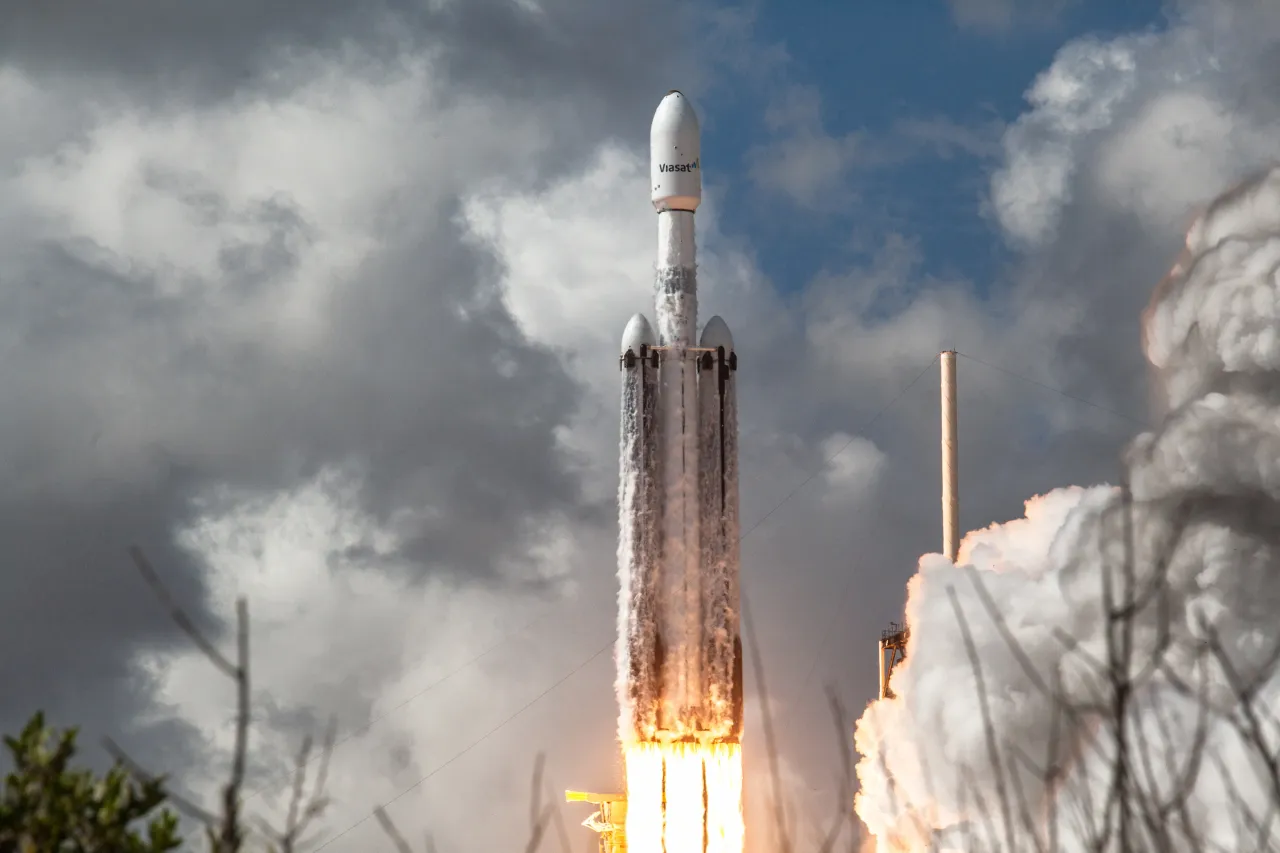


- The money raised will help expand the company’s three main businesses, including Starship development.
- Only about 5% of the company’s total shares will be available for public trading after the IPO.
- Trading could begin as soon as June 12, 2026.
Advertisement|Remove ads.
SpaceX on Wednesday said that it plans to price its shares at $135 each in what is expected to be the largest initial public offering in U.S. history.
This would raise roughly $75 billion for Elon Musk's SpaceX — with none of the shares coming from current owners — and value the whole company at $1.77 trillion once the IPO is complete. This would make SpaceX more valuable than Musk’s EV giant Tesla, which currently has a market cap of about $1.6 trillion as of Wednesday’s closing.
SpaceX took the rare step of announcing this fixed price before the investor roadshow even begins, unlike most IPOs that wait until after marketing to set the final number.
Advertisement|Remove ads.
Elon Musk To Retain Control
Only about 5% of the company’s total shares will be available for public trading after the IPO. This leaves founder Elon Musk and existing investors with the vast majority of ownership and control. Musk is expected to keep roughly 42% of the economic ownership and more than 85% of the voting power through a special share structure that gives some shares 10 times the voting power of others.
SpaceX has asked to list its shares on the Nasdaq stock exchange under the ticker symbol SPCX. Trading could begin as soon as June 12, 2026, after a series of investor meetings that start the week of June 8. The lead banks are Goldman Sachs, Morgan Stanley, BofA Securities, Citigroup, J.P. Morgan and Barclays.
The money raised will help expand the company’s three main businesses: rockets and space travel (including Starship development), Starlink satellite internet and mobile service, and artificial intelligence computing (following its 2026 tie-up with xAI).
Executives called the potential market across these areas “the largest actionable total addressable market in human history,” worth an estimated $28.5 trillion.
Advertisement|Remove ads.
SpaceX Financials
SpaceX reported strong growth in 2025. For the full year, it brought in $18.674 billion in total sales, up 33% from the previous year. Starlink accounted for $11.387 billion, the space business $4.086 billion, and the AI business $3.201 billion. The company posted a net loss of $4.937 billion because of heavy spending on new rockets, more satellites, and AI data centers. It ended the year with $24.7 billion in cash.
The IPO is expected to be one of the most closely watched stock market debuts ever. It would create one of the world’s most valuable public companies, give early investors a chance to cash out some of their holdings, and keep Elon Musk firmly in control.
On Stocktwits, retail sentiment around SPCX is ‘bullish’ with ‘extremely high’ message volume.
Advertisement|Remove ads.
For updates and corrections, email newsroom[at]stocktwits[dot]com.
Comments posted here will also appear on symbol pages.

Latest News
/filters:format(webp)https://news.stocktwits-cdn.com/large_Getty_Images_2183604828_0179169ddb.jpg)
/filters:format(webp)https://news.stocktwits-cdn.com/Anushka_Basu_make_me_smile_in_the_picture_b92832aa_af59_4141_aacc_4180d2241ba8_1_2_png_1086e0ed8c.webp) Anushka Basu·12h ago
Anushka Basu·12h ago/filters:format(webp)https://news.stocktwits-cdn.com/large_Getty_Images_1244247217_jpg_900a48e334.webp) Anushka Basu·13h ago
Anushka Basu·13h ago/filters:format(webp)https://news.stocktwits-cdn.com/large_Getty_Images_2187781361_2f00b8c65a.jpg) Anushka Basu·15h ago
Anushka Basu·15h ago/filters:format(webp)https://news.stocktwits-cdn.com/large_arthur_hayes_2026_OG_jpg_9f3524f8b1.webp) Anushka Basu·16h ago
Anushka Basu·16h ago/filters:format(webp)https://news.stocktwits-cdn.com/large_Tom_Lee_BMNR_64157a5786.webp) Anushka Basu·17h ago
Anushka Basu·17h ago/filters:format(webp)https://news.stocktwits-cdn.com/large_Getty_Images_2194650023_jpg_2af2244b5a.webp)
/filters:format(webp)https://st-everywhere-cms-prod.s3.us-east-1.amazonaws.com/i_OS_App_Icon_1_8054f2a2fe.png) Stocktwits News Desk·18h ago
Stocktwits News Desk·18h ago