


Advertisement|Remove ads.
SPY, QQQ, DIA Gain — Iran Weighs Letting Europe Clear Mines In Strait Of Hormuz, Report Says
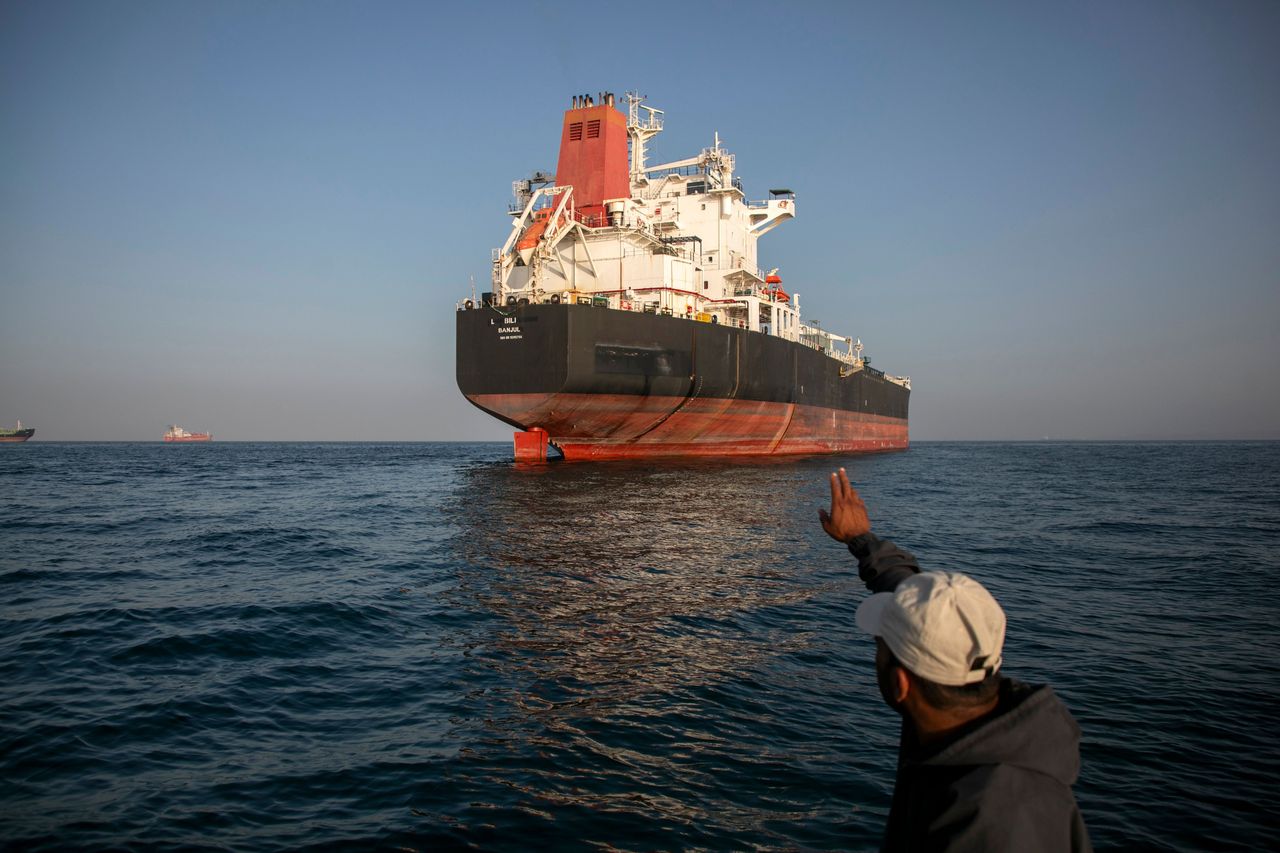


- Any demining effort would still require Iranian security guarantees and approval from the Revolutionary Guard.
- On Tuesday, Treasury Secretary Scott Bessent also said that the U.S. and Iran could strike a deal to reopen the Strait of Hormuz.
- Brent and WTI crude prices were down more than 4% at the time of writing as oil markets tracked the latest developments around the Strait of Hormuz.
Advertisement|Remove ads.
Iran is considering allowing European nations to remove mines from the Strait of Hormuz, a potential climbdown that could form part of a deal to normalize shipping through the critical energy corridor and ease peace negotiations with the U.S.
While Tehran has publicly maintained that it would not allow foreign participation in demining efforts, diplomats said it has softened that stance in private discussions in recent weeks, according to a report in Bloomberg.
At the time of writing, the SPDR S&P 500 ETF Trust (SPY) was up around 1.8%, the Invesco QQQ Trust (QQQ) gained around 3.2%, while the SPDR Dow Jones Industrial Average ETF (DIA) advanced 1.9%.
Advertisement|Remove ads.
Iran Softens Stance On European Demining
Iran has publicly maintained that it will not allow foreign countries to participate in demining efforts in the Strait of Hormuz, a critical transit route for oil and liquefied natural gas. However, diplomats familiar with the matter said Tehran has softened its stance in private meetings in recent weeks, reported Bloomberg.
The reported shift could provide shipping and insurance companies with third-party assurance that the strait is safe after more than five months of military conflict. It could also support wider diplomatic efforts aimed at ending the war.
Talks Gain Momentum, But Hurdles Remain
Treasury Secretary Scott Bessent said on Tuesday that the U.S. and Iran could strike a deal to reopen the Strait of Hormuz. Speaking to CNBC, he said the two sides are discussing the free passage of commercial vessels through the waterway.
Advertisement|Remove ads.
Any European demining mission would depend on Iran providing security assurances for participating naval vessels and on a ceasefire proving sustainable, reported Bloomberg, citing people familiar with the discussions. There is also no guarantee the plan will move forward, as it would require approval from Iran's Islamic Revolutionary Guard Corps (IRGC), the military branch that has led attacks on shipping through the passage.
There are also divisions within Iran's leadership, with some IRGC members insisting that Iran, rather than foreign countries, should oversee the removal of sea mines.
Governance Dispute Continues
The future governance of the Strait of Hormuz remains a major sticking point. Iran is seeking control over the waterway and the collection of transit fees, a position the U.S. opposes.
Advertisement|Remove ads.
On Monday, President Donald Trump said that Iran has a “last chance” to reach an agreement, warning that airstrikes could resume if no accord is reached. Any deal is likely to depend on the outcome of talks between Iran and Oman, which controls the strait's southern coastline.
Mediator Qatar said on Tuesday that a draft agreement to revive talks between Washington and Tehran has been circulated between the parties as a possible short-term measure to de-escalate tensions. Bessent said a Hormuz agreement could come as soon as Tuesday.
SPY, QQQ, DIA: What Retail Sentiment Says
Retail sentiment on Stocktwits was ’bearish’ for the SPDR S&P 500 ETF Trust (SPY) and SPDR Dow Jones Industrial Average ETF (DIA), while it was ‘neutral’ for the Invesco QQQ Trust (QQQ). Message volume was ‘high’ for all three ETFs.
Advertisement|Remove ads.
At the time of writing, Oil prices moved lower, with Brent crude futures (CO1) down 4.8% at $79.75 a barrel and U.S. West Texas Intermediate crude (CL1) falling about 5.25% to $76.13 a barrel, according to Koyfin.
For updates and corrections, email newsroom[at]stocktwits[dot]com.
Advertisement|Remove ads.
Comments posted here will also appear on symbol pages.

Latest News
/filters:format(webp)https://news.stocktwits-cdn.com/large_michael_burry_cropped_b787ce89b4.jpg)
/filters:format(webp)https://news.stocktwits-cdn.com/1707726834303_jpg_11f20a9aa9.webp) Shashank Nayar·31m ago
Shashank Nayar·31m ago/filters:format(webp)https://news.stocktwits-cdn.com/gettyimages_2267701500_594x594_1cfbb8b517.jpg) Shashank Nayar·39m ago
Shashank Nayar·39m ago/filters:format(webp)https://news.stocktwits-cdn.com/large_Getty_Images_2201785005_20e88769ae.jpg)
/filters:format(webp)https://news.stocktwits-cdn.com/unnamed_jpg_9dff551b50.webp) Anan Ashraf·44m ago
Anan Ashraf·44m ago/filters:format(webp)https://news.stocktwits-cdn.com/large_Getty_Images_2294813618_32d1c72fa2.jpg) Shashank Nayar·2h ago
Shashank Nayar·2h ago/filters:format(webp)https://news.stocktwits-cdn.com/large_cybercab_jpg_2ee0cf8e6a.webp) Anan Ashraf·2h ago
Anan Ashraf·2h ago/filters:format(webp)https://news.stocktwits-cdn.com/large_Getty_Images_2295963708_f2aefbb8ff.jpg) Anan Ashraf·3h ago
Anan Ashraf·3h ago