


Advertisement|Remove ads.
Tesla, Rivian In For A Rough Ride? Senator Warns Trump Could Let Chinese EV Makers Into America Under Xi Deal
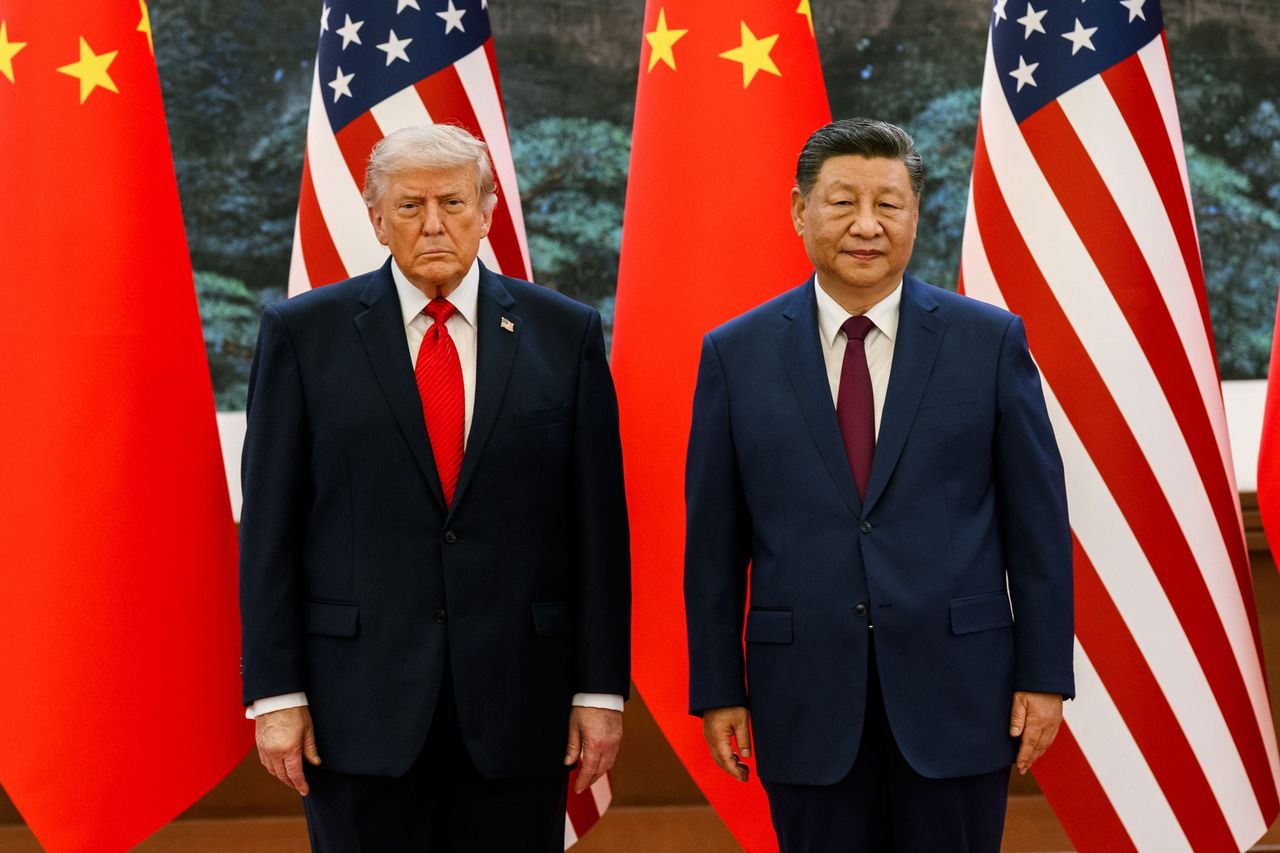


- Chinese EVs currently face a 100% additional tariff, connected-vehicle restrictions and a separate 25% tariff on imported vehicles.
- BYD sold 2.26 million EVs in 2025, compared with Tesla’s 1.64 million deliveries.
- BYD is expanding in Canada and Mexico, while XPeng, Nio and Li Auto maintain U.S. research operations.
Advertisement|Remove ads.
Tesla and Rivian could face unexpected volatility as Senator Elissa Slotkin said President Donald Trump may be considering U.S. market access for Chinese cars as part of a broader deal with Chinese President Xi Jinping.
Senator Sounds Alarm Over Chinese Cars
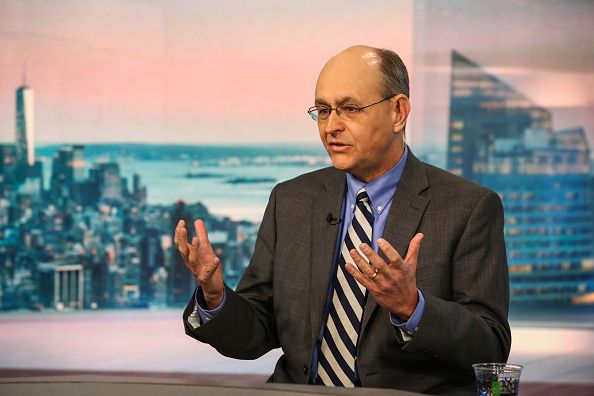
The Michigan Democrat raised the claim on Wednesday ahead of an expected Xi visit to Washington “in just a few weeks.” However, the White House has not announced plans to remove the tariffs and national-security restrictions that currently keep Chinese passenger vehicles out of the U.S. market.
“We hear rumors that Trump is planning to allow Chinese cars to be sold in the U.S., as part of a larger deal he’s putting together,” Slotkin said on X. She called such a move a “strategic mistake” that would “irrevocably impact” the 1.2 million Michigan jobs directly or indirectly tied to the auto industry, as well as America’s wider manufacturing capacity.
Advertisement|Remove ads.
Slotkin pointed to Germany as a warning, saying Chinese-owned automakers have captured around 8% of its market since entering in 2021 as Volkswagen moves to eliminate 50,000 jobs. “The CCP is seeking global auto dominance, using the same playbook they have for decades: artificially keeping prices low through government subsidies, abusing weak international trade systems, and then undercutting domestic manufacturing to put it out of business,” she said.
Chinese Cars Face Steep US Barriers
Chinese-made EVs already face a series of U.S. barriers. In 2024, the Biden administration increased the additional Section 301 tariff on Chinese EVs from 25% to 100% and raised the tariff on lithium-ion EV batteries from 7.5% to 25%.
The Commerce Department followed in January 2025 with a rule restricting connected vehicles linked to Chinese or Russian software and hardware. Its software limits take effect for model year 2027, with hardware restrictions following later. Trump added a separate 25% tariff on imported passenger vehicles and light trucks in April 2025. Combined with the China-specific duties and connected-vehicle rules, the measures make Chinese passenger-vehicle imports commercially hard today.
Advertisement|Remove ads.
Lawmakers Push Chinese Vehicle Ban
Trump has not backed imports of Chinese-made passenger cars, but in January he welcomed Chinese automakers willing to manufacture in America. “If they want to come in, and build the plant, and hire you and hire your friends and your neighbors, that’s great,” Trump said. “Let China come in. Let Japan come in.”
Sens. Elissa Slotkin and Bernie Moreno introduced the bipartisan Connected Vehicle Security Act in April, seeking to ban vehicles, software and hardware linked to entities with more than 15% Chinese ownership. Ahead of Trump’s May summit with Xi, Slotkin warned: “Please don’t make a bad deal,” while Rep. Don Beyer said: “The only thing that terrifies me is BYD.”
Chinese EVs Could Pressure TSLA, RIVN
Lower-cost Chinese cars could create pricing pressure for Tesla and Rivian if U.S. barriers fall. BYD sold 2.26 million EVs in 2025, compared with Tesla’s 1.64 million deliveries. Tesla faces added complexity as it produces cars in Shanghai and competes directly with BYD in China. During the 2025 trade dispute, it stopped taking Chinese orders for its U.S.-built Model S and Model X after Beijing raised tariffs.
Advertisement|Remove ads.
Chinese passenger brands are currently absent from U.S. showrooms, but they are expanding nearby. BYD is preparing two models for Canada and reportedly planning six dealerships there. Canada initially permits 49,000 Chinese EVs annually at a 6.1% tariff, while Chinese-made vehicles already account for roughly one in five sales in Mexico.
BYD executive Stella Li has said those expansions target Canada and Mexico, not a back-door entry into the U.S. XPeng, Nio and Li Auto also maintain U.S. research or development operations, although none has announced an American retail launch. XPeng Co-President Brian Gu said in April that “the U.S. is definitely somewhere we have to look.”
Meanwhile, the Trump administration is scrutinizing American automakers’ ties to China, with Transportation Secretary Sean Duffy this week criticizing Ford’s relationships with CATL, Geely and BYD.
Advertisement|Remove ads.
How Do Retail Traders Feel About TSLA And RIVN?
On Stocktwits, retail sentiment for both TSLA and RIVN was ‘bearish,’ with TSLA seeing ‘high’ message volume and RIVN recording ‘normal’ chatter.
While TSLA stock has risen 6% over the past year, RIVN has advanced 15% over the same period.
For updates and corrections, email newsroom[at]stocktwits[dot]com.
Advertisement|Remove ads.
Comments posted here will also appear on symbol pages.

Latest News
/filters:format(webp)https://news.stocktwits-cdn.com/gettyimages_902959070_594x594_26e25e3cea.jpg)
/filters:format(webp)https://news.stocktwits-cdn.com/Harshita_3cfe02022c.jpg) Harshita Tyagi·7m ago
Harshita Tyagi·7m ago/filters:format(webp)https://news.stocktwits-cdn.com/large_blackrock_bitcoin_OG_jpg_5f4aa439e5.webp)
/filters:format(webp)https://news.stocktwits-cdn.com/Anushka_Basu_make_me_smile_in_the_picture_b92832aa_af59_4141_aacc_4180d2241ba8_1_2_png_1086e0ed8c.webp) Anushka Basu·19m ago
Anushka Basu·19m ago/filters:format(webp)https://news.stocktwits-cdn.com/gettyimages_2275481199_594x594_2ece639a98.jpg)
/filters:format(webp)https://news.stocktwits-cdn.com/Heera_1_1c30cb0170.PNG) Heera Hari·1h ago
Heera Hari·1h ago/filters:format(webp)https://news.stocktwits-cdn.com/large_Getty_Images_2201668075_jpg_cae68c6d02.webp)
/filters:format(webp)https://news.stocktwits-cdn.com/Prabhjote_DP_67623a9828.jpg) Prabhjote Gill·1h ago
Prabhjote Gill·1h ago/filters:format(webp)https://news.stocktwits-cdn.com/large_Getty_Images_1237524770_d165e1c091.jpg) Anushka Basu·2h ago
Anushka Basu·2h ago/filters:format(webp)https://st-everywhere-cms-prod.s3.us-east-1.amazonaws.com/large_Salesforce_logo_527d466034.jpg) Harshita Tyagi·2h ago
Harshita Tyagi·2h ago