


Advertisement|Remove ads.
EXCLUSIVE: The Man Who Predicted The Oil Shock, Iran Strikes Says Markets Could Fall Another 18%
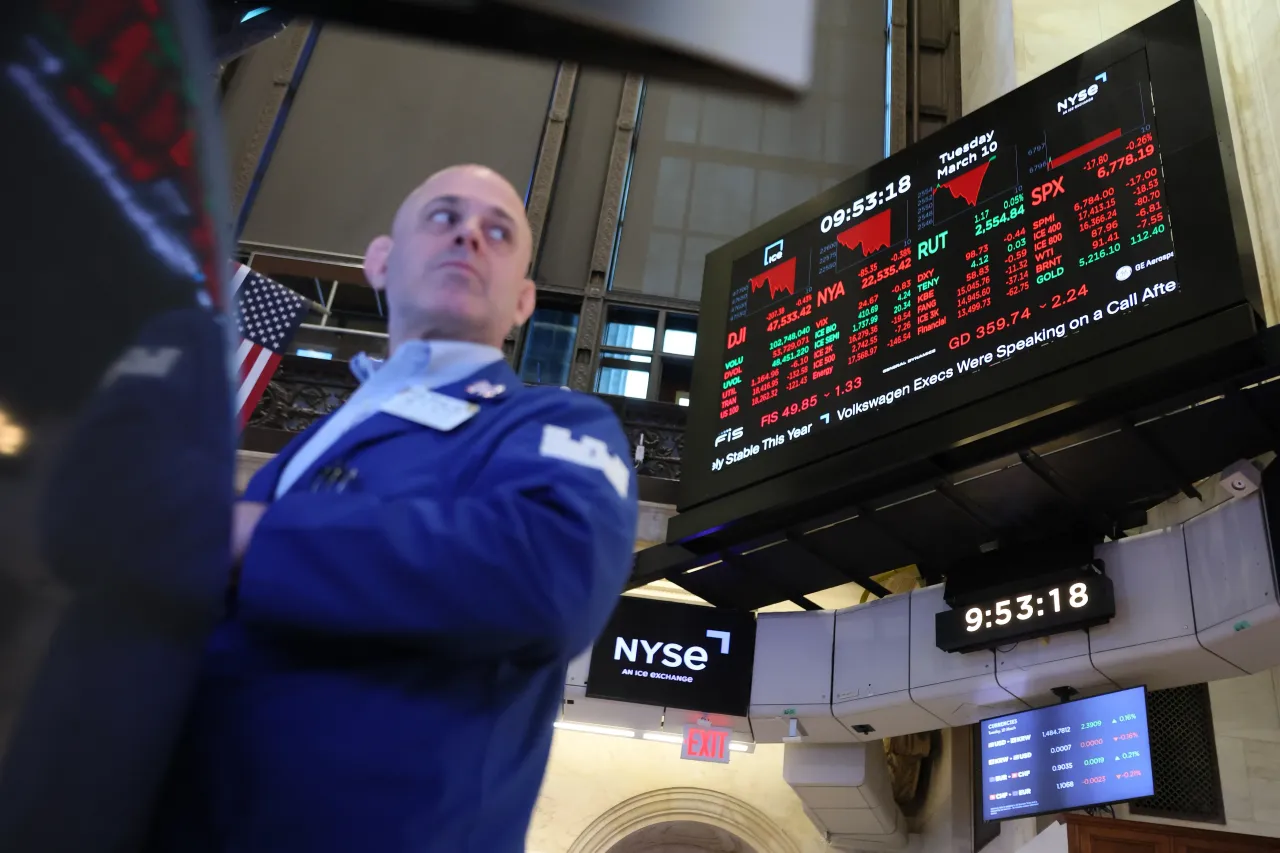

- In an interview with Stocktwits, founder and CIO of Kai Wealth, Cem Karsan said the downturn is likely to unfold gradually in a ‘stair-step’ pattern rather than a sharp crash.
- He added that the U.S.’s geopolitical focus extends beyond Iran, pointing to oil market control and the strategic importance of the Strait of Hormuz.
- Karsen also flagged that traditional hedging strategies may not work effectively in the current environment, increasing downside risk.
Advertisement|Remove ads.
Cem Karsan, the founder and CIO of Kai Wealth, believes that markets are poised to fall another 18% to 23% from current levels, reaching a total drawdown of 25% to 35% by September or October.
“The fundamentals are awful,” he told Stocktwits in an exclusive interview with Michele Steele, adding that the drawdown is unlikely to be a clean crash. “It's going to be a lot of stair steps, but you want to be broadly looking for rips to sell.”
The comments come after he appeared on StockTwitsTV on February 27, and flagged an imminent U.S. strike on Iran, a structural volatility implosion, and the beginning of a stair-step bear market. The next day, US strikes began, and oil spiked.
Advertisement|Remove ads.
Karsan Says The Middle East Conflict Was Never About Iran
According to Karsan, the conflict in the Middle East is being widely misread. "This is not about Iran and their nuclear capabilities," he said. "This is about dominance in oil markets and what that means for the petrodollar."
In his view, the real adversary is China and the Strait of Hormuz. The sea route oversees roughly 40% of China's oil supply flows and is the actual prize for the U.S. "Your adversary is not Iran. Your adversary is China and Russia. Unlimited funding, unlimited intelligence, unlimited willingness to battle over this critical choke point," he said.
Karsan stated that this dynamic leaves any near-term diplomatic "resolution" meaningless. "A resolution does not mean the Strait of Hormuz just opens back up and goes back to normal," he said. "That is not an acceptable solution. There's no world in my opinion that the U.S. military allows things to just go back to normal."
Advertisement|Remove ads.
Karsan stated that the more likely scenario is that the U.S. pivots to managing and policing the strait rather than active bombardment, while keeping Chinese energy access constrained and pulling in Western allies to share the burden.
The Structural Case for More Pain
Beyond the geopolitics and options mechanics, Karsan laid out a broader macro backdrop that he believes is deeply hostile to risk assets. He pointed out that long-end bond yields are up around 40 basis points, structural inflationary pressure has not yet passed through into the consumer price index (CPI), the private equity and private credit markets are seized up, and a fiscal impulse from Congress is likely to worsen inflation heading into the midterms.
Karsan also flagged that hedges are not working, making the environment more dangerous, not less. "If you get a big volatility event, volatility expands, you can get a V-bottom and hedges at least protect people," he said. "Bigger pain trades tend to happen — think 2022, late 2018 — when hedges don't work, and volatility supply is compressed. Those are slow, melting, stair-steppy moves where retail tries to buy every dip and every dip bleeds them out."
Advertisement|Remove ads.
U.S. equities were mixed in morning trade on Wednesday ahead of Trump’s Iran speech scheduled for later in the day. The SPDR S&P 500 ETF (SPY) was up 0.70%, the SPDR Dow Jones Industrial Average ETF (DIA) gained 0.69%, and the Nasdaq-100 tracking Invesco QQQ Trust (QQQ) moved more than 1% higher. Retail sentiment around QQQ on Stocktwits remained in ‘extremely bearish’ territory.
The S&P 500 lost 5.1% in March for its worst monthly performance since 2022. The Dow dropped 5.4%, snapping a 10-month winning streak. The Nasdaq declined 4.8%. According to Reuters, the S&P 500 has posted its worst quarter since 2022.
Read also: Bitcoin Reclaims $68K But Ethereum Outpaces Gains Ahead Of Trump's Iran Speech
For updates and corrections, email newsroom[at]stocktwits[dot]com.
Advertisement|Remove ads.
Comments posted here will also appear on symbol pages.

Latest News
/filters:format(webp)https://news.stocktwits-cdn.com/large_Netflix_Hollywood_Campus_resized_jpg_b2567a3c60.webp)
/filters:format(webp)https://news.stocktwits-cdn.com/Prabhjote_DP_67623a9828.jpg) Prabhjote Gill·30m ago
Prabhjote Gill·30m ago/filters:format(webp)https://news.stocktwits-cdn.com/large_Getty_Images_2294813618_32d1c72fa2.jpg)
/filters:format(webp)https://news.stocktwits-cdn.com/Anushka_Basu_make_me_smile_in_the_picture_b92832aa_af59_4141_aacc_4180d2241ba8_1_2_png_1086e0ed8c.webp) Anushka Basu·1h ago
Anushka Basu·1h ago/filters:format(webp)https://news.stocktwits-cdn.com/large_Getty_Images_2265986908_jpg_7f70141275.webp) Prabhjote Gill·1h ago
Prabhjote Gill·1h ago/filters:format(webp)https://news.stocktwits-cdn.com/large_Getty_Images_2225143615_jpg_7ea5f0ac95.webp)
/filters:format(webp)https://news.stocktwits-cdn.com/vivekkrishnanphotography_58_jpg_0e45f66a62.webp) Arnab Paul·1h ago
Arnab Paul·1h ago/filters:format(webp)https://news.stocktwits-cdn.com/large_globalfoundries_logo_resized_jpg_6dff80978e.webp) Prabhjote Gill·1h ago
Prabhjote Gill·1h ago/filters:format(webp)https://st-everywhere-cms-prod.s3.us-east-1.amazonaws.com/large_fastenal_resized_1b724a7854.jpg)
/filters:format(webp)https://news.stocktwits-cdn.com/Heera_1_1c30cb0170.PNG) Heera Hari·2h ago
Heera Hari·2h ago