


Advertisement|Remove ads.
Trump Signs Executive Order For Early Government Access To Advanced AI Models
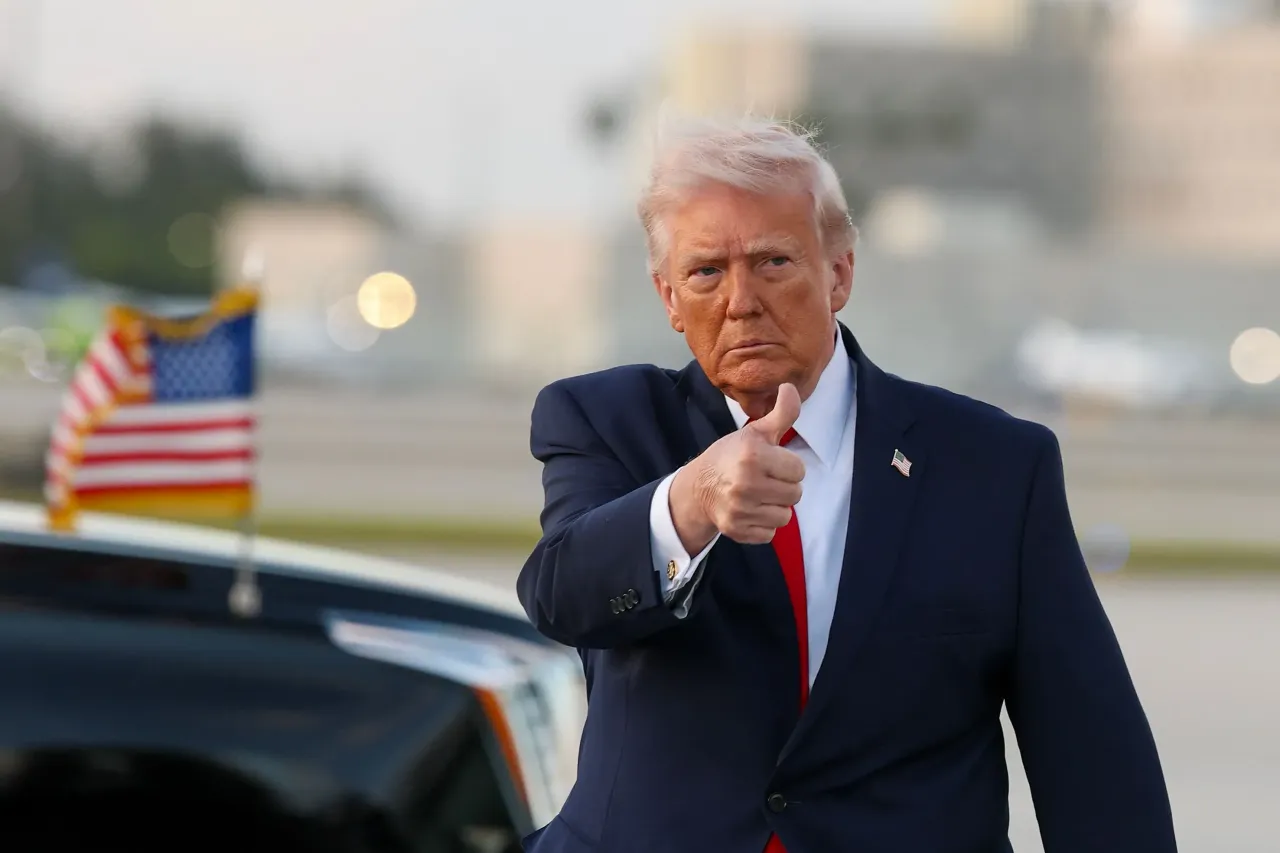


- The order directs federal agencies to form an AI cybersecurity clearinghouse, in voluntary collaboration with the AI industry and operators of critical infrastructure
- The policy does not impose any mandatory government licensing, approval, or permitting requirements for AI companies.
- The administration plans to work with AI companies to identify trusted organizations that could receive early access to new models.
Advertisement|Remove ads.
U.S. President Donald Trump signed an executive order on Tuesday, requiring developers to provide the government with access to advanced AI models for up to 30 days before broader rollout.
The order also directs federal officials to create a classified system to evaluate the cybersecurity capabilities of advanced AI models and determine which models qualify as “covered frontier models.” These assessments may be shared with AI developers and researchers when appropriate, the order read.
It directed federal agencies to form an AI cybersecurity clearinghouse, in voluntary collaboration with the AI industry and operators of critical infrastructure, and clarified that the policy does not impose any mandatory government licensing, approval, or permitting requirements on the development, release, or distribution of new AI models.
Advertisement|Remove ads.
An earlier version of the order would have allowed the government to review advanced AI models up to 90 days before their public release. However, following feedback from some AI industry leaders, the final policy shortened that review window to a maximum of 30 days. Industry officials had pushed for an even shorter period of 14 days, according to a Politico report last month.
Microsoft, Google Among Firms Already Collaborating With US Government
The goal is to allow government experts to evaluate the models’ cybersecurity capabilities and identify potential national security risks. The administration also plans to work with AI companies to identify trusted organizations that could receive early access to new models for security testing and research.
The White House said the measures are designed to promote AI innovation while ensuring that emerging technologies are deployed securely.
Advertisement|Remove ads.
In May, Microsoft, Google, and Elon Musk’s xAI agreed to provide the U.S. government with advance access to their latest AI models, allowing officials to evaluate potential security risks before the systems are widely released.
How Retail Traders Reacted
At the time of writing, shares of Alphabet Inc. (GOOG, GOOGL) were down 2.2%, Microsoft (MSFT) slumped 3.8%, while Meta Platforms (META) gained around 1.2%, and Nvidia (NVDA) traded marginally higher.
The SPDR S&P 500 ETF (SPY), which tracks the S&P 500 index, was up 0.1%, while the Invesco QQQ Trust ETF (QQQ) and the SPDR Dow Jones Industrial Average ETF Trust (DIA) gained 0.3 each.
Advertisement|Remove ads.
Meanwhile, retail sentiment on Stocktwits for SPY was ‘bullish,’ ‘neutral’ for QQQ and ‘bearish’ for DIA.
For updates and corrections, email newsroom[at]stocktwits[dot]com.
Advertisement|Remove ads.
Comments posted here will also appear on symbol pages.

Latest News
/filters:format(webp)https://st-everywhere-cms-prod.s3.us-east-1.amazonaws.com/large_cardmapr_nl_Ej_Akf_N_Qb46k_unsplash_3c13d430bf.jpg)
/filters:format(webp)https://news.stocktwits-cdn.com/Heera_1_1c30cb0170.PNG) Heera Hari·7m ago
Heera Hari·7m ago/filters:format(webp)https://news.stocktwits-cdn.com/large_Getty_Images_2273703424_jpg_8635ddf3a3.webp)
/filters:format(webp)https://news.stocktwits-cdn.com/vivekkrishnanphotography_58_jpg_0e45f66a62.webp) Arnab Paul·12m ago
Arnab Paul·12m ago/filters:format(webp)https://news.stocktwits-cdn.com/large_Getty_Images_1243796855_jpg_594b4eab0d.webp)
/filters:format(webp)https://news.stocktwits-cdn.com/Anushka_Basu_make_me_smile_in_the_picture_b92832aa_af59_4141_aacc_4180d2241ba8_1_2_png_1086e0ed8c.webp) Anushka Basu·17m ago
Anushka Basu·17m ago/filters:format(webp)https://news.stocktwits-cdn.com/large_Tom_Lee_c6db3cdfe4.webp)
/filters:format(webp)https://news.stocktwits-cdn.com/Prabhjote_DP_67623a9828.jpg) Prabhjote Gill·21m ago
Prabhjote Gill·21m ago/filters:format(webp)https://st-everywhere-cms-prod.s3.us-east-1.amazonaws.com/large_lam_research_logo_resized_3eeb50952a.jpg)
/filters:format(webp)https://news.stocktwits-cdn.com/Harshita_3cfe02022c.jpg) Harshita Tyagi·24m ago
Harshita Tyagi·24m ago/filters:format(webp)https://news.stocktwits-cdn.com/large_Getty_Images_2222922178_jpg_42dd8f319f.webp) Arnab Paul·33m ago
Arnab Paul·33m ago