


Advertisement|Remove ads.
Trump Tariffs Have 'Not Gone Away': Paul Krugman Says Iran War Distracted From 'Policy Failure'
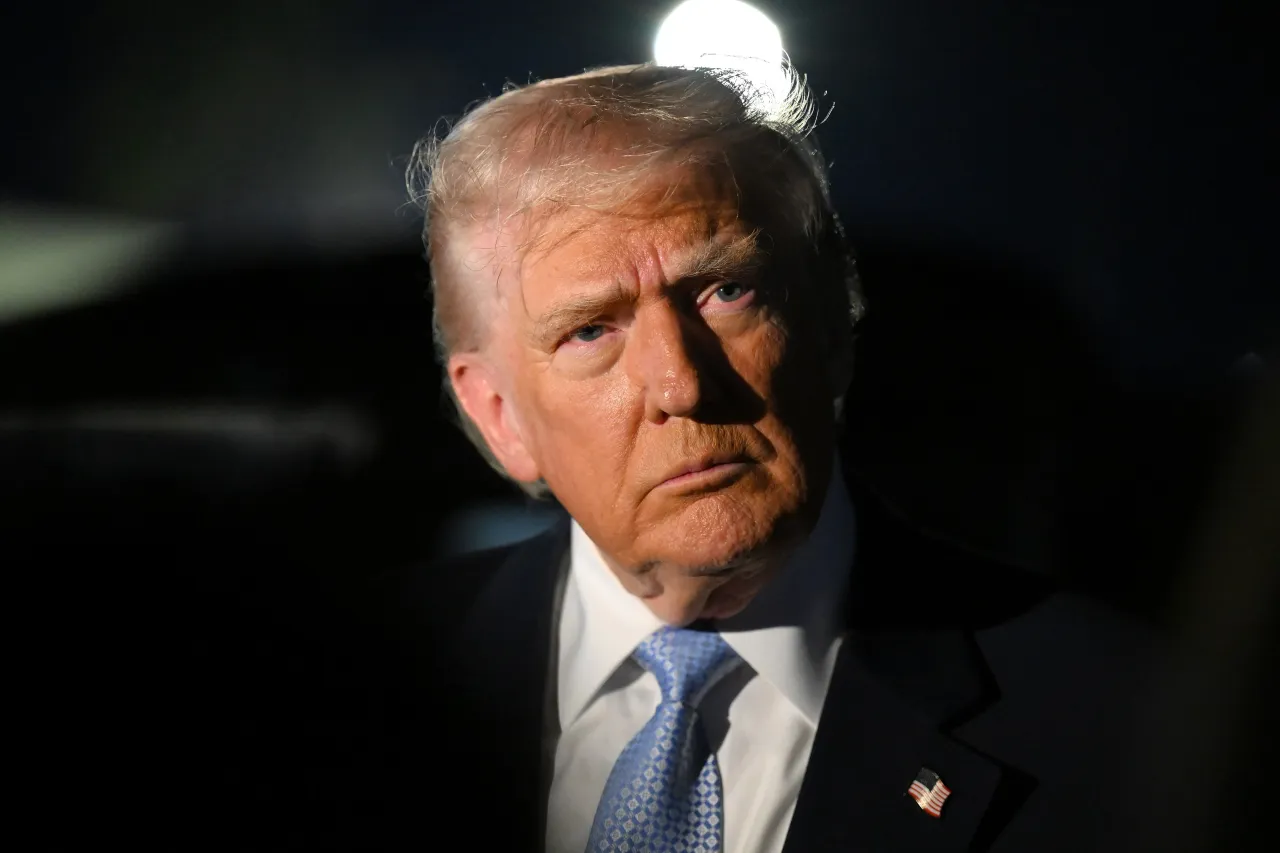


- The economist’s comments come ahead of the April consumer price index report expected on Tuesday.
- Krugman argued that the tariffs were largely passed on to consumers in the form of higher prices, and that after the tariffs were ruled illegal by courts, the refunds went to corporations rather than consumers.
- Krugman also added that the tariffs had failed to meet other objectives, like rebuilding manufacturing in the country and reducing the trade deficit.
Advertisement|Remove ads.
Even as markets are closely watching the war in Iran and the resulting global oil rout, Economist and Nobel laureate Paul Krugman is drawing attention back to the impact of President Donald Trump’s tariff policies on the U.S. economy.
“Remember tariffs? They have not gone away,” Krugman said in a recent video commentary posted to Substack. The economist said that while the issue had faded into the background in light of “everything else” going on in the world, the economic damage from the tariffs was still playing out through higher consumer prices, legal battles and refund payouts to importers.
His reminder comes ahead of Tuesday’s closely-watched April consumer price index report. According to a CNBC report, economists expect headline inflation to reach 3.7%, the highest level in nearly three years.
Advertisement|Remove ads.
Krugman Highlights Trump’s Policy Failures
Krugman said in the post that the Iran war wasn’t Trump’s only “big, illegal, stupid policy,” arguing that the tariffs were a major policy failure as they increased costs significantly for Americans.
The economist argued that the tariffs were largely passed on to consumers through higher prices, and when many of the tariffs were later ruled illegal by courts, the refunds went to corporations, but not consumers.
“So we have created a machine which rips off consumers when the tariffs are imposed, then hands a bunch of money to corporations when the tariffs are ruled illegal,” Krugman said. “There’s no reason to think that consumers would benefit from the refunds on the past tariffs," he added.
Advertisement|Remove ads.
Earlier, the U.S. Supreme Court ruled Trump could not use the International Emergency Economic Powers Act to impose sweeping tariffs. In response, the administration pivoted to Section 122 of the Trade Act to impose import charges for up to 150 days to address balance-of-payments deficits. A federal court struck down the fresh tariffs as unlawful last week, though the administration has already appealed the decision.
Krugman also said that the tariffs had failed to meet other objectives, like rebuilding manufacturing in the country or reducing the trade deficit. "So another policy disaster, although it’s overshadowed by the war," he said.
How Have US Markets Reacted So Far?
Despite the volatility and high energy prices amid the war, U.S. stock markets have notched fresh highs this year. On Monday, benchmark indexes closed up, with the S&P 500 and Nasdaq Composite rising to yet another all-time high in the intraday trading session.
Advertisement|Remove ads.
However, U.S. equities declined in Monday’s overnight trade. At the time of writing, the SPDR S&P 500 ETF (SPY), which tracks the S&P 500 index, was down 0.30%, the Invesco QQQ Trust ETF (QQQ) fell 0.58%, and the SPDR Dow Jones Industrial Average ETF Trust (DIA) edged lower by 0.07%.
For updates and corrections, email newsroom[at]stocktwits[dot]com.
Comments posted here will also appear on symbol pages.

Latest News
/filters:format(webp)https://news.stocktwits-cdn.com/large_Getty_Images_1491619367_jpg_3b3b73ce3c.webp)
/filters:format(webp)https://news.stocktwits-cdn.com/Anushka_Basu_make_me_smile_in_the_picture_b92832aa_af59_4141_aacc_4180d2241ba8_1_2_png_1086e0ed8c.webp) Anushka Basu·9h ago
Anushka Basu·9h ago/filters:format(webp)https://news.stocktwits-cdn.com/large_tom_lee_fundstrat_bmnr_OG_jpg_94a105e116.webp) Anushka Basu·11h ago
Anushka Basu·11h ago/filters:format(webp)https://news.stocktwits-cdn.com/large_michael_saylor_OG_2_jpg_9905e10e5a.webp) Anushka Basu·12h ago
Anushka Basu·12h ago/filters:format(webp)https://news.stocktwits-cdn.com/large_ras_tanura_jpg_b79d6fe085.webp) Anushka Basu·13h ago
Anushka Basu·13h ago/filters:format(webp)https://news.stocktwits-cdn.com/large_mike_novogratz_OG_jpg_66c648a5e8.webp) Anushka Basu·14h ago
Anushka Basu·14h ago/filters:format(webp)https://news.stocktwits-cdn.com/large_Getty_Images_2275353529_jpg_271d3f9c9b.webp) Anushka Basu·16h ago
Anushka Basu·16h ago