


Advertisement|Remove ads.
TSLA Stock Gets No Charge From Roadster Date Reveal — ‘Big Short’ Michael Burry Is Plugged Into A Chinese EV Rival Instead


- Investor Sawyer Merritt said the next-gen Roadster unveiling will take place in Waco, Texas, with RSVPs due Sept.16.
- Morgan Stanley raised its Tesla bull case to $840, implying nearly 130% upside, but retained its $400 target and ‘Equal Weight’ rating.
- Burry favors BYD’s conventional ownership structure, vertical integration, international growth and low-cost Blade battery tech.
Advertisement|Remove ads.
Shares of Tesla, Inc. (TSLA) slipped over 1% overnight heading into Monday as retail investors questioned whether the company’s long-delayed Roadster could boost its revenue, while “The Big Short” investor Michael Burry turned his attention to Chinese rival BYD as its stock neared his preferred buying range.
TSLA stock closed Friday 0.5% higher at $365.44. Meanwhile, BYD’s Hong Kong-listed shares rose 1.4% to HK$80.95 on Monday, while its U.S.-listed shares ended Friday 1.2% higher at $10.13.
Tesla Teases New Roadster
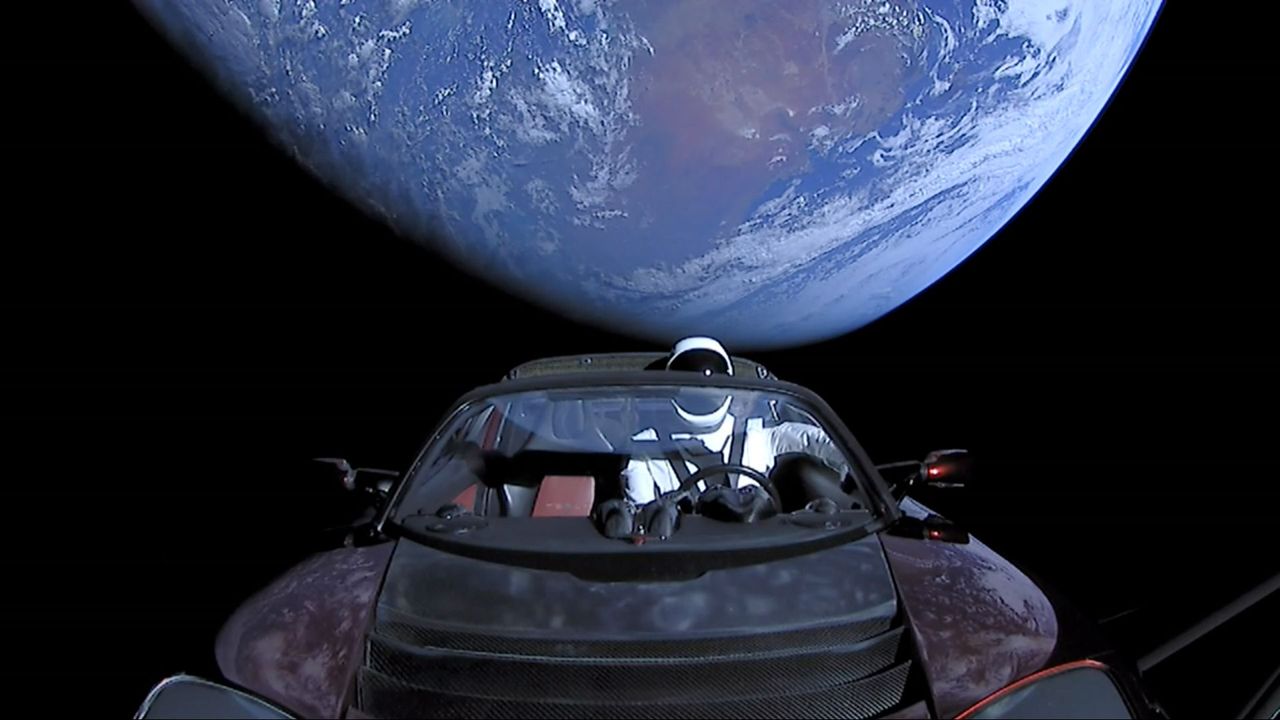
Tesla reignited speculation around its next-gen Roadster after posting “Go for launch” on X early Sunday alongside an image of a sports car with four thruster-like plumes and the date Oct.1. The image also contained the faint phrase “WHERE WE’RE GOING,” seemingly referencing Back To The Future and CEO Elon Musk’s long-running suggestion that the Roadster could hover.
Advertisement|Remove ads.
Tesla did not name the vehicle, venue, or event time. However, invitations circulating on X reportedly pointed to an Oct. 1 gathering in Waco, Texas, with a Sept. 16 RSVP deadline.
Tesla did not name the vehicle, venue or event time. However, Tesla investor and influencer Sawyer Merritt said on X that Tesla sent invitations for the next-generation Roadster unveiling to reservation holders. According to Merritt, the event will take place in Waco, Texas, on Oct. 1, and invitees must RSVP by Sept. 16.
Tesla Traders Turn Bearish
Tesla first unveiled the second-gen Roadster in November 2017, promising zero-to-60-mph acceleration in 1.9 seconds, a top speed above 250 mph, 620 miles of range and deliveries beginning in 2020. The vehicle has since faced repeated delays and remained in “design development” in Tesla’s latest earnings materials.
Advertisement|Remove ads.
Musk has said an optional SpaceX package would add 10 cold-gas thrusters to improve acceleration, braking, cornering and top speed. “Maybe they will even allow a Tesla to fly,” he said in 2018.
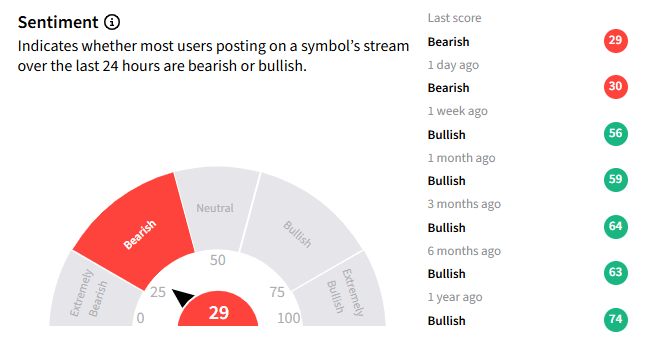
Still, retail sentiment toward Tesla turned ‘bearish’ from ‘bullish’ levels a week ago on Stocktwits as traders questioned the commercial importance of an expensive, low-volume sports car. While message volumes for the ticker plunged 87% over the past month, the watcher base has grown modestly by 0.1%.
One user compared the Roadster to Apple unveiling a $40,000 paper-thin television, asking, “Who really cares about that minimal boosted revenue?” Another bullish trader said the car could be so fast that “it feels like flying.”
Advertisement|Remove ads.
A third user said investors would watch Monday’s open to find out whether the announcement becomes a genuine catalyst or “another delay-cycle headline.”
Morgan Stanley Bets On Tesla Semi
Morgan Stanley raised Tesla’s bull-case valuation to $840 from $820, implying nearly a 130% upside from current levels, citing the longer-term potential of the Tesla Semi and autonomous trucking. The bank estimates autonomous trucks could achieve 2.3 times greater utilization, reduce costs per mile by 20% and generate six times more profit per vehicle than human-driven trucks.
It said charging between $0.85 and $1 per mile for Full Self-Driving (FSD) could produce $12,000 to $18,000 in monthly revenue per truck, making even relatively small Semi volumes meaningful to Tesla’s financial outlook. However, Morgan Stanley maintained its official $400 price target and ‘Equal Weight’ rating.
Advertisement|Remove ads.
Michael Burry Eyes BYD
While Tesla investors debated the Roadster, Burry confirmed that he was monitoring BYD as its shares approached the price at which he previously said he would buy aggressively. When asked whether he was considering BYD as it moved closer to his target, Burry replied on his Substack, “Yes, I am watching it.”
In a March analysis, Burry rated BYD a mild ‘7/10’ at about HK$95 and identified HK$75 as his ‘8/10’ price. “I would be an aggressive buyer at HK$75 or better, if the thesis still holds at that time,” he said. Burry disclosed then that he did not own BYD. The stock has since traded inside that territory, hitting a 52-week low of HK$71.40 in late June before recovering to around HK$80.
Why BYD Appeals To Burry
Burry highlighted BYD’s conventional shareholding structure as a significant advantage over many Chinese tech companies that use variable interest entities. BYD investors own common shares in the operating company, which is the same class of equity held by founder Wang Chuanfu and the founding team.
Advertisement|Remove ads.
He also praised BYD’s vertical integration, international expansion and ability to manufacture its own batteries, chips, motors and other major components. Burry described the company as potentially the world’s lowest-cost vehicle producer at scale.
Its in-house Blade battery uses lithium iron phosphate chemistry, which is generally cheaper and considered safer than the nickel-manganese-cobalt batteries used by Tesla and several competitors.
BYD’s U.S.-listed shares have declined 25% over the past year.
Advertisement|Remove ads.
For updates and corrections, email newsroom[at]stocktwits[dot]com.
Comments posted here will also appear on symbol pages.

Latest News
/filters:format(webp)https://news.stocktwits-cdn.com/large_franklin_templeton_OG_jpg_4b3a7330d9.webp)
/filters:format(webp)https://news.stocktwits-cdn.com/Anushka_Basu_make_me_smile_in_the_picture_b92832aa_af59_4141_aacc_4180d2241ba8_1_2_png_1086e0ed8c.webp) Anushka Basu·1h ago
Anushka Basu·1h ago/filters:format(webp)https://news.stocktwits-cdn.com/large_Getty_Images_1445160636_5780a5fdde.jpg) Anushka Basu·3h ago
Anushka Basu·3h ago/filters:format(webp)https://news.stocktwits-cdn.com/Getty_Images_540198451_jpg_3e5f3d8ee7.webp) Anushka Basu·4h ago
Anushka Basu·4h ago/filters:format(webp)https://news.stocktwits-cdn.com/large_Getty_Images_2228875514_jpg_ae066f5c0f.webp)
/filters:format(webp)https://st-everywhere-cms-prod.s3.us-east-1.amazonaws.com/i_OS_App_Icon_1_8054f2a2fe.png) Stocktwits News Desk·4h ago
Stocktwits News Desk·4h ago/filters:format(webp)https://news.stocktwits-cdn.com/large_tom_lee_OG_2_jpg_9ae5c049c3.webp) Stocktwits News Desk·5h ago
Stocktwits News Desk·5h ago/filters:format(webp)https://news.stocktwits-cdn.com/large_Getty_Images_1491619356_jpg_1a9c6d5342.webp) Anushka Basu·6h ago
Anushka Basu·6h ago