


Advertisement|Remove ads.
U.S. Scales Back The Number Of Vaccines It Recommends For Every Child


- CDC reduced number of diseases prevented by routine shot to 11 from 17.
- The health officials said that they will continue to recommend vaccines for measles, mumps, among other diseases.
- All vaccines currently recommended by CDC will remain covered by insurance without cost sharing, said CMS Administrator Dr. Mehmet Oz.
Advertisement|Remove ads.
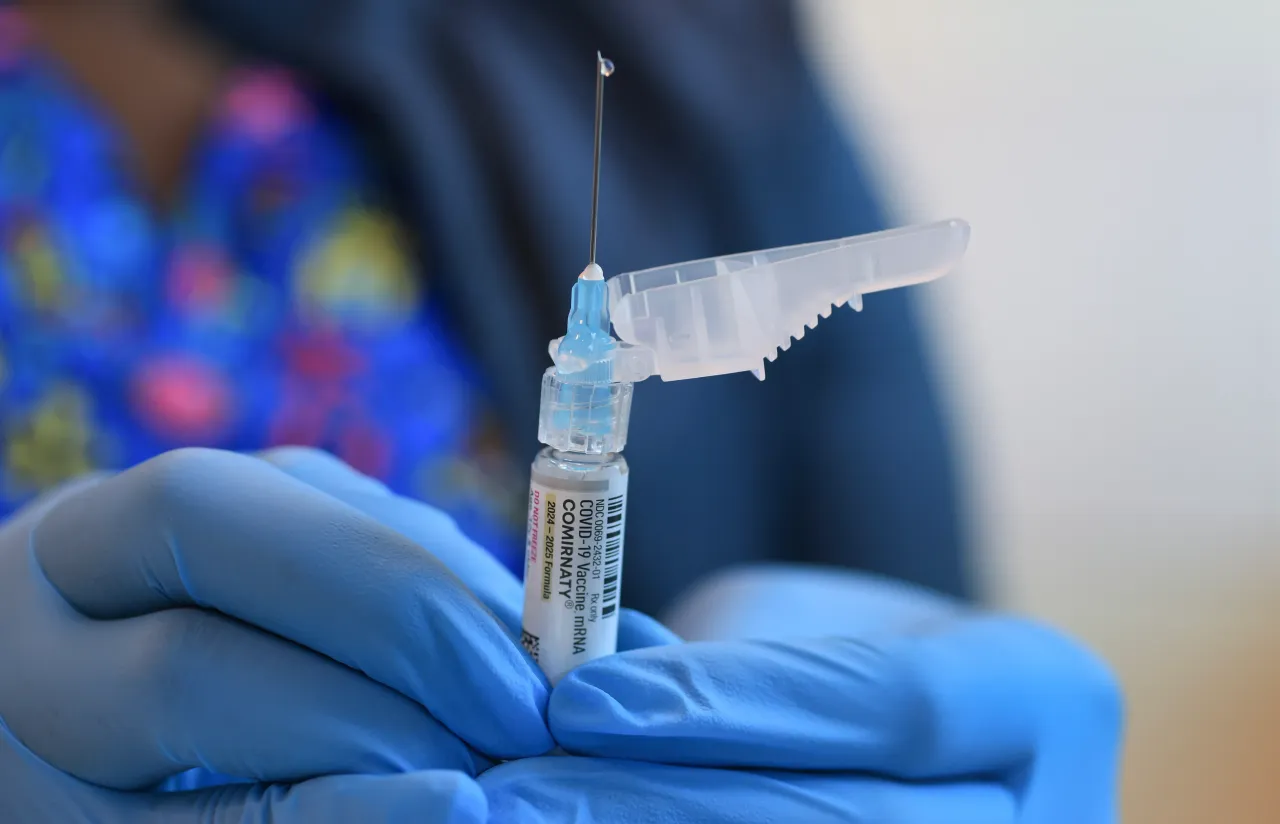
The U.S. health officials on Monday scaled back the number of the vaccines it recommends for American children, reducing the number of diseases prevented by routine shots to 11 from 17.
Jim O’Neill, acting director of the Centers for Disease Control and Prevention updated the agency’s immunization schedule to reflect the changes.

“President Trump directed us to examine how other developed nations protect their children and to take action if they are doing better,” Health Secretary Robert F. Kennedy Jr. said. “After an exhaustive review of the evidence, we are aligning the U.S. childhood vaccine schedule with international consensus while strengthening transparency and informed consent.
Advertisement|Remove ads.
The health officials said that they will continue to recommend vaccines for measles, mumps and rubella as well as against polio and chicken pox. Some of the vaccines that were removed from the recommendations include vaccines for Hepatitis, COVID, Respiratory syncytial virus (RSV) and flu.
“All vaccines currently recommended by CDC will remain covered by insurance without cost sharing,” said Centers for Medicare & Medicaid Services Administrator Dr. Mehmet Oz.
The move comes in response to a presidential memorandum issued by President Donald Trump in December, calling on Kennedy and O’Neill to align U.S. vaccination practices with other developed nations.
Advertisement|Remove ads.
The move aligns closely with Denmark that gives vaccination to children against 10 diseases and with the United Kingdom where the number is at 12.
Trumps’ Drug Prices Deals
Donald Trump recently announced nine new agreements with pharmaceutical companies to lower prescription drug prices for Americans to the lowest levels paid in other developed nations, under what the administration calls a “most-favored-nation” (MFN) pricing framework.
The companies named in the agreements are Amgen, Bristol Myers Squibb, Boehringer Ingelheim, Genentech, Gilead Sciences, GSK, Merck, Novartis and Sanofi.
Advertisement|Remove ads.
Trump has also floated the idea of calling a meeting with insurance companies to discuss further ways to lower healthcare costs, suggesting insurers could significantly reduce prices or face alternative approaches that would direct savings to consumers.
Shares of major vaccine makers Glaxosmithkline, Pfizer and Sanofi were down more than 0.5%, while Merck edged higher 0.3% on Monday.
For updates and corrections, email newsroom[at]stocktwits[dot]com.
Advertisement|Remove ads.
Comments posted here will also appear on symbol pages.

Latest News
/filters:format(webp)https://news.stocktwits-cdn.com/gettyimages_2283723097_594x594_6bd6cc0d66.jpg)
/filters:format(webp)https://news.stocktwits-cdn.com/Harshita_3cfe02022c.jpg) Harshita Tyagi·3m ago
Harshita Tyagi·3m ago/filters:format(webp)https://news.stocktwits-cdn.com/large_Getty_Images_2278385066_a804eadba0.jpg)
/filters:format(webp)https://news.stocktwits-cdn.com/Prabhjote_DP_67623a9828.jpg) Prabhjote Gill·4m ago
Prabhjote Gill·4m ago/filters:format(webp)https://news.stocktwits-cdn.com/large_Getty_Images_2289079202_89814720c2.jpg)
/filters:format(webp)https://news.stocktwits-cdn.com/Heera_1_1c30cb0170.PNG) Heera Hari·19m ago
Heera Hari·19m ago/filters:format(webp)https://news.stocktwits-cdn.com/large_nebius_OG_jpg_09a7ca76a4.webp) Harshita Tyagi·51m ago
Harshita Tyagi·51m ago/filters:format(webp)https://news.stocktwits-cdn.com/gettyimages_2300709253_612x612_2c5b708e2f.jpg) Prabhjote Gill·1h ago
Prabhjote Gill·1h ago/filters:format(webp)https://news.stocktwits-cdn.com/gettyimages_2299714910_612x612_6ae0a15d09.jpg)
/filters:format(webp)https://news.stocktwits-cdn.com/Whats_App_Image_2026_05_11_at_09_45_43_1_jpeg_a08c0cf251.webp) Aveek Bhowmik·1h ago
Aveek Bhowmik·1h ago