


Advertisement|Remove ads.
UAL CEO Highlights Pursuit Of Talks With AAL Has Ended – Says Without A Willing Partner ‘Something This Big Simply Can't Get Done’
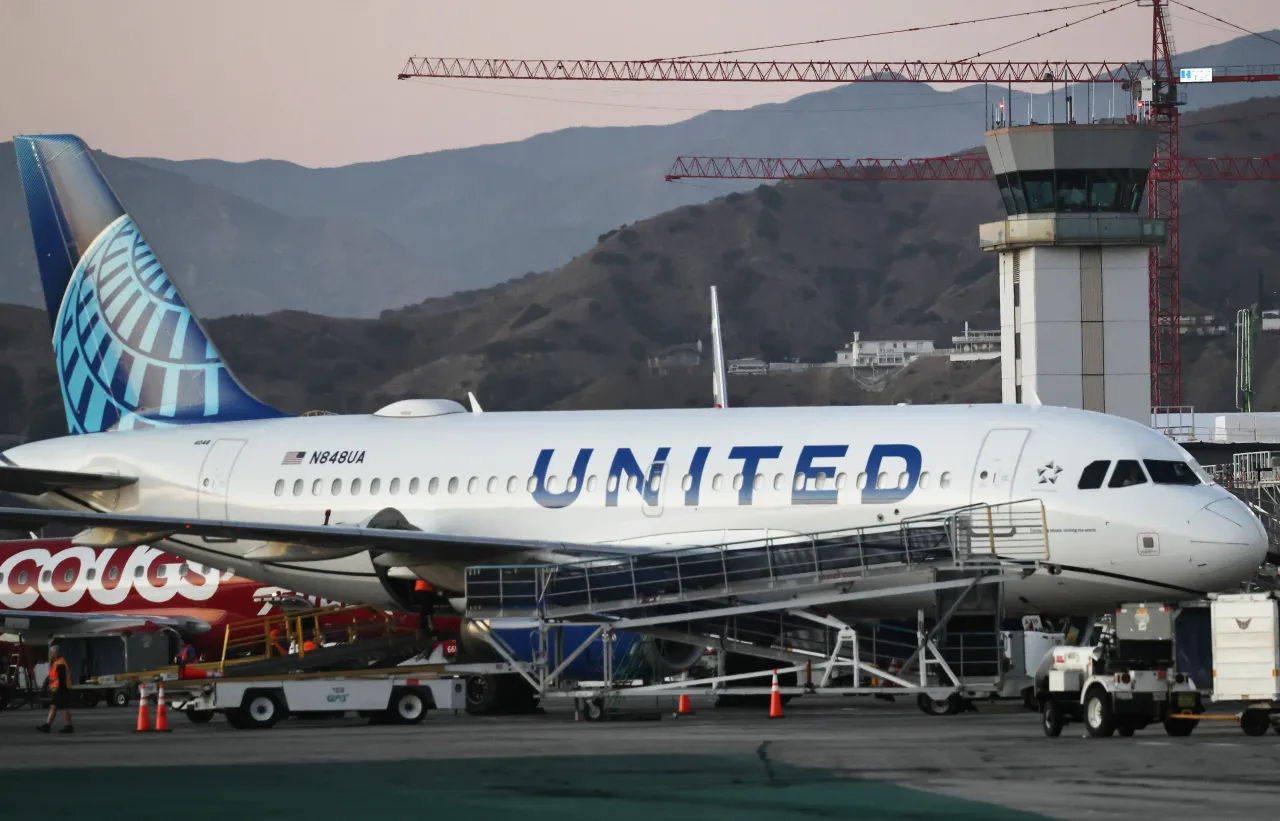


- United CEO said regulators would have approved such a deal because they would have recognized the benefits to customers, our shared employees, and communities.
- CEO Scott Kirby said foreign-flagged airlines fly about 65% of long-haul seats into the United States, even though only about 40% of those customers are foreign citizens.
- He added that the company would not have proposed a deal had it raised the prices for consumers.
Shares of United Airlines (UAL) and American Airlines (AAL) are back in focus premarket on Monday after United Airlines Chief Executive Officer Scott Kirby confirmed he had approached American Airlines about a merger, outlining how the combined carrier would look, but noted that the pursuit of talks with American has ended.
"I approached American about exploring a combination because I thought we could do something incredible for customers together," he stated.
Kirby noted that American Airlines "declined to engage and instead responded by publicly closing the door." Without a willing partner, "something this big simply can't get done," he said.
The confirmation follows weeks of speculation after reports surfaced that Kirby had pitched the idea to the Trump administration in February 2026.
What The Combined Airline Would Look Like
Kirby outlined a vision for a combined carrier that would have extended United's customer experience and loyalty programs across a larger network, expanded service to smaller domestic communities and international markets, and competed more directly with foreign carriers.
He noted that foreign-flagged airlines fly about 65% of long-haul seats to the United States, even though only about 40% of those customers are foreign citizens.
He said the combination would have increased the total number of economy seats in the marketplace rather than restricting capacity, and noted that the structure would not have been designed to push ticket prices higher for customers.
"In the past, airline mergers usually have been about two struggling airlines coming together to cut costs, flights, and headcount. My aspirations could not be more different,” he noted.
The United Airlines CEO also said that regulators would have approved such a deal because they would have recognized the benefits to customers, shared employees, and communities. He also added that the company would not have proposed a deal had it raised the prices for consumers.
Earlier this month, during an interview with CNBC, American Airlines CEO Robert Isom stated that a merger with United Airlines was not a good idea and that it could be anti-competitive. He also added that the company would not pursue any merger talks.
American Airlines also issued a formal statement, saying it was not interested in discussing a merger with United Airlines.
Even though the broader airline marketplace warrants change, the merger with UAL would be negative for competition and customers, the company stated.
Wall Street’s View On The Two Carriers
On Friday, UBS analyst Atul Maheswari raised UAL’s price target to $139 from $135 and kept a ‘Buy’ rating on the shares.
Earlier last week, BMO Capital maintained an ‘Outperform’ rating on United Airlines and raised its price target to $130 from $110.
According to Koyfin data, the 12-month average price target for UAL was $129.29, implying an upside potential of about 39% from Friday's close.
Meanwhile, BMO Capital raised its price target on AAL to $13.50 from $12 and maintained a "Market Perform" rating. According to Koyfin data, the 12-month average price target for AAL was $14.92, implying a 23% premium over Friday's close at $12.10.
How Did Retail Traders React?
On Stocktwits, the sentiment surrounding United Airlines has remained ‘extremely bullish’ amid ‘extremely high’ message volumes
For American Airlines, the sentiment surrounding the stock is in the ‘extremely bullish’ territory amid ‘high’ message volumes.
Shares of United Airlines have fallen more than 17% so far this year, while American Airlines’ shares have declined more than 21% year-to-date.
For updates and corrections, email newsroom[at]stocktwits[dot]com.

Latest News
/filters:format(webp)https://news.stocktwits-cdn.com/large_Getty_Images_2269812042_jpg_6a69c0f17a.webp)
/filters:format(webp)https://news.stocktwits-cdn.com/1707726834303_jpg_11f20a9aa9.webp) Shashank Nayar·4m ago
Shashank Nayar·4m ago/filters:format(webp)https://news.stocktwits-cdn.com/large_Getty_Images_2264270294_jpg_97b0b72b9d.webp)
/filters:format(webp)https://news.stocktwits-cdn.com/Whats_App_Image_2026_05_11_at_09_45_43_1_jpeg_a08c0cf251.webp) Aveek Bhowmik·12m ago
Aveek Bhowmik·12m ago/filters:format(webp)https://news.stocktwits-cdn.com/large_Trending_stock_resized_may_jpg_bc23339ae7.webp)
/filters:format(webp)https://news.stocktwits-cdn.com/vivekkrishnanphotography_58_jpg_0e45f66a62.webp) Arnab Paul·25m ago
Arnab Paul·25m ago/filters:format(webp)https://news.stocktwits-cdn.com/large_Getty_Images_2275396018_jpg_a205b2aecb.webp)
/filters:format(webp)https://st-everywhere-cms-prod.s3.us-east-1.amazonaws.com/Prabhjote_DP_67623a9828.jpg) Prabhjote Gill·30m ago
Prabhjote Gill·30m ago/filters:format(webp)https://news.stocktwits-cdn.com/large_Getty_Images_2275353529_jpg_271d3f9c9b.webp)
/filters:format(webp)https://news.stocktwits-cdn.com/Anushka_Basu_make_me_smile_in_the_picture_b92832aa_af59_4141_aacc_4180d2241ba8_1_2_png_1086e0ed8c.webp) Anushka Basu·53m ago
Anushka Basu·53m ago/filters:format(webp)https://news.stocktwits-cdn.com/large_Getty_Images_2238553113_jpg_02cf1c9b5e.webp)
/filters:format(webp)https://st-everywhere-cms-prod.s3.us-east-1.amazonaws.com/Rounak_Author_Image_7607005b05.png) Rounak Jain·58m ago
Rounak Jain·58m ago