


Advertisement|Remove ads.
US Chip Curbs Could Affect Up To 10% Of AI Demand in 2027, Says UBS — Sees Major Hyperscalers Relatively Insulated
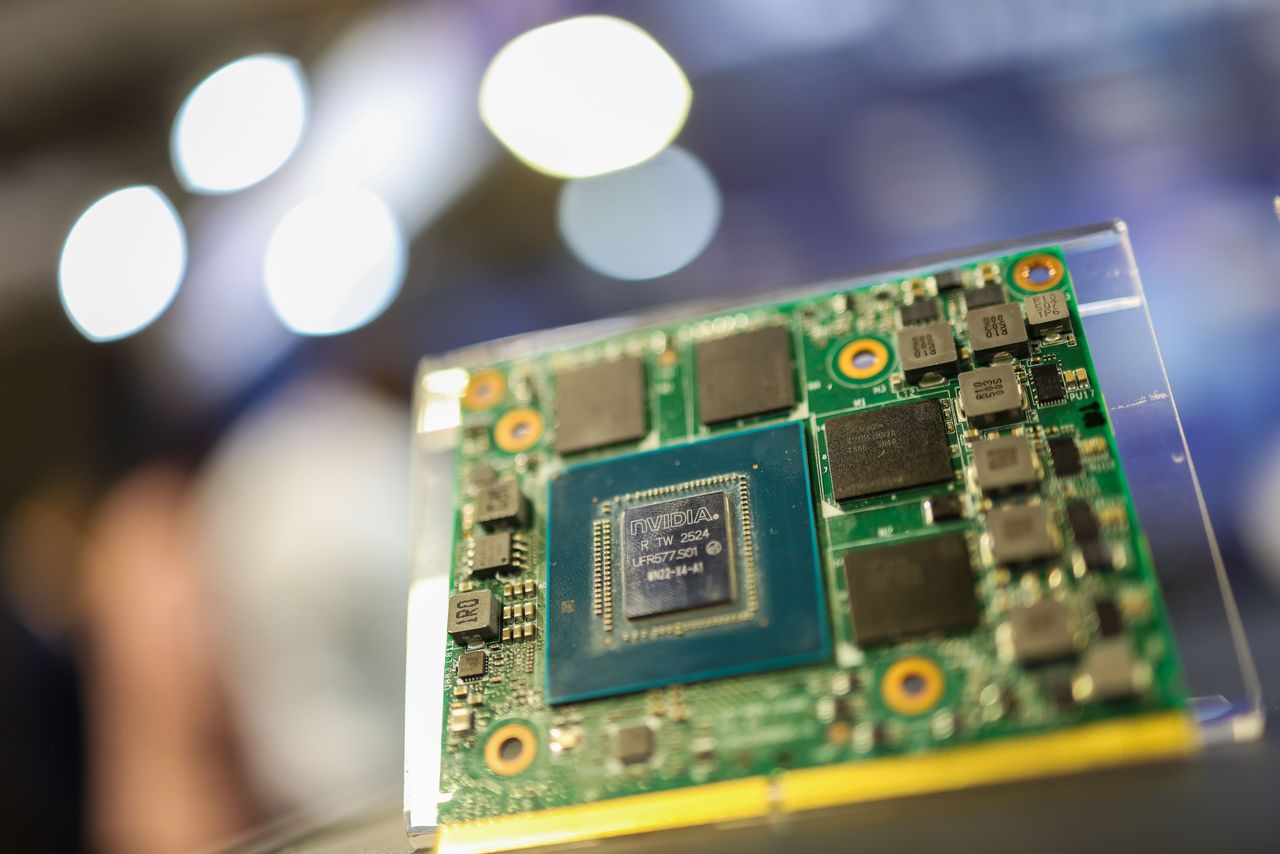


- The firm said the revenue impact on U.S. chipmakers should be limited, as displaced capacity could be sold to other customers.
- It noted that major hyperscalers appear relatively insulated, while smaller cloud providers and standalone Chinese AI labs face greater exposure.
- The greater concern is that the rule adds pressure to elevated 2028 capital spending and earnings expectations, UBS said.
Advertisement|Remove ads.
The new U.S. chip restrictions could affect 5% to 10% of artificial intelligence (AI) demand in 2027, UBS said on Tuesday, forecasting $1.4 trillion in aggregate AI capital spending next year, citing resilient computing demand and tight semiconductor supply.
The U.S. Commerce Department announced new restrictions Monday aimed at preventing Chinese companies from accessing advanced American computing technology through overseas data centers.

The rule also introduces additional licensing requirements for advanced semiconductor shipments to Indonesia, Malaysia, Singapore, Thailand and Brazil. The revenue impact on American chipmakers should be limited because displaced capacity could be sold to other customers, the firm said in its note.
Advertisement|Remove ads.
UBS said major U.S. hyperscalers appear relatively insulated because of their scale and diversified cloud businesses. However, smaller cloud providers, regional data center operators, and standalone Chinese AI laboratories face greater exposure.
“The greater concern is that the rule adds to pressure on elevated 2028 capital spending and earnings expectations,” the note said.
UBS Remains Constructive On AI Spending
UBS maintained that underlying demand for computing capacity remains robust, supported by accelerating cloud revenue and growing advance orders. “Project delays, repricing, and consolidation appear more likely than a broad collapse in AI spending,” it said.
Advertisement|Remove ads.
As AI investment climbs into trillions of dollars, “investors are placing greater weight on how this spending translates into revenue, free cash flow, utilization, and sustainable returns,” UBS said.
It further added that Nvidia's (NVDA) upcoming earnings would be assessed for evidence of data-center utilization, margins, order visibility, supply constraints, and customers' spending plans.
Chip Stocks Remain Volatile
The Philadelphia Semiconductor Index fell another 0.5% on Tuesday, extending its 5% decline from the previous session. Technology stocks showed mixed performance, with NVDA stock down 1%, MU stock slipping over 3%, and AVGO shares rising over 1.5%.
Advertisement|Remove ads.
“Recent volatility does not yet change our conviction in the structural AI opportunity or our constructive view on diversified equities,” UBS said.
The firm believes a lasting deterioration would require evidence of weakening computing demand, slowing AI-related revenue growth, or tighter financing conditions affecting major technology companies.
“We therefore continue to see potential for gains in broad equity markets over the next six to 12 months,” UBS said. It favors established AI platforms with strong balance sheets and tangible revenue while recommending diversification into health care, industrials and Eurozone equities.
Advertisement|Remove ads.
Semiconductor ETFs were under pressure in early Tuesday trading, with the iShares Semiconductor ETF (SOXX) and VanEck Semiconductor ETF (SMH) slipping about 1% and the iShares Future AI & Tech ETF (ARTY) falling more than 2%.
For updates and corrections, email newsroom[at]stocktwits[dot]com.
Advertisement|Remove ads.
Comments posted here will also appear on symbol pages.

Latest News
 Harshita Tyagi·8m ago

 Heera Hari·22m ago

 Prabhjote Gill·41m ago
 Harshita Tyagi·57m ago
 Heera Hari·2h ago

 Arnab Paul·2h ago