


Advertisement|Remove ads.
USO, INDO Rise Premarket In Choppy Trade As Hormuz Disruptions Persist: Analyst Says War Premium Keeping Oil Above $100
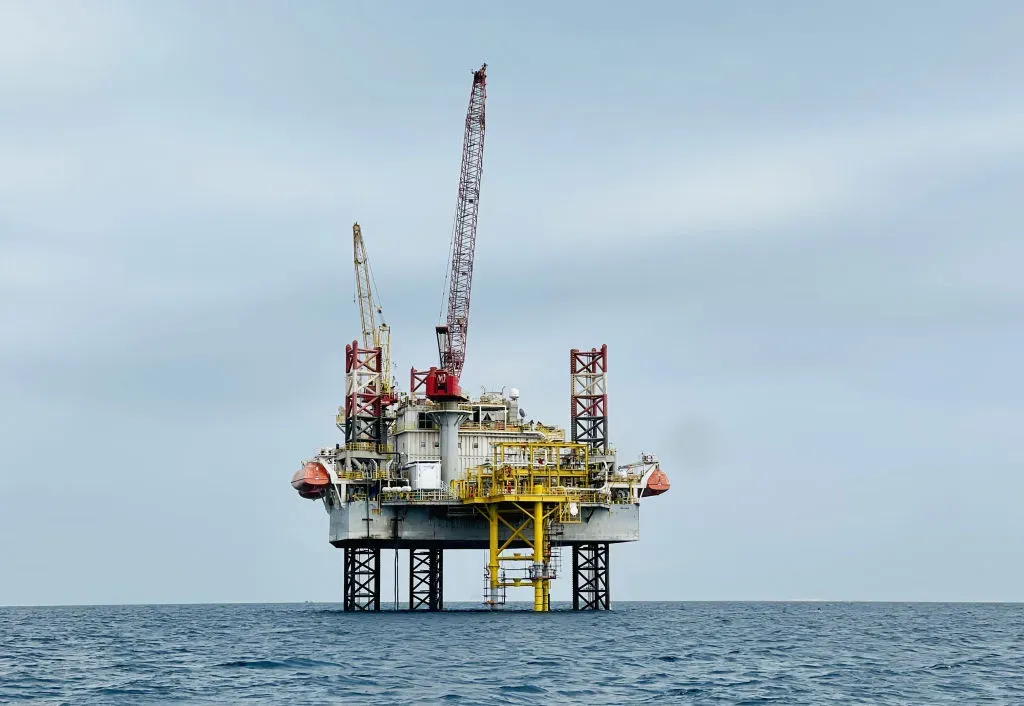


- Oil stocks rose premarket as Brent held above $102 and traders reassessed escalation risks tied to ongoing disruptions in the Strait of Hormuz.
- Brent has surged about 40% this month as Gulf transit disruptions forced output cuts and raised fears of a widening global energy crunch.
- Analysts said energy markets are tightening at a record pace, warning refined-product markets show the clearest signs of stress.
Advertisement|Remove ads.
Major oil stocks and index funds traded mixed in premarket trading on Tuesday as crude rebounded after Monday’s sharp selloff, with investors continuing to weigh escalation risks in the Middle East and persistent disruptions to flows through the Strait of Hormuz.
Small-Cap Oil Stocks Jump As Brent Holds Above $102

The United States Oil Fund (USO) rose over 1% and Indonesia Energy (INDO) added nearly 1% in premarket trading on Tuesday, while Battalion Oil (BATL) dropped nearly 6%, EON Resources (EONR) fell about 3%, and Trio Petroleum (TPET) slipped over 1%.
Brent crude traded above $102 per barrel, while U.S. benchmark West Texas Intermediate rose about 3%, recovering part of Monday’s roughly 11% decline after U.S. President Donald Trump delayed and threatened strikes on Iran’s energy infrastructure by five days, citing possible negotiations with Tehran. Iran denied talks were underway even as Israel continued attacks.
Advertisement|Remove ads.
Large-cap energy companies such as Chevron (CVX) and Halliburton (HAL) saw more muted moves as investors instead focused on smaller exploration-linked stocks that tend to react more sharply to short-term crude price swings and geopolitical risk.
Fuel Supply Risks Spread Beyond Middle East
Brent has surged about 40% this month as hostilities involving the United States, Israel and Iran disrupted transit through the Strait of Hormuz, forcing Persian Gulf producers to cut millions of barrels of daily output and raising concerns about a widening global energy crunch.
Chile is preparing fuel price increases, Japan ordered a review of its oil-product supply chain, Thailand raised diesel prices, China’s largest refiner prioritized domestic supply, and the Philippines warned that grounding aircraft due to jet-fuel shortages was a “distinct possibility.”
Advertisement|Remove ads.
Regional tensions also intensified after reports that U.S. allies in the Gulf were moving closer to joining military operations. Saudi Arabia told Washington it was prepared to strike Iran if its infrastructure were targeted, while the Wall Street Journal reported that Crown Prince Mohammed bin Salman was nearing a decision on whether to participate in attacks aimed at restoring deterrence.
Iranian Deputy Speaker Ali Nikzad said the Strait of Hormuz would not return to normal conditions and ruled out negotiations with the United States, while gas facilities in Isfahan were struck in the latest escalation.
Saxo: Hormuz Disruption Driving Market Repricing
Ole Hansen, head of commodity strategy at Saxo Bank, said on X that crude rebounded after Monday’s slump as traders reassessed escalation risks tied to continued Hormuz disruption.
Advertisement|Remove ads.
“Global energy markets are tightening at a record pace amid the continued disruption to flows through the Strait of Hormuz,” Hansen said, adding that reports Saudi Arabia and the United Arab Emirates could join the conflict point to further escalation risk. He said the clearest signal of stress currently lies in refined-product markets rather than crude itself.
“Crude’s relative resilience may come under increasing pressure as the initial buffer of elevated oil-on-water inventories continues to erode.”
War Premium Keeps Oil Above $100 Outlook
Patrick De Haan, head of petroleum analysis at GasBuddy, said rising fuel prices across the U.S. reflect tightening supply conditions linked to disruptions in the Strait of Hormuz.
Advertisement|Remove ads.
“Gas prices continued to rise nationwide over the last week as seasonal factors, combined with ongoing supply concerns tied to the continued disruption in the Strait of Hormuz, pushed both gasoline and diesel prices sharply higher,” De Haan said. He added that the national average gasoline price could soon cross a key psychological threshold.
Goldman Sachs said Monday’s selloff reflected a partial reassessment of disruption risk. “The market reaction likely reflects some retreat in the perceived risks of lengthy disruptions and of damage to energy assets,” the bank said.
Despite the temporary pause in strike threats, analysts said the war premium remains embedded in crude markets. ANZ Research said supply losses have already tightened the global oil balance for the year.
Advertisement|Remove ads.
Oil prices are expected to remain above $100 per barrel in the near term, the firm said, adding that even if tensions ease, crude is unlikely to return to the $60-$70 range seen previously. ANZ expects oil to average above $90 per barrel in 2026 as disruptions continue reshaping the global supply outlook.
How Did Stocktwits Users React?
On Stocktwits, retail sentiment toward USO was ‘bearish’ amid ‘high’ message volume, while INDO, TPET and BATL also saw ‘bearish’ sentiment amid ‘extremely low’ to ‘low’ message volume. Sentiment for EONR remained ‘neutral’ despite ‘high’ message volume.
Over the past year, BATL has surged by over 700%, while USO rose by about 50%, EONR gained roughly 49%, and INDO advanced by around 37%. In contrast, TPET declined about 38% over the same period.
Advertisement|Remove ads.
For updates and corrections, email newsroom[at]stocktwits[dot]com.
Comments posted here will also appear on symbol pages.

Latest News
/filters:format(webp)https://news.stocktwits-cdn.com/large_Getty_Images_2200882557_jpg_53f3e467bc.webp)
/filters:format(webp)https://st-everywhere-cms-prod.s3.us-east-1.amazonaws.com/i_OS_App_Icon_1_8054f2a2fe.png) Stocktwits News Desk·54m ago
Stocktwits News Desk·54m ago/filters:format(webp)https://news.stocktwits-cdn.com/gettyimages_2267701500_594x594_1cfbb8b517.jpg)
/filters:format(webp)https://news.stocktwits-cdn.com/1707726834303_jpg_11f20a9aa9.webp) Shashank Nayar·5h ago
Shashank Nayar·5h ago/filters:format(webp)https://news.stocktwits-cdn.com/large_Getty_Images_1503993596_8deb3f6bd9.jpg)
/filters:format(webp)https://news.stocktwits-cdn.com/unnamed_jpg_9dff551b50.webp) Anan Ashraf·5h ago
Anan Ashraf·5h ago/filters:format(webp)https://news.stocktwits-cdn.com/large_Getty_Images_2247481493_2752b5d809.jpg)
/filters:format(webp)https://news.stocktwits-cdn.com/Prabhjote_DP_67623a9828.jpg) Prabhjote Gill·6h ago
Prabhjote Gill·6h ago/filters:format(webp)https://news.stocktwits-cdn.com/large_Getty_Images_1411089032_84de9393bb.jpg) Shashank Nayar·6h ago
Shashank Nayar·6h ago/filters:format(webp)https://news.stocktwits-cdn.com/large_Getty_Images_507531870_jpg_6497bb5caf.webp)
/filters:format(webp)https://news.stocktwits-cdn.com/vivekkrishnanphotography_58_jpg_0e45f66a62.webp) Arnab Paul·6h ago
Arnab Paul·6h ago