


Advertisement|Remove ads.
Apple Earnings, Midterms, Jobs Data Put Markets To The Test: 3 Charts To Watch This Week
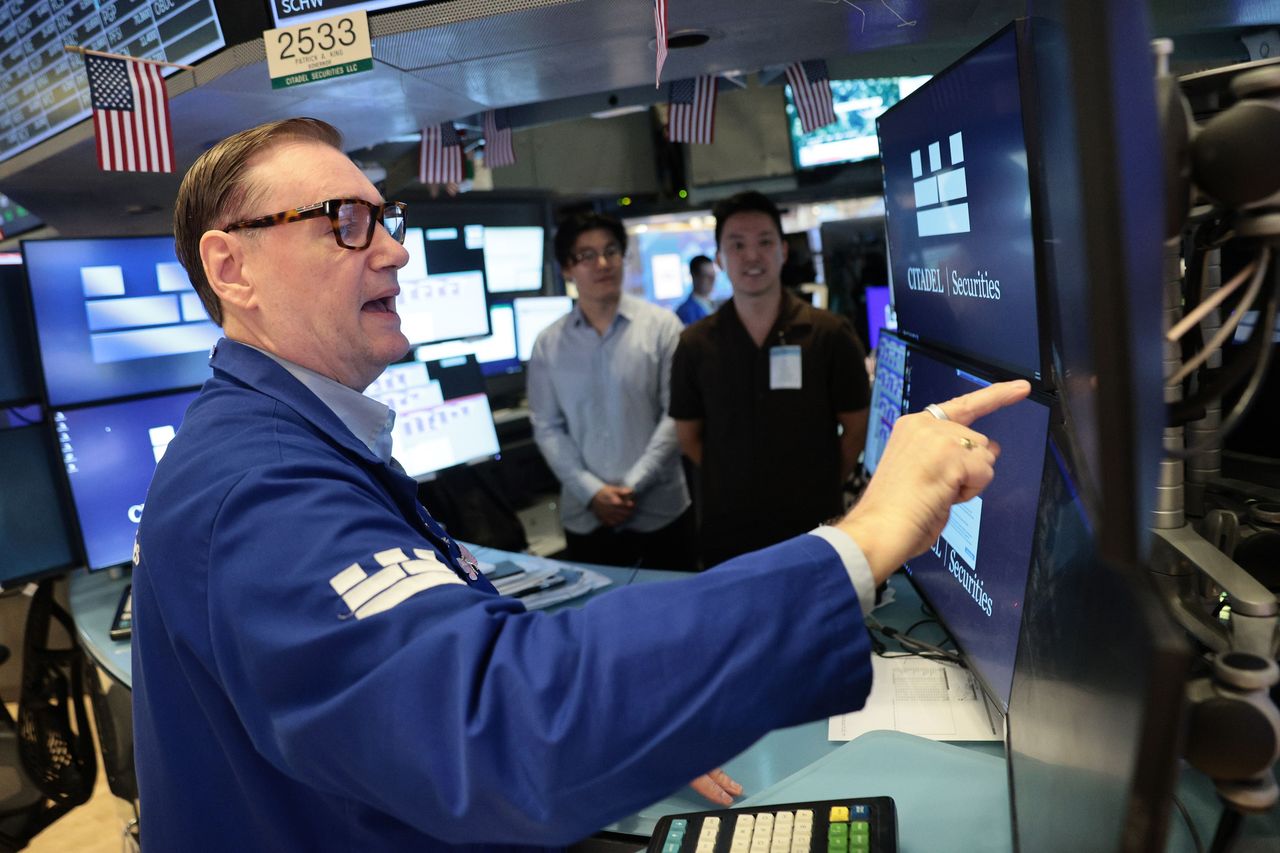


- Investors will be watching Apple’s margins for whether the company can absorb higher memory-chip costs.
- Big Tech’s AI spending is squeezing cash flow, pushing companies toward more borrowing and stock sales.
- Friday’s jobs report will help determine whether slowing hiring changes expectations for another Federal Reserve rate hike in December.
Advertisement|Remove ads.
Apple (AAPL) earnings on Monday, Tuesday’s midterm elections and Friday’s jobs report will test whether last week’s AI sell-off was a blip or the start of a broader pullback.
To recap, Alphabet (GOOG, GOOGL) suffered its worst day on record, Amazon’s (AMZN) outlook disappointed despite accelerating cloud growth, and Intel (INTC) plunged nearly 29%. In the broader market, the S&P 500 fell 1.8% on Friday, its steepest single-day decline since June.

Investors’ concerns are shifting from whether demand for AI is real to who will pay for the infrastructure behind it, and at what cost. A Democratic win could bring tougher AI rules and more resistance to data centers, analysts said, while Friday’s jobs report could influence expectations for the Federal Reserve’s December rate decision.
Advertisement|Remove ads.
Here are three charts to watch:
Apple Earnings Will Test the AI Trade
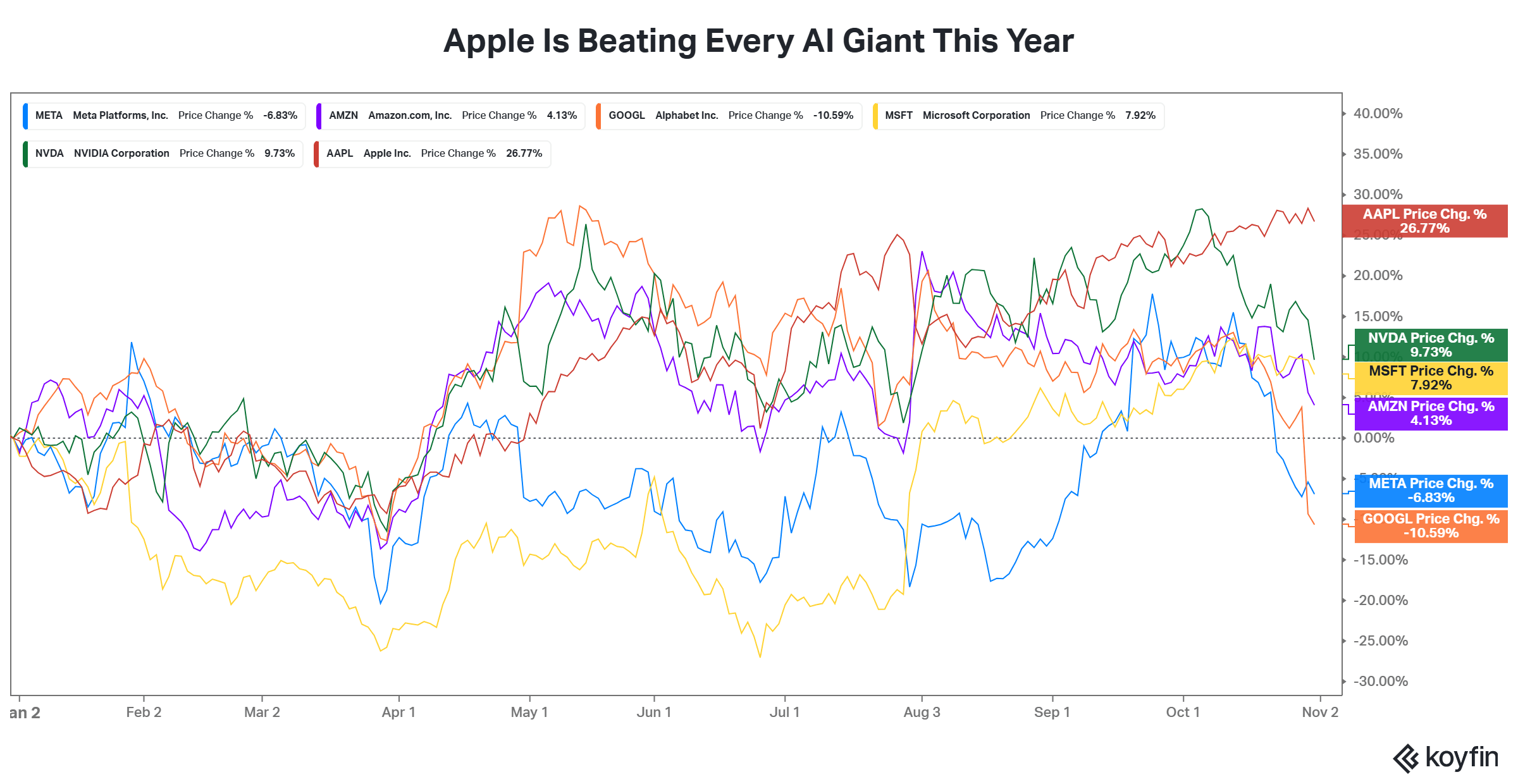
Apple has been one of the few major technology stocks to deliver strong gains this year, even though it spends less on AI infrastructure than many of its peers. Its shares are up more than 25%, while Alphabet and Meta Platforms (META) are down, and Microsoft (MSFT), Amazon and Nvidia (NVDA) have lagged Apple.
Monday’s earnings report will test whether investors continue to treat Apple as a relative safe haven. The company reports after the market close during its first earnings call led by new CEO John Ternus. Wall Street is expecting earnings per share of $1.99 on revenue of $113.35 billion, as per Koyfin.
Advertisement|Remove ads.
One pressure point is the cost of memory chips, which has climbed. Apple has forecast a gross margin of about 47% to 48%, down from 50% last quarter. Last quarter’s figure also benefited from a one-time boost from tariff refunds.
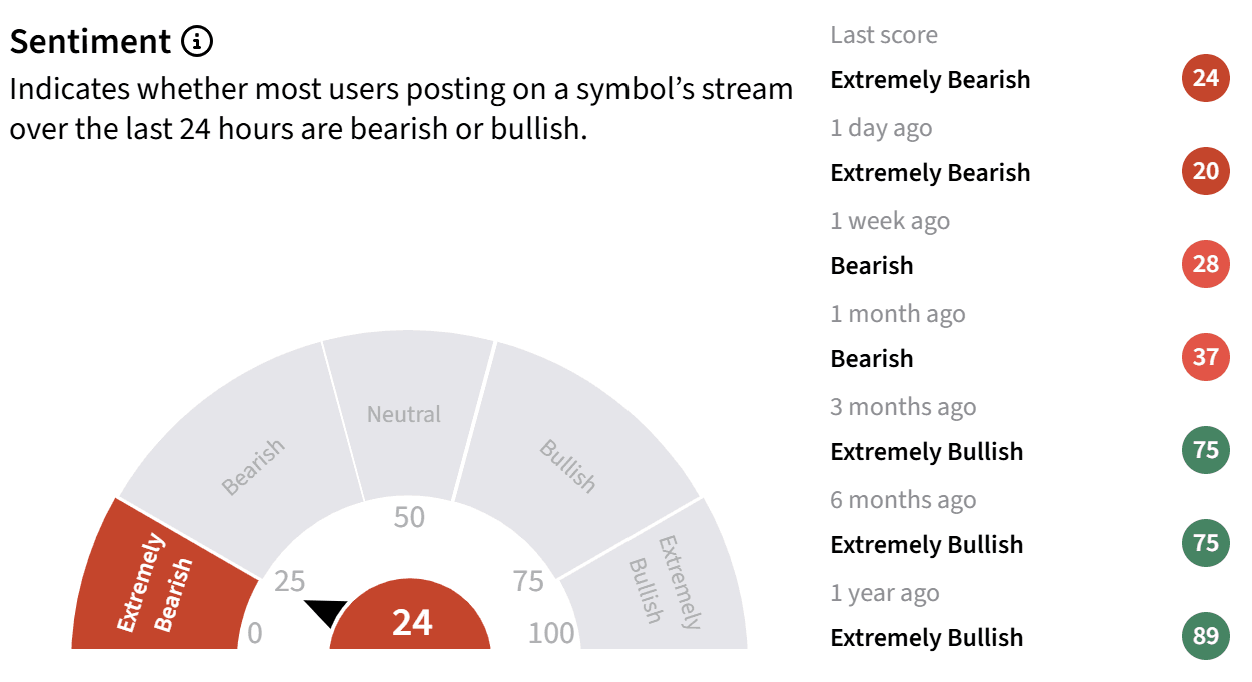
The new iPhone Duo, which went on sale in late October at $1,999, will not be included in Monday’s results, making any early comments on demand worth watching. AAPL stock edged 0.4% lower in pre-market trade on Monday. On Stocktwits, retail sentiment around Apple trended in ‘extremely bearish’ territory over the past day.
Other Tech Earnings To Watch This Week
Palantir (PLTR), which sells AI software rather than building its business around buying chips and data-center capacity, also reports Monday. Its results will offer another read on demand for AI applications. Later in the week, Advanced Micro Devices (AMD) reports Tuesday and Qualcomm (QCOM) reports Wednesday.
Advertisement|Remove ads.
PLTR stock gained over 1% in pre-market trading on Monday and was among the top-trending tickers on Stocktwits at the time of writing. Retail sentiment around the company on Stocktwits remained in ‘bearish’ territory over the past day.
Big Tech Faces A Growing AI Financing Challenge
The cash available to fund the AI buildout has also come under scrutiny, with companies choosing between borrowing more, selling stock or scaling back spending.
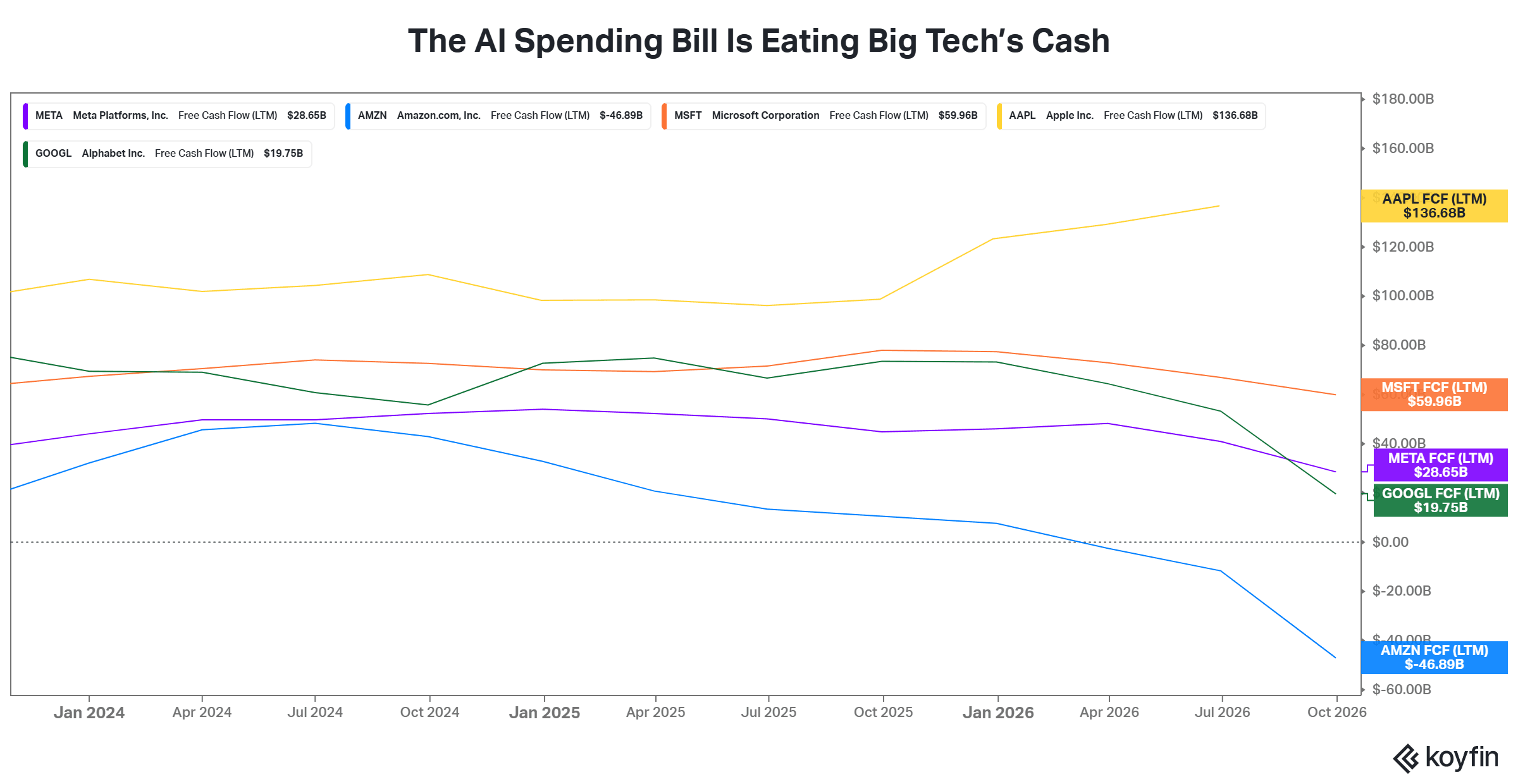
Amazon’s third-quarter report showed that free cash flow turned negative over the past year. Alphabet, Meta and Microsoft have also seen their free cash flow decline. Apple remains an exception.
Advertisement|Remove ads.
Last week’s results offered a glimpse of how the companies intend to proceed. Alphabet said its AI spending could double, while Amazon expects to spend about $220 billion this year. Amazon CEO Andy Jassy has also said the company’s cloud business could grow by more than 40% in each of the next two years.
The other ways to pay are already in motion. Meta created a new class of non-voting shares that it plans to distribute in January and sell from time to time.
The cost of that financing matters, too. Although the 10-year Treasury yield has cooled off from its early-October highs, it’s still hovering near 4.92%. As a result, borrowing is still relatively expensive, potentially raising the hurdle for investments that take years to generate returns.
Advertisement|Remove ads.
Anthropic, the maker of the Claude chatbot, made its IPO paperwork public last week. Reports suggest a possible listing before Thanksgiving, although no date has been confirmed.
Jobs Data Could Shift December Rate Expectations
Friday’s jobs report will help shape expectations for the Federal Reserve’s next policy decision, with traders increasingly pricing in another rate hike in December. The Fed held its benchmark rate at 3.75% to 4.00% last week, but two officials voted for an increase. Traders now see roughly a 72% chance of a hike at the Dec. 8-9 meeting, according to CME Fed Watch data.
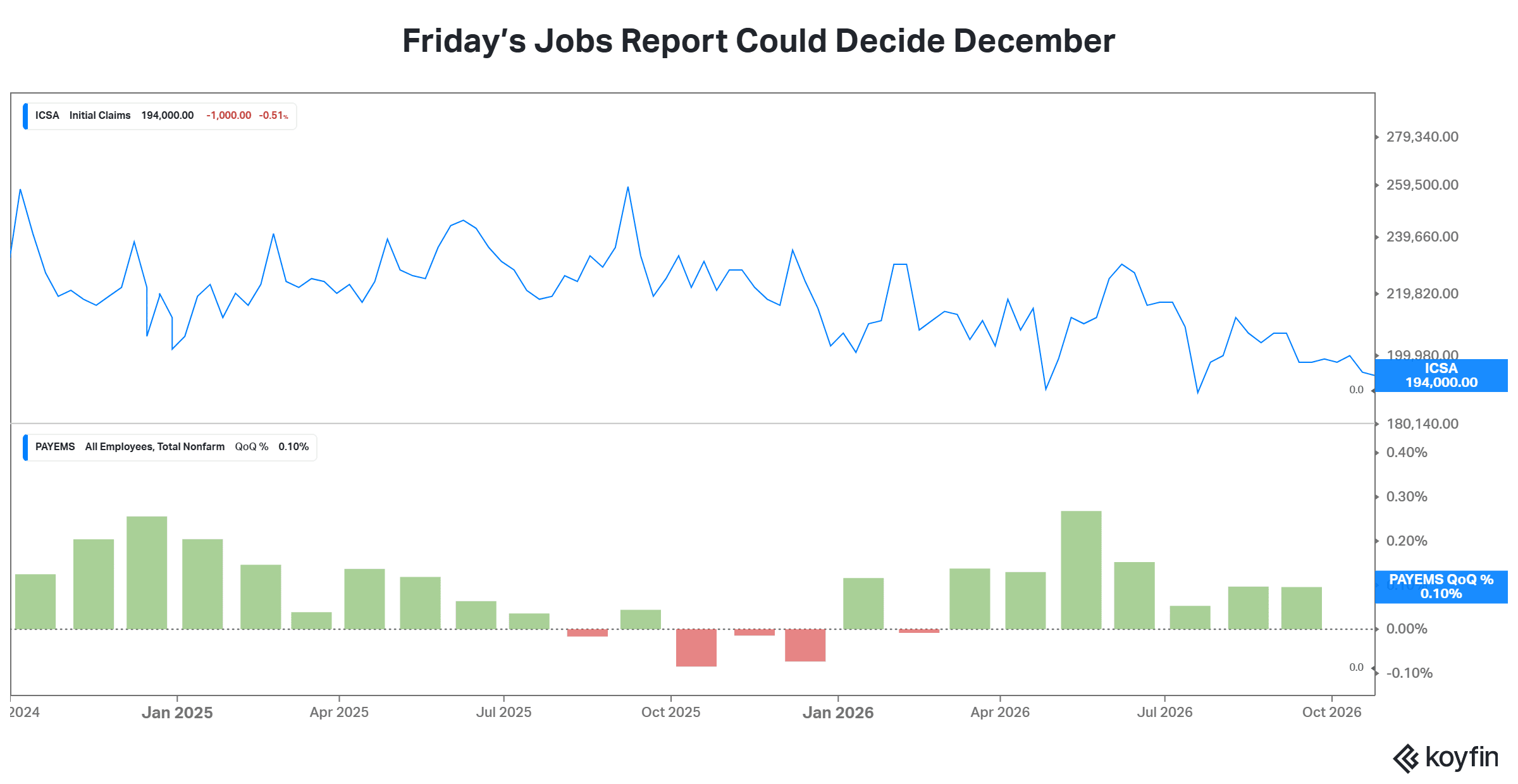
The chart helps explain why a soft jobs report may not be enough to derail the case for tighter policy. The bars show the change in total payrolls over three months, and hiring has slowed since the spring. Meanwhile, weekly initial claims for unemployment benefits have drifted lower and remain near multi-decade lows.
Advertisement|Remove ads.
That combination gives the Fed room to remain focused on inflation even as hiring cools. A weak payroll number accompanied by low jobless claims may not be enough to stop a December hike.
For updates and corrections, email newsroom[at]stocktwits[dot]com.
Advertisement|Remove ads.
Comments posted here will also appear on symbol pages.

Latest News

 Anushka Basu·17m ago

 Heera Hari·25m ago

 Harshita Tyagi·40m ago
 Prabhjote Gill·42m ago

 Arnab Paul·1h ago

 Aveek Bhowmik·1h ago