


Advertisement|Remove ads.
Bessent Says US Won’t Extend Oil Waivers On Russia, Iran Amid Strait Of Hormuz Tensions
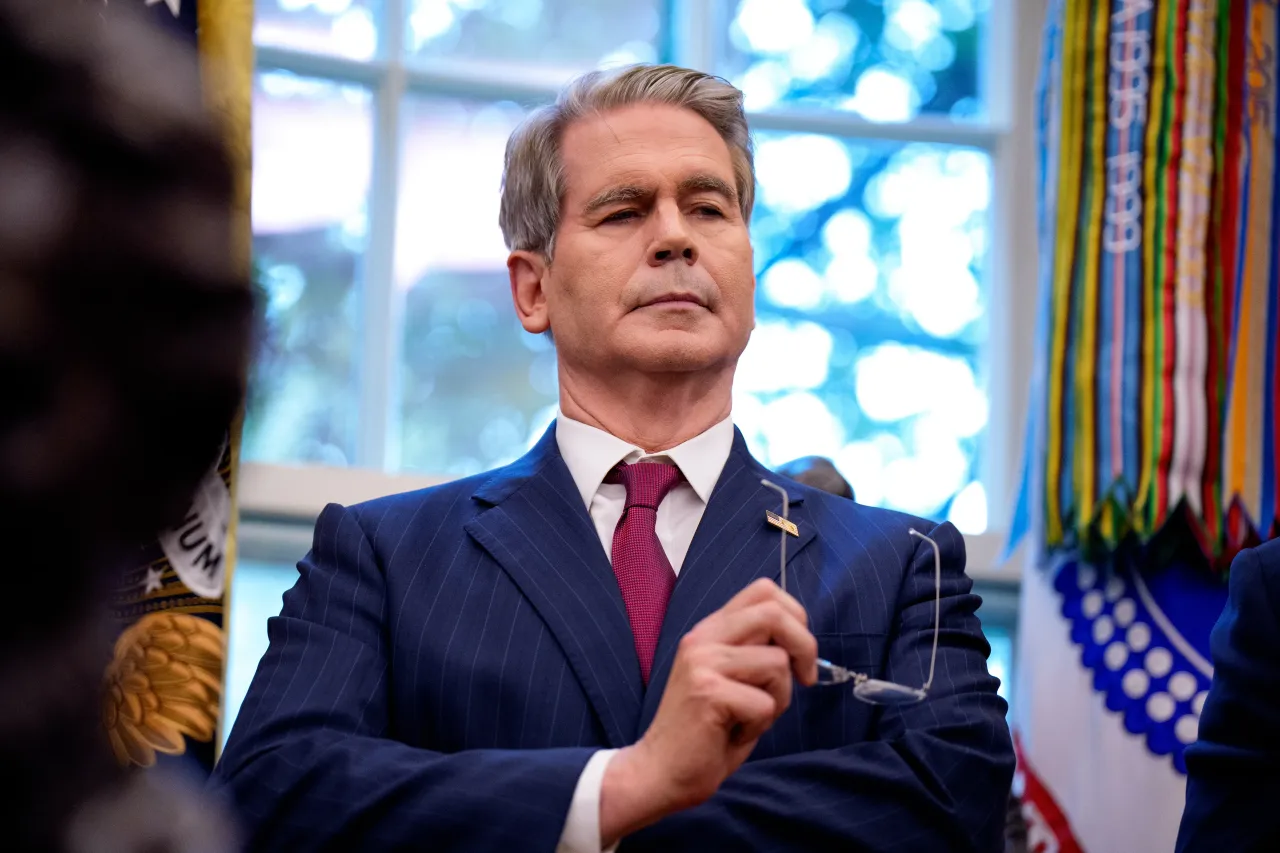


- The move indicates an end to the Trump administration's efforts to use the sanctions waivers to ease global oil prices.
- Washington had previously allowed the purchase of sanctioned oil from Russia and Iran under a waiver issued for a period of 30 days, but the deadline is now set to expire.
- Meanwhile, diplomatic efforts are underway to ease tensions between the two countries.
Advertisement|Remove ads.
U.S. Treasury Secretary Scott Bessent said on Wednesday that the country will not renew the temporary licenses that allowed limited sales of Russian and Iranian crude oil to ease global energy supplies.
“We will not be renewing the general license on Russian oil, and we will not be renewing the general license on Iranian oil,” Bessent said at a White House press briefing.

“That was oil that was on the water prior to March 11. So all that has been used," Bessent said.
Advertisement|Remove ads.
This announcement comes amid ongoing geopolitical tensions and rising crude oil prices since the start of the war with Iran as the flow of oil through Strait of Hormuz remains severely disrupted. The move indicates an end to the Trump administration's efforts to use the sanctions waivers to ease up oil prices.
Soaring Oil Prices
Washington had previously allowed the purchase of sanctioned oil from Russia and Iran under a waiver issued for a period of 30 days. However, as the Russian waiver has expired and the Iranian exemption is set to lapse, the U.S.’s decision to not extend them could severely impact global oil supply.
Meanwhile, diplomatic efforts are underway to ease tensions between the two countries. The U.S. and Iran are reportedly close to extending a two-week ceasefire, with negotiations progressing despite earlier setbacks tied to Iran’s nuclear program, maritime navigation, and wartime compensation.
Advertisement|Remove ads.
President Donald Trump said the conflict is nearing an end and suggested oil prices could fall significantly if hostilities cease. Still, the risk of further supply disruptions, including the possibility of a U.S. blockade in the strait, continues to weigh on global energy markets and U.S. allies heavily dependent on Middle Eastern oil.
Market Reactions
Crude oil prices dipped lower on Wednesday, with U.S. West Texas Intermediate (WTI) crude futures maturing in May falling by about 0.5% to $90.81 per barrel. Brent crude futures maturing in June were trading around $94.79 per barrel at the time of writing.
The United States Oil Fund ETF (USO) fell nearly 1%, while the ProShares Ultra Bloomberg Crude Oil ETF (UCO) was up about 1.5% at the time of writing.
Advertisement|Remove ads.
At the time of writing, the SPDR S&P 500 ETF (SPY), which tracks the S&P 500 index, was up 0.78%; the Invesco QQQ Trust ETF (QQQ) climbed 1.3% higher; and the SPDR Dow Jones Industrial Average ETF Trust (DIA) fell 0.13%.
Retail sentiment on Stocktwits regarding the S&P 500 ETF was in the ‘neutral’ territory.
For updates and corrections, email newsroom[at]stocktwits[dot]com.
Advertisement|Remove ads.
Comments posted here will also appear on symbol pages.

Latest News
/filters:format(webp)https://news.stocktwits-cdn.com/Getty_Images_2228900888_jpg_338103de79.webp)
/filters:format(webp)https://news.stocktwits-cdn.com/Anushka_Basu_make_me_smile_in_the_picture_b92832aa_af59_4141_aacc_4180d2241ba8_1_2_png_1086e0ed8c.webp) Anushka Basu·5h ago
Anushka Basu·5h ago/filters:format(webp)https://news.stocktwits-cdn.com/large_Getty_Images_1767602875_jpg_db2e050c08.webp) Anushka Basu·6h ago
Anushka Basu·6h ago/filters:format(webp)https://news.stocktwits-cdn.com/large_new_york_stock_exchange_jpg_e1f85c0d8c.webp)
/filters:format(webp)https://st-everywhere-cms-prod.s3.us-east-1.amazonaws.com/i_OS_App_Icon_1_8054f2a2fe.png) Stocktwits News Desk·6h ago
Stocktwits News Desk·6h ago/filters:format(webp)https://news.stocktwits-cdn.com/large_grayscale_OG_jpg_c35dc5b1a2.webp) Anushka Basu·7h ago
Anushka Basu·7h ago/filters:format(webp)https://news.stocktwits-cdn.com/large_Google_Office_in_New_York_City_2ff844002a.jpg) Stocktwits News Desk·7h ago
Stocktwits News Desk·7h ago/filters:format(webp)https://news.stocktwits-cdn.com/large_mark_rubio_original_jpg_1e75e0c7f2.webp) Stocktwits News Desk·7h ago
Stocktwits News Desk·7h ago