


Advertisement|Remove ads.
‘The Big Short’ Burry Adds Nvidia Puts, Buys GameStop, JD.com, Alibaba
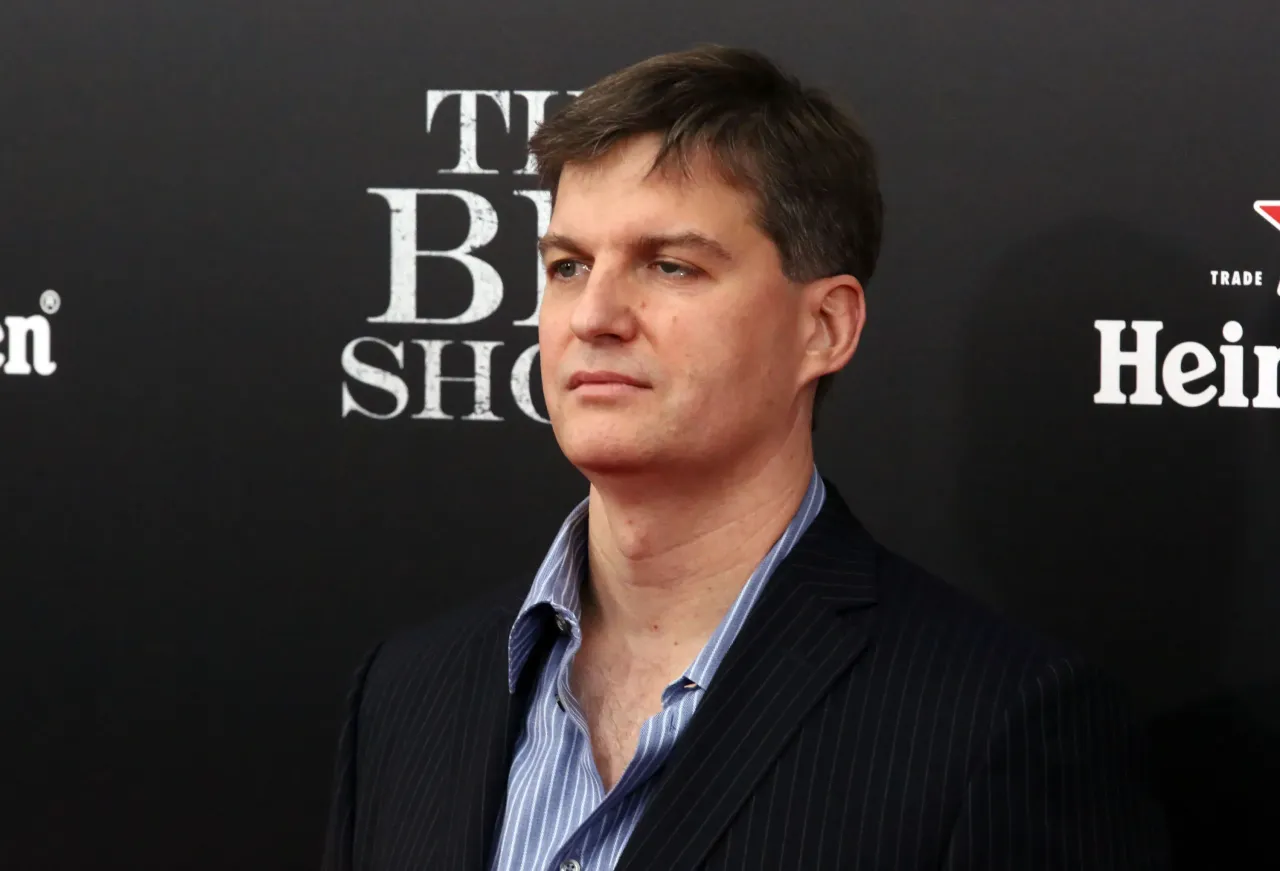


- Burry said that the decision to buy puts instead of shorting was to limit maximum loss and time decay.
- However, Wall Street analysts are betting big on Nvidia, with 57 out of 60 analysts covering the stock having a rating of ‘Buy’ or higher on the company, as per Koyfin.
- Meanwhile, Burry revealed expanded positions in GameStop stock, as well as Chinese companies JD.com and Alibaba Group.
Advertisement|Remove ads.
Contrarian investor Michael Burry, best known for betting against the U.S. housing market before the 2008 financial crisis, said on Friday that he had added to Nvidia Corp. (NVDA) puts, while increasing his stake in GameStop Corp. (GME).
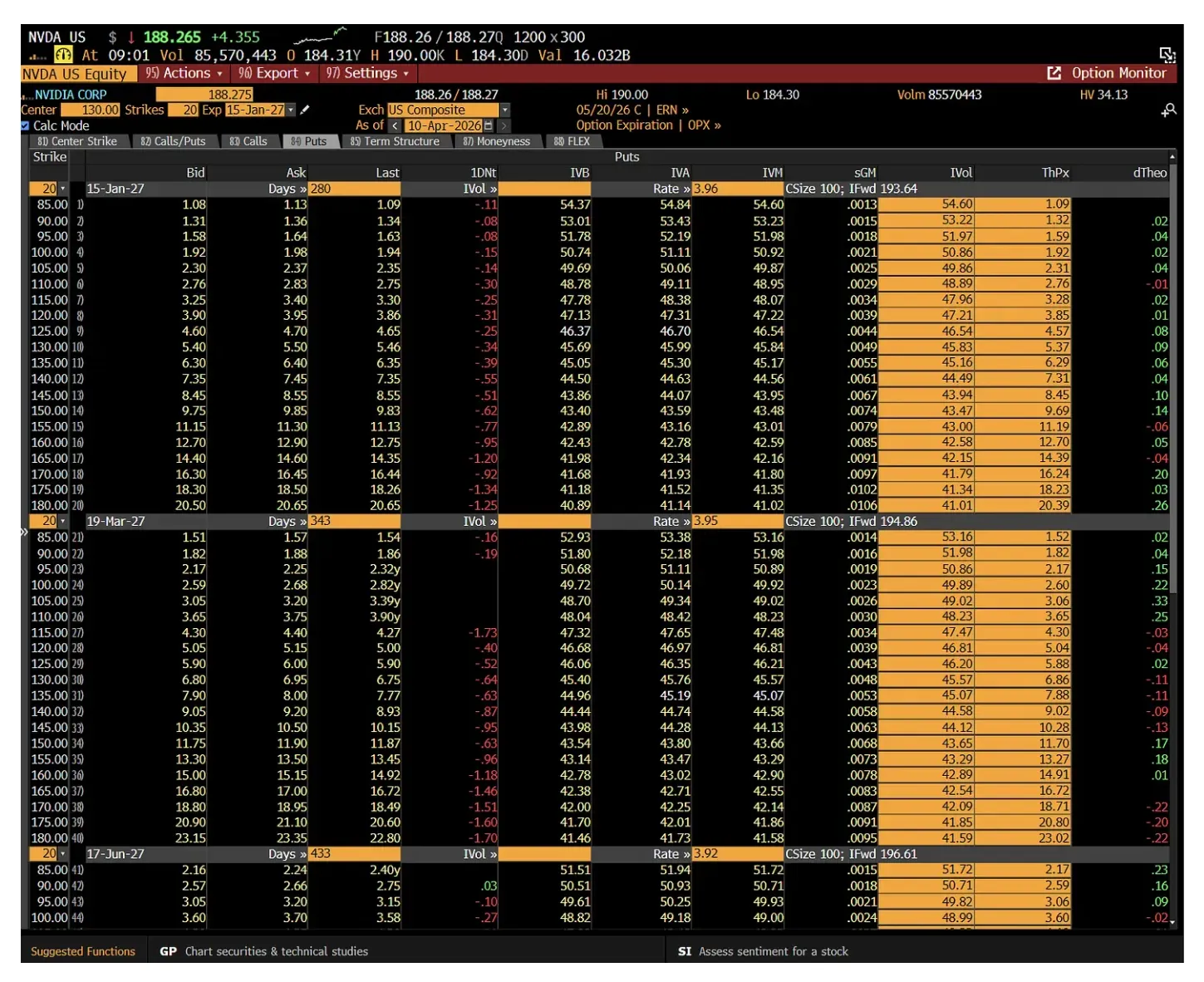
In a Substack post on Friday, Burry said that he bought January 2027 puts at a strike price of $115. “Implied Volatility is high, so I thought about shorting it outright,” Burry said, adding that the decision to buy puts instead was to limit maximum loss and time decay.
Put options are derivative instruments that give the buyer the right, but not the obligation, to sell an asset at a predetermined, fixed price. They are typically used to profit from stock price declines, indicating a bearish position.
Advertisement|Remove ads.
Meanwhile, the investor also said that he had purchased GME shares, adding to an existing position.
Burry On Nvidia
The latest announcement from Burry doubles down on the investor’s bearish outlook on the semiconductor company. In earlier posts, Burry has argued that Nvidia is "simply the purest play," criticizing the company’s dependence on hyperscaler spending and also cited inventory problems in the current AI buildout.
“So shorting it is cheap, and its puts are cheaper than some of the other big shorts out there that are more doubted,” he previously said.
Advertisement|Remove ads.
Burry has also compared Nvidia to Cisco Systems Inc. (CSCO) at the height of the dot-com bubble, highlighting issues with its purchase commitments.
“The other way I think about it is that I am short at about 3% of notional value, and borrowing costs could easily get that high or higher if NVDA really starts falling. I also own NVDA January 27 Strike 100 Puts from earlier, and I continue to hold those,” Burry said in the latest post.
Nvidia Bettors
Meanwhile, other Wall Street investors are betting big on Nvidia. Dan Ives, managing director at Wedbush Securities, has backed the chipmaker aggressively, calling it massively underestimated and terming the company’s chips “the new gold, the new oil” of the world.
Advertisement|Remove ads.
Morgan Stanley’s Joseph Moore has also named Nvidia as its leading semiconductor pick. Moore said concerns over how long the company can sustain its rapid growth have pressured the stock, but he expects sentiment to turn more positive as investors refocus on its longer-term earnings outlook, especially for fiscal 2027.
The company has projected a strong Q1 2027 revenue forecast of around $78 billion, above estimates of about $71.6 billion.
According to data from Koyfin, 57 out of 60 analysts covering NVDA stock have a rating of ‘Buy’ or higher on the company. NVDA shares have gained more than 75% in the past year.
Advertisement|Remove ads.
Meanwhile, on Stocktwits, retail sentiment around NVDA shares has improved from ‘extremely bearish’ to ‘bearish’ territory over the past 24 hours.
What’s Burry Betting On?
Meanwhile, Burry revealed expanded positions in GME stock, as well as Chinese companies JD.com Inc. (JD) and Alibaba Group Holding (BABA), which he bought as American Depositary Receipts in New York.
“In a market crash, I believe Ryan (CEO) could move fast to deploy cash, which would be a catalyst, and I do not see much downside from here, as described in Final Stop GameStop. Corporate governance is as good as it gets if one is ok with a benign dictator,” Burry said about GameStop.
Advertisement|Remove ads.
The investor said that Alibaba was a new position, at slightly more than 6%, and JD was a significant add. “The shares have been weak lately, providing an attractive entry point,” he said. Burry also bought shares of fintech company Fiserv Inc. (FISV).
GME stock has risen nearly 12% so far this year, while FISV stock has declined more than 14% in the same period.
For updates and corrections, email newsroom[at]stocktwits[dot]com.
Advertisement|Remove ads.
Comments posted here will also appear on symbol pages.

Latest News
/filters:format(webp)https://news.stocktwits-cdn.com/large_Oil_drill_06147e8349.webp)
/filters:format(webp)https://news.stocktwits-cdn.com/Aashika_Suresh_Profile_Picture_jpg_2acd6f446c.webp) Aashika Suresh·5m ago
Aashika Suresh·5m ago/filters:format(webp)https://st-everywhere-cms-prod.s3.us-east-1.amazonaws.com/large_qualcomm_logo_resized2_3d59ca39e9.jpg)
/filters:format(webp)https://news.stocktwits-cdn.com/IMG_9209_1_d9c1acde92.jpeg) Yuvraj Malik·32m ago
Yuvraj Malik·32m ago/filters:format(webp)https://news.stocktwits-cdn.com/large_Getty_Images_2227347116_jpg_6a738ad597.webp) Aashika Suresh·35m ago
Aashika Suresh·35m ago/filters:format(webp)https://news.stocktwits-cdn.com/large_cybercab_a95ec55e62.jpg)
/filters:format(webp)https://news.stocktwits-cdn.com/IMG_8805_JPG_6768aaedc3.webp) Deepti Sri·48m ago
Deepti Sri·48m ago/filters:format(webp)https://news.stocktwits-cdn.com/large_Getty_Images_2275170958_51e7635bab.jpg)
/filters:format(webp)https://news.stocktwits-cdn.com/shivani_photo_jpg_dd6e01afa4.webp) Shivani Kumaresan·1h ago
Shivani Kumaresan·1h ago/filters:format(webp)https://news.stocktwits-cdn.com/large_Getty_Images_2233055067_jpg_0bc5b9d760.webp) Aashika Suresh·1h ago
Aashika Suresh·1h ago