


Advertisement|Remove ads.
EXCLUSIVE: Nvidia CEO Jensen Huang Is Flying To Taiwan Nearly Every Month Asking For More GPUs – The Answer Remains Not Yet
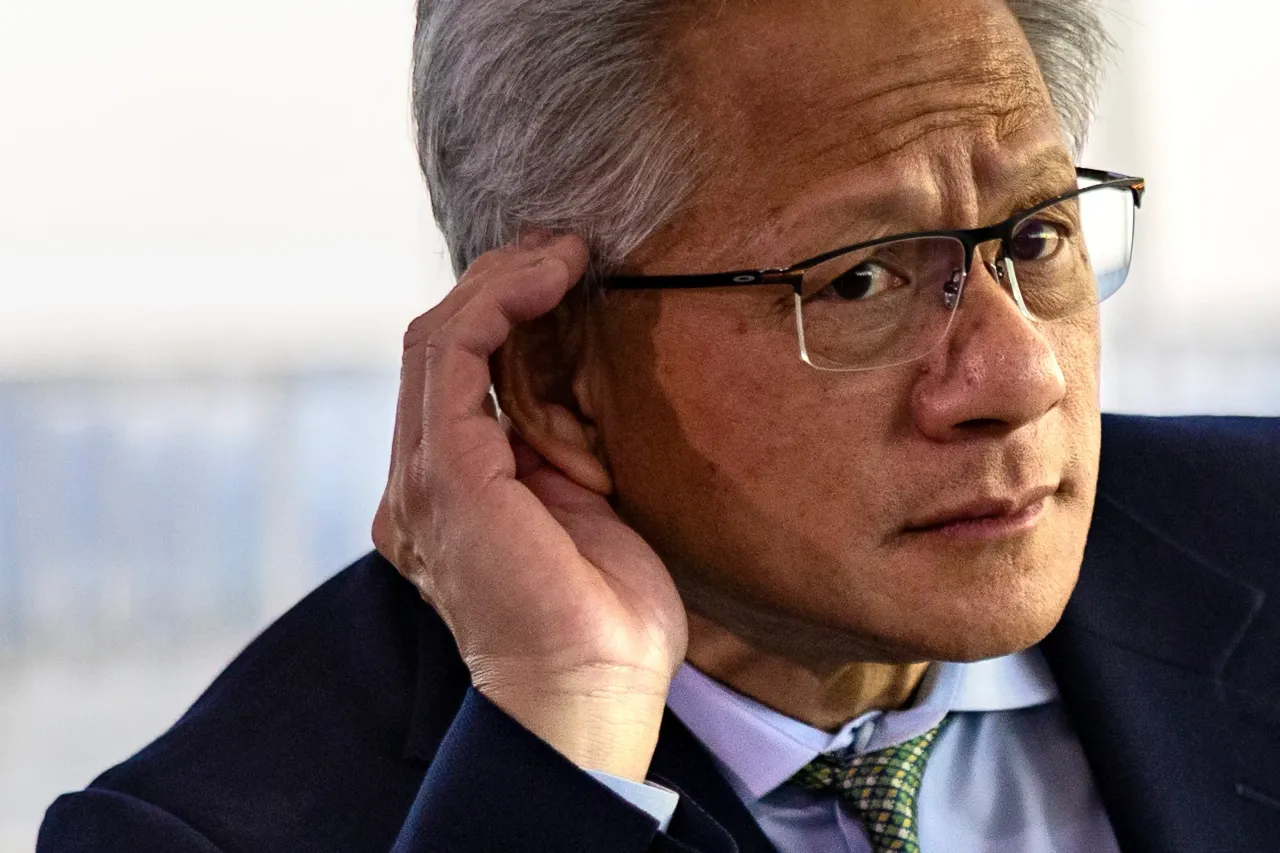


- In an exclusive interview with Stocktwits, former Goldman Sachs executive Michael Parekh called TSMC the “Federal Reserve of the global tech market” because of its control over advanced chip production capacity.
- Parekh stated that Jensen Huang is “flying to Taiwan almost every month” to ask TSMC for more production capacity.
- Nvidia CEO Jensen Huang recently projected that AI infrastructure spending could reach $3 trillion to $4 trillion by the end of the decade, but Parekh said it could be higher if TSMC can expand supply.
Advertisement|Remove ads.
Chief executive Jensen Huang told investors on Nvidia’s ($NVDA) earnings call that customers are on track to spend $3 to $4 trillion on AI infrastructure by the end of the decade. According to Michael Parekh, a former Goldman Sachs executive who now runs the AI: Return to Zero Substack, the number is probably conservative, and a single company in Taiwan gets to decide whether it happens.
“That they are the gating factor,” Parekh said of Taiwan Semiconductor Manufacturing Company (TSMC) in an exclusive Stocktwits interview with Michele Steele. “Jensen’s flying to Taiwan almost every month, basically telling his friends at TSMC: please, here’s another hundred billion, make me extra fabs. But the TSMC guys are not doing it.”
“TSMC is the Federal Reserve of the global tech market. They have to ramp up their manufacturing fabs, which takes three to five years to build, billions and tens and hundreds of billions of dollars. And they’re not ramping up production their to accommodate the full five-plus trillion [potential].” – Michael Parekh, Founder, AI: Return to Zero Substack
Advertisement|Remove ads.
NVDA’s stock closed Friday nearly 2% lower, and is down over 6% for the week. Retail sentiment around the tech giant on Stocktwits trended in ‘extremely bullish’ territory over the past week, accompanied by ‘extremely high’ levels of chatter.
Why TSMC Holds The Cards
TSMC makes approximately 90% of the chips Nvidia needs. Apple and Nvidia together account for roughly 50% of TSMC’s revenues. When Jensen Huang stood outside a Taipei restaurant in February and told the press, “TSMC needs to work very hard this year because I need a lot of wafers,” he was describing a constraint, not a negotiation.
Meanwhile, TSMC’s deliberate pacing is not stubbornness, according to Parekh. It is the rational behavior of a company that understands building a new leading-edge fab costs tens of billions of dollars and takes three to five years to reach full production. According to him, TSMC is threading the needle between the demand it can see and the capacity it can responsibly build.
Advertisement|Remove ads.
The Demand Side Is Not The Problem
According Parekh, the way technology has evolved over the past year has substantially changed the demand side of things. He noted that twelve months ago, the primary use case for AI compute was chatbots. Today it is agents and reasoning models, which are systems that use more than 100 times the chips for inference that chatbots require for the same task.
He stated that the acceleration in demand is what gives Jensen the confidence to cite numbers that would have sounded absurd three years ago. It is also what makes the TSMC constraint more acute rather than less, because demand is growing faster than any fab can be built to meet it.
“Jensen has the confidence to talk about trillions of demand, and yes, he does have the visibility to trillions of demand. The AI was, just a year ago, all about chatbots. Now it’s about agents and reasoning, and those things use 100-plus times the chips for inference than we needed for chatbots just a year ago.” – Michael Parekh, Founder, AI: Return to Zero Substack
Advertisement|Remove ads.
Parekh has covered the internet, mobile, cloud, and every major technology wave of the past three decades. He told Stocktwits this is bigger than all of them. Jensen’s $3 to $4 trillion figure, he said, is probably an underestimate. He pegged the real number at $4 to $5 trillion over the next six years, provided TSMC can build the capacity to support it.
“This is way bigger than the internet boom. And Jensen is right – at least three-plus trillion. The reality is he could probably sell four to five trillion in the next six years. But the gating factor is TSMC,” Parekh stated.
NVDA’s stock has gained over 13% this year, and rallied more than 60% in the past 12 months.
Advertisement|Remove ads.
Read also: EXCLUSIVE: A Former Goldman Sachs Executive Thinks Nvidia’s China Story Isn’t Over
For updates and corrections, email newsroom[at]stocktwits[dot]com
Comments posted here will also appear on symbol pages.

Latest News
/filters:format(webp)https://news.stocktwits-cdn.com/large_coreweave_logo_original_jpg_d5b88ecdd9.webp)
/filters:format(webp)https://news.stocktwits-cdn.com/Prabhjote_DP_67623a9828.jpg) Prabhjote Gill·6m ago
Prabhjote Gill·6m ago/filters:format(webp)https://st-everywhere-cms-prod.s3.us-east-1.amazonaws.com/Walmart_store_exterior_5266815680_wc_cef072d1c7.jpg)
/filters:format(webp)https://news.stocktwits-cdn.com/Heera_1_1c30cb0170.PNG) Heera Hari·60m ago
Heera Hari·60m ago/filters:format(webp)https://st-everywhere-cms-prod.s3.us-east-1.amazonaws.com/large_Representative_Chip_image_601ac8ff55.jpg)
/filters:format(webp)https://news.stocktwits-cdn.com/Harshita_3cfe02022c.jpg) Harshita Tyagi·1h ago
Harshita Tyagi·1h ago/filters:format(webp)https://news.stocktwits-cdn.com/large_redwire_logo_jpg_9c82781656.webp)
/filters:format(webp)https://news.stocktwits-cdn.com/vivekkrishnanphotography_58_jpg_0e45f66a62.webp) Arnab Paul·1h ago
Arnab Paul·1h ago/filters:format(webp)https://news.stocktwits-cdn.com/Apple_CEO_jpg_3e79c87def.webp)
/filters:format(webp)https://news.stocktwits-cdn.com/Whats_App_Image_2026_05_11_at_09_45_43_1_jpeg_a08c0cf251.webp) Aveek Bhowmik·2h ago
Aveek Bhowmik·2h ago/filters:format(webp)https://news.stocktwits-cdn.com/large_skydance_decde45b1e.jpg)
/filters:format(webp)https://news.stocktwits-cdn.com/shivani_photo_jpg_dd6e01afa4.webp) Shivani Kumaresan·2h ago
Shivani Kumaresan·2h ago