


Advertisement|Remove ads.
‘Very Severe’ Crude Oil Shock Coming? IEA Warning Sparks Reaction As Trump’s Iran Deadline Looms
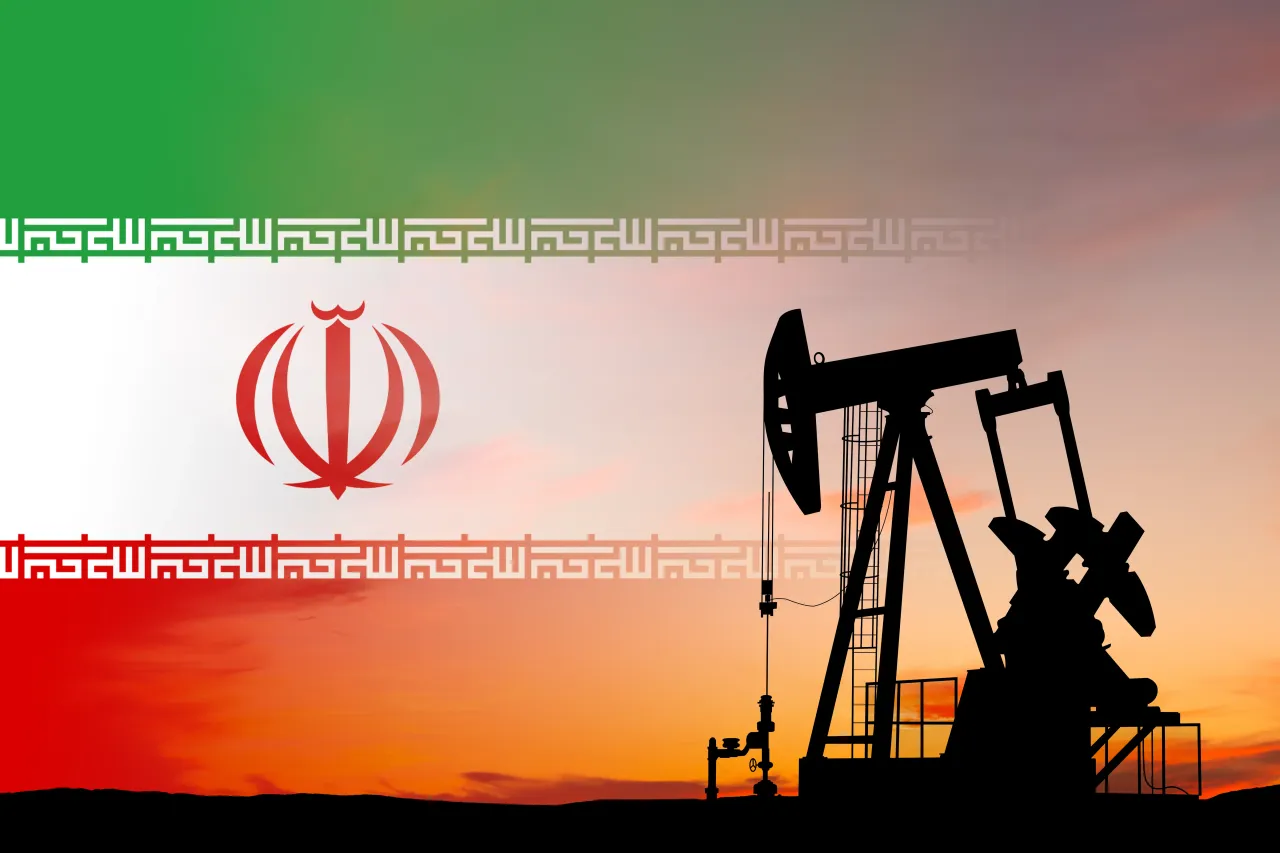


- President Trump gave Iran an ultimatum on Saturday that the U.S. will “obliterate” the country’s power plants if it doesn’t stand down and fully open the Strait of Hormuz.
- Iran's Parliament Speaker Mohammad Baqer Qalibaf warned that critical and energy infrastructure, as well as oil facilities in the Middle East, could be destroyed if Iran’s energy infrastructure is targeted.
- According to a Reuters report, Iran’s National Defence Council has warned that all communication lines in the Persian Gulf will be mined if there is any attempt to attack the Iranian coast or islands.
Advertisement|Remove ads.
Crude oil prices soared on Monday amid intensifying tensions in the Middle East due to the Iran war, with the ultimatum issued by President Donald Trump looming large.
According to a Reuters report, International Energy Agency (IEA) chief Fatih Birol warned that the Middle East crisis is “very severe” and that its impact is worse than the two oil shocks of the 1970s and the Russia-Ukraine war put together.
“The single most important solution to this problem is opening the Hormuz Strait. The depth of the problem was not well appreciated by the decision makers around the world,” he said, according to the report, explaining his decision to speak up now.
Advertisement|Remove ads.
This comes amid a continued rise in crude oil prices. U.S. West Texas Intermediate (WTI) crude futures maturing in May were up more than 3% before losing some steam, hovering around $99 a barrel at the time of writing. Brent crude futures expiring in May surged about 3% to hover around $109 a barrel.
The United States Oil Fund ETF (USO) was up about 2% at the time of writing, while the ProShares Ultra Bloomberg Crude Oil ETF (UCO) soared nearly 6%.
Meanwhile, major U.S. oil stocks like Exxon Mobil Corp. (XOM), Chevron Corp. (CVX), and ConocoPhillips (COP) rose about 1% in Monday’s pre-market trade.
Advertisement|Remove ads.
Trump’s Looming Ultimatum
President Trump gave Iran an ultimatum on Saturday that the U.S. will “obliterate” the country’s power plants if it doesn’t stand down and fully open the Strait of Hormuz.
“If Iran doesn’t FULLY OPEN, WITHOUT THREAT, the Strait of Hormuz, within 48 HOURS from this exact point in time, the United States of America will hit and obliterate their various POWER PLANTS, STARTING WITH THE BIGGEST ONE FIRST!” he said.
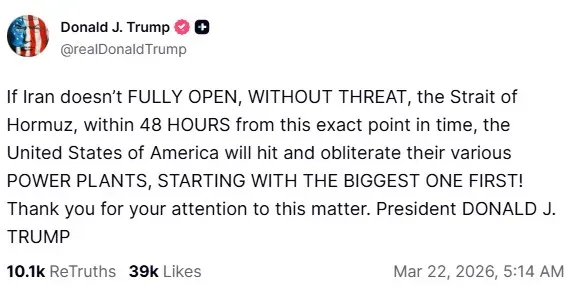
It’s been nearly 35 hours since the president’s post, leaving Iran with about 13 hours to take a call.
Advertisement|Remove ads.
Iran Warns Gulf Facilities Could Be Destroyed In An ‘Irreversible Manner’
Meanwhile, Iran's Parliament Speaker Mohammad Baqer Qalibaf warned in a post on X that critical and energy infrastructure as well as oil facilities in the Middle East could be destroyed in an “irreversible manner” immediately after Iran’s energy infrastructure is targeted.
According to a Reuters report, Iran’s National Defence Council has warned that all communication lines in the Persian Gulf will be mined if there is any attempt to attack the Iranian coast or islands.
“In this case, the entire Gulf will practically be in a situation similar to the Strait of Hormuz for a long time (...) One should not forget the failure of more than 100 minesweepers in the 1980s in removing a few sea mines,” the council said.
Advertisement|Remove ads.
Meanwhile, U.S. equities declined in Monday’s pre-market trade. At the time of writing, the SPDR S&P 500 ETF (SPY), which tracks the S&P 500 index, was down 0.94%; the Invesco QQQ Trust ETF (QQQ) fell 1.01%; and the SPDR Dow Jones Industrial Average ETF Trust (DIA) rose 0.75%. Retail sentiment on Stocktwits regarding the S&P 500 ETF was in the ‘extremely bearish’ territory.
For updates and corrections, email newsroom[at]stocktwits[dot]com.
Advertisement|Remove ads.
Comments posted here will also appear on symbol pages.

Latest News
/filters:format(webp)https://news.stocktwits-cdn.com/large_Getty_Images_915868956_jpg_408b387146.webp)
/filters:format(webp)https://news.stocktwits-cdn.com/IMG_8805_JPG_6768aaedc3.webp) Deepti Sri·14m ago
Deepti Sri·14m ago/filters:format(webp)https://news.stocktwits-cdn.com/large_Getty_Images_2249581920_jpg_e0f76b0419.webp)
/filters:format(webp)https://news.stocktwits-cdn.com/shivani_photo_jpg_dd6e01afa4.webp) Shivani Kumaresan·26m ago
Shivani Kumaresan·26m ago/filters:format(webp)https://st-everywhere-cms-prod.s3.us-east-1.amazonaws.com/large_US_Stock_Market_Investing_in_the_United_States_c469bc6f1d.jpg)
/filters:format(webp)https://news.stocktwits-cdn.com/Aashika_Suresh_Profile_Picture_jpg_2acd6f446c.webp) Aashika Suresh·43m ago
Aashika Suresh·43m ago/filters:format(webp)https://news.stocktwits-cdn.com/large_Getty_Images_2298410743_96c6253c60.jpg)
/filters:format(webp)https://news.stocktwits-cdn.com/IMG_9209_1_d9c1acde92.jpeg) Yuvraj Malik·51m ago
Yuvraj Malik·51m ago/filters:format(webp)https://news.stocktwits-cdn.com/large_So_Fi_new_6d7889a863.webp) Aashika Suresh·1h ago
Aashika Suresh·1h ago/filters:format(webp)https://news.stocktwits-cdn.com/large_Getty_Images_2272991538_826b8a4556.jpg) Deepti Sri·2h ago
Deepti Sri·2h ago