


Advertisement|Remove ads.
Dow, S&P 500, Nasdaq Futures Slip As Trump’s Hormuz Deadline Looms: Why UNH, CAR, TSLA, AVGO, ENVX Are Trending After-Hours
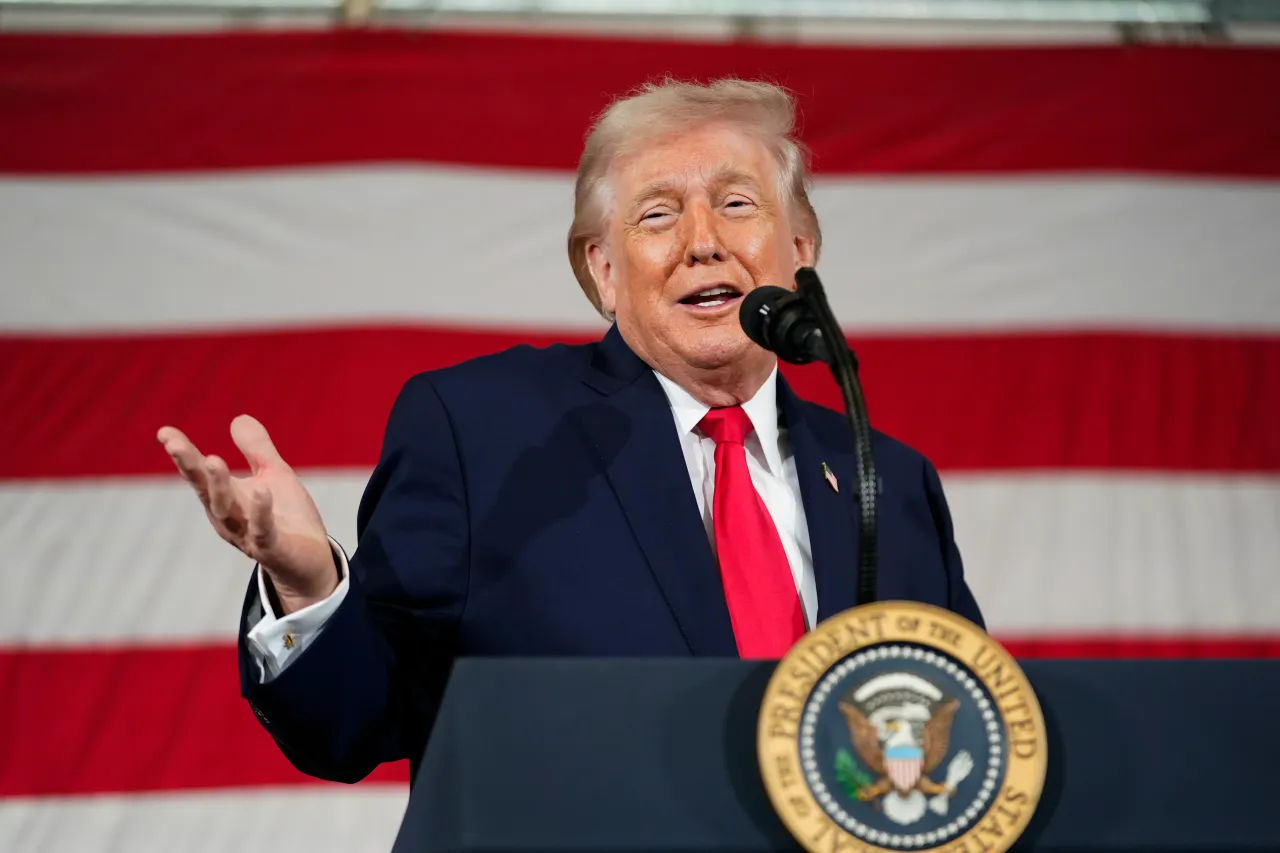


- Trump reiterated his warning late Monday at a White House conference that the U.S. could strike Iranian infrastructure if Hormuz is not reopened by Tuesday evening.
- Oil stayed elevated as the conflict entered its sixth week, with WTI near $112 and Brent near $110.
- Markets also digested weaker services-sector data, with the ISM services index falling to 54 as employment posted its steepest drop since 2023.
Advertisement|Remove ads.
U.S. stock futures traded lower late Monday as traders tracked U.S. President Donald Trump’s deadline for Iran to reopen the Strait of Hormuz, while weighing ceasefire talks amid elevated oil prices.
As of 10.15 p.m. ET, Nasdaq 100 futures were down 0.8%, while S&P 500 futures were down by 0.6%. Dow futures were down 0.4%.
On Stocktwits, retail sentiment toward the SPDR S&P 500 ETF Trust (SPY) and Invesco QQQ Trust (QQQ) was ‘extremely bearish’ amid ‘high’ message volume, and sentiment toward the SPDR Dow Jones Industrial Average ETF Trust (DIA) was ‘bearish’ amid ‘normal’ message volume.
Advertisement|Remove ads.
US Market Drivers
Speaking at a White House conference on Monday, Trump reiterated that the U.S. military could target Iranian bridges and power plants if the strait is not reopened by 8 p.m. ET Tuesday. He said negotiations were “going well,” but added that restoring access through Hormuz remains a “very big priority.” He also said that while he would like the U.S. to “take the oil,” Americans ultimately want U.S. forces to return home.
The U.S., Iran and regional mediators are reportedly exploring a possible 45-day ceasefire that could open the door to a settlement, while Washington and Tehran are also supposedly reviewing a Pakistan-brokered proposal to restore navigation through the Strait of Hormuz.
However, Tehran has said it would only accept ceasefire terms that include a permanent end to the war, sanctions relief, reconstruction commitments and guarantees around safe navigation through the strait. It also warned that strikes on civilian infrastructure could trigger retaliatory attacks on energy facilities across the Gulf.
Advertisement|Remove ads.
The conflict, now in its sixth week, continues to ripple through energy markets, with West Texas Intermediate settling near $112.41 per barrel and Brent crude closing around $109.77.
Michael Cembalest, chair of market and investment strategy at J.P. Morgan Asset & Wealth Management, said that the belief the U.S. economy is insulated from a closure of the Strait of Hormuz is “mostly false,” adding that U.S. fossil-fuel independence “is not as much of an economic firewall as you might think.”
In the previous session, the S&P 500 logged its fourth straight session of gains, marking its longest winning streak since January:
Advertisement|Remove ads.
| Index | Move | Close |
| Dow Jones Industrial Average | 0.36% | 46,669.88 |
| S&P 500 | 0.44% | 6,611.83 |
| Nasdaq Composite | 0.54% | 21,996.34 |
Investors also weighed weaker-than-expected economic data, with the U.S. services sector expanding at a slower pace in March. The ISM services index fell 2.1 points to 54, with employment posting its sharpest drop since 2023.
Mohamed El-Erian, Chief Economic Advisor at Allianz, said on X that the report “reinforces the dual narrative of rising input prices and a resilient real economy.”
Trending Stocks To Watch On NYSE, Nasdaq
Avis Budget Group (CAR): Shares hit nearly a three-year high on Monday despite Deutsche Bank downgrading the stock to 'Hold,' saying the recent 30% weekly rally appears driven by technical reasons tied to a potential short squeeze rather than fundamentals.
Advertisement|Remove ads.
Tesla (TSLA): Shares fell over 2% on Monday to nearly a seven-month low after a first-quarter delivery miss, with GLJ Research analyst Gordon Johnson warning the stock has broken below key moving averages and could fall another 24%-36% by June if free-cash-flow correlations hold.
Broadcom (AVGO): Shares rose 2% in extended trading after the company announced a long-term agreement with Alphabet’s Google to develop and supply next-generation Tensor Processing Units and expand AI infrastructure partnership through 2031 alongside Anthropic.
Enovix (ENVX): Shares posted their best session in nine months on Monday as retail traders speculated about a potential catalyst after Chinese media reported a deal with AR-optics firm MoJie to improve battery life in AI-enabled smart glasses.
Advertisement|Remove ads.
Humana (HUM), UnitedHealth Group (UNH), Elevance Health (ELV): Shares of health insurers rallied in extended trading after the Centers for Medicare and Medicaid Services (CMS) finalized a 2.48% increase in Medicare Advantage payment rates for 2027, expected to add more than $13 billion in plan funding.
How Global Markets Are Performing Today
In broader markets, the yield on the benchmark 10-year U.S. Treasury note hovered near 4.33%, its highest level in about a week. Gold steadied near $4,664 per ounce after a two-day slide, while silver traded around $73.18.
Asian markets were mostly higher on Tuesday, with the MSCI Asia-Pacific index excluding Japan rising about 0.4%. Shares opened higher in Australia, while Japan opened lower.
Advertisement|Remove ads.
Among the catalysts for Tuesday are durable-goods orders, durable-goods orders excluding transportation, remarks from Chicago Fed President Austan Goolsbee, consumer credit data, and comments from Federal Reserve Vice Chair Philip Jefferson.
For updates and corrections, email newsroom[at]stocktwits[dot]com.
Comments posted here will also appear on symbol pages.

Latest News
/filters:format(webp)https://news.stocktwits-cdn.com/large_Getty_Images_2236793425_jpg_2458e96bb4.webp)
/filters:format(webp)https://news.stocktwits-cdn.com/Harshita_3cfe02022c.jpg) Harshita Tyagi·42m ago
Harshita Tyagi·42m ago/filters:format(webp)https://news.stocktwits-cdn.com/large_Eli_Lilly_jpg_953956d5f8.webp)
/filters:format(webp)https://news.stocktwits-cdn.com/vivekkrishnanphotography_58_jpg_0e45f66a62.webp) Arnab Paul·43m ago
Arnab Paul·43m ago/filters:format(webp)https://news.stocktwits-cdn.com/large_terawulf_OG_jpg_a87a18705d.webp)
/filters:format(webp)https://news.stocktwits-cdn.com/Prabhjote_DP_67623a9828.jpg) Prabhjote Gill·1h ago
Prabhjote Gill·1h ago/filters:format(webp)https://news.stocktwits-cdn.com/gettyimages_2295061056_594x594_afda5c9169.jpg)
/filters:format(webp)https://news.stocktwits-cdn.com/Heera_1_1c30cb0170.PNG) Heera Hari·1h ago
Heera Hari·1h ago/filters:format(webp)https://news.stocktwits-cdn.com/large_SPACEX_SPCX_d5bfc46a3b.webp) Arnab Paul·2h ago
Arnab Paul·2h ago/filters:format(webp)https://news.stocktwits-cdn.com/large_Getty_Images_2294367938_81e2686905.jpg) Harshita Tyagi·2h ago
Harshita Tyagi·2h ago