


Advertisement|Remove ads.
SpaceX IPO Has A Stunning Clause Even Tesla Didn't Think Of — Elon Musk Can Only Be Fired If He Says So: Report
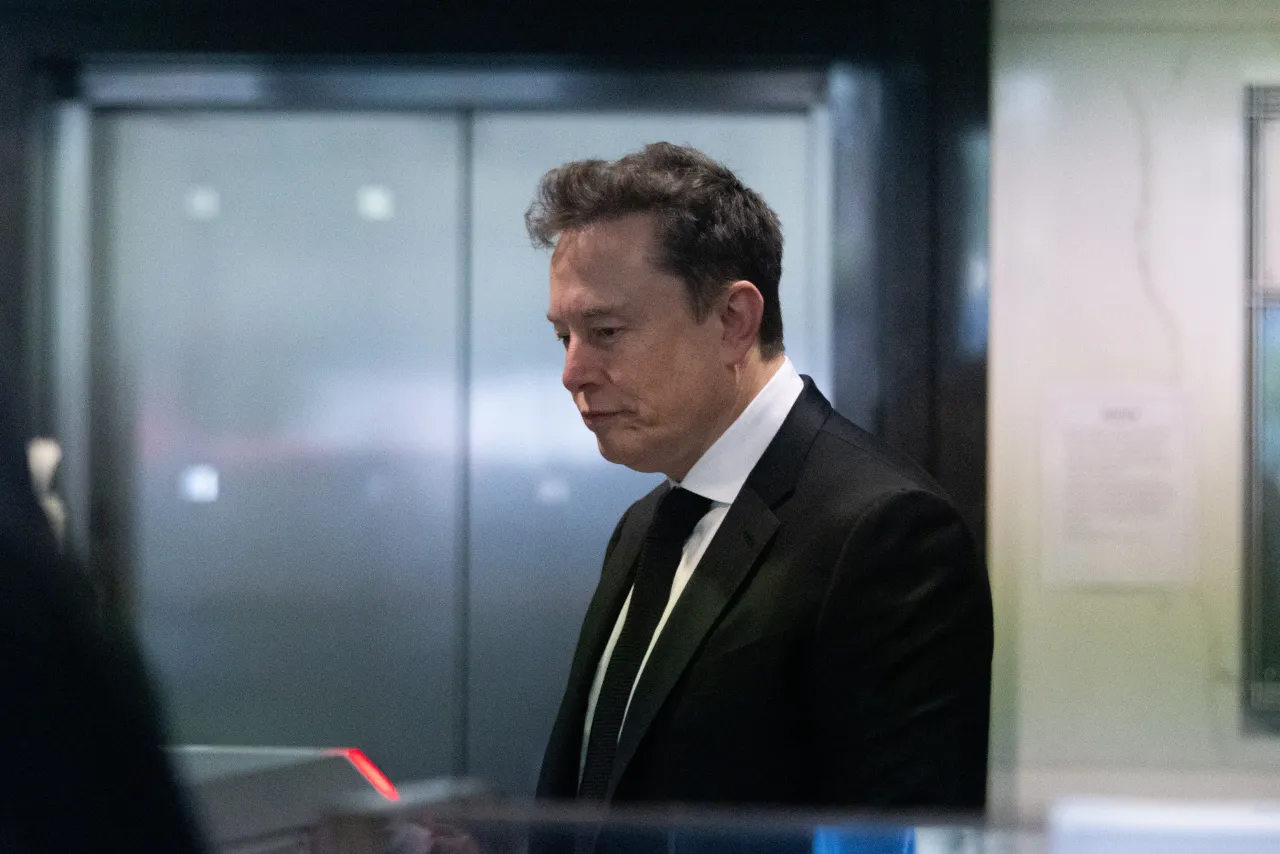


- Musk reportedly cannot be removed as CEO and board chair of SpaceX without his own consent, according to an IPO filing reviewed by Reuters.
- SpaceX has adopted a dual-class share structure for its planned 2026 IPO, giving Musk's Class B shares 10 votes each versus one vote per Class A share.
- At Tesla, where no such share structure exists, the board has repeatedly demonstrated strong alignment with Musk.
Advertisement|Remove ads.
Billionaire entrepreneur Elon Musk has spent years building companies that make products ranging from electric cars and rockets to brain implant devices and tunnel-boring machines. Now, it looks like he has also thought deeply about building structures that make it nearly impossible for anyone to remove him from them.
How Is Musk Protected At SpaceX?
Reuters reported Wednesday, citing a confidential IPO filing it reviewed, that removing Musk from SpaceX would effectively require his own consent. The filing states that Musk "can only be removed from our board or these positions by the vote of Class B holders," and Musk controls those votes.
SpaceX has adopted a dual-class share structure ahead of its planned 2026 IPO, reserving super-voting Class B shares for Musk and a small group of insiders. Each Class B share carries 10 votes, while the Class A shares available to public investors carry just one. Musk will hold a majority of the total voting power following the listing, giving him effective veto power over any attempt to remove him.
Advertisement|Remove ads.
Reuters noted that while dual-class structures are common among founder-led companies going public, most at least retain the formal ability to remove a CEO, even if the votes to do so are hard to muster. SpaceX's structure goes a step further, making even the theoretical path to removal contingent on Musk's cooperation.
Musk's Iron Throne At Tesla
Tesla, in comparison, has only a single share class, meaning the CEO does not hold Class B voting shares. However, even at the EV giant, it would be incredibly difficult to oust Musk, who has been leading the company for over 17 years.
Under Tesla's bylaws, the board of directors holds the authority to remove any officer, including the CEO, by a simple majority vote with or without cause, subject to any employment protections.
Advertisement|Remove ads.
Yet the nine-member board — chaired by Robyn Denholm and including Musk himself, his brother Kimbal Musk, and longtime allies such as J.B. Straubel and early investors with personal or business ties to him — has repeatedly demonstrated strong alignment with the CEO.
In 2025, amid reports that the board had quietly explored a CEO search amid performance concerns and Musk's political activities, Denholm publicly denied any such effort and affirmed the board's "high confidence" in Musk's leadership.
Past Delaware court rulings on Musk's 2018 compensation package have highlighted questions about board independence, underscoring how difficult it would be for directors to act against him.
Advertisement|Remove ads.
Musk further entrenches his position as Tesla's largest individual shareholder, with approximately 22% beneficial ownership, per Fiscal.ai. In November 2025, shareholders approved a new performance-based compensation package potentially worth up to $1 trillion, with more than 75% of votes in favor, explicitly designed in part to give Musk greater long-term voting influence toward his stated goal of roughly 25% control, a level intended to deter activist challenges.
Musk has repeatedly signaled that without sufficient voting control or incentives, he could redirect his focus to SpaceX, xAI, or other ventures — a threat that has weighed on board deliberations. Following the SpaceX-xAI merger, Musk's combined ownership was estimated at around 43% of the merged entity, with a potential value of over $530 billion, according to a CNBC report from February.
What Do TSLA Retail Traders Feel?
On Stocktwits, sentiment around SPACEX trended 'bearish' with 'extremely low' message volume. TSLA, by contrast, stayed in 'extremely bullish' territory over the past 24 hours, with 'high' retail chatter.
Advertisement|Remove ads.
"When the main argument for owning shares becomes 'They're eventually going to merge with SpaceX,' you know you've got problems," one bearish user wrote.
https://stocktwits.com/TICKERTUTOR/message/651502059
Several analysts have echoed that caution, with some warning that a Tesla-SpaceX combination "makes no sense mathematically" for Tesla shareholders unless it delivers an unusually large boost to costs or revenue, and would significantly dilute existing holders in the process.
Advertisement|Remove ads.
TSLA stock has gained 27% over the past 12 months, but has lagged its "Magnificent Seven" peers this year with a 17% loss.
For updates and corrections, email newsroom[at]stocktwits[dot]com.
Advertisement|Remove ads.
Comments posted here will also appear on symbol pages.

Latest News
/filters:format(webp)https://news.stocktwits-cdn.com/large_Getty_Images_2296204501_14a84e5451.jpg)
/filters:format(webp)https://news.stocktwits-cdn.com/unnamed_jpg_9dff551b50.webp) Anan Ashraf·10m ago
Anan Ashraf·10m ago/filters:format(webp)https://news.stocktwits-cdn.com/large_Getty_Images_2271714842_jpg_e9329f8e11.webp) Anan Ashraf·38m ago
Anan Ashraf·38m ago/filters:format(webp)https://news.stocktwits-cdn.com/gettyimages_131113971_594x594_18605564f3.jpg)
/filters:format(webp)https://news.stocktwits-cdn.com/1707726834303_jpg_11f20a9aa9.webp) Shashank Nayar·51m ago
Shashank Nayar·51m ago/filters:format(webp)https://news.stocktwits-cdn.com/large_IBM_jpg_db5b7d0908.webp) Shashank Nayar·2h ago
Shashank Nayar·2h ago/filters:format(webp)https://news.stocktwits-cdn.com/Getty_Images_2258302119_jpg_de7ca8145a.webp) Anan Ashraf·2h ago
Anan Ashraf·2h ago/filters:format(webp)https://news.stocktwits-cdn.com/large_Getty_Images_2296215726_e82f86b85a.jpg) Shashank Nayar·3h ago
Shashank Nayar·3h ago