


Advertisement|Remove ads.
Elon Musk’s SpaceX Could Become A $15 Trillion Business, Says Ron Baron – Remains Skeptical Of Tesla’s Humanoid Robots

- Baron expects Starlink to generate about $1 trillion in annual revenue within 10 years, with EBITDA of $700 billion to $800 billion.
- He sees falling launch costs as a major driver of Starlink’s expansion and expects SpaceX’s next-generation rocket to further reduce costs.
- Baron remains bullish on Tesla but does not assign much value to the company’s humanoid-robot ambitions.
Advertisement|Remove ads.
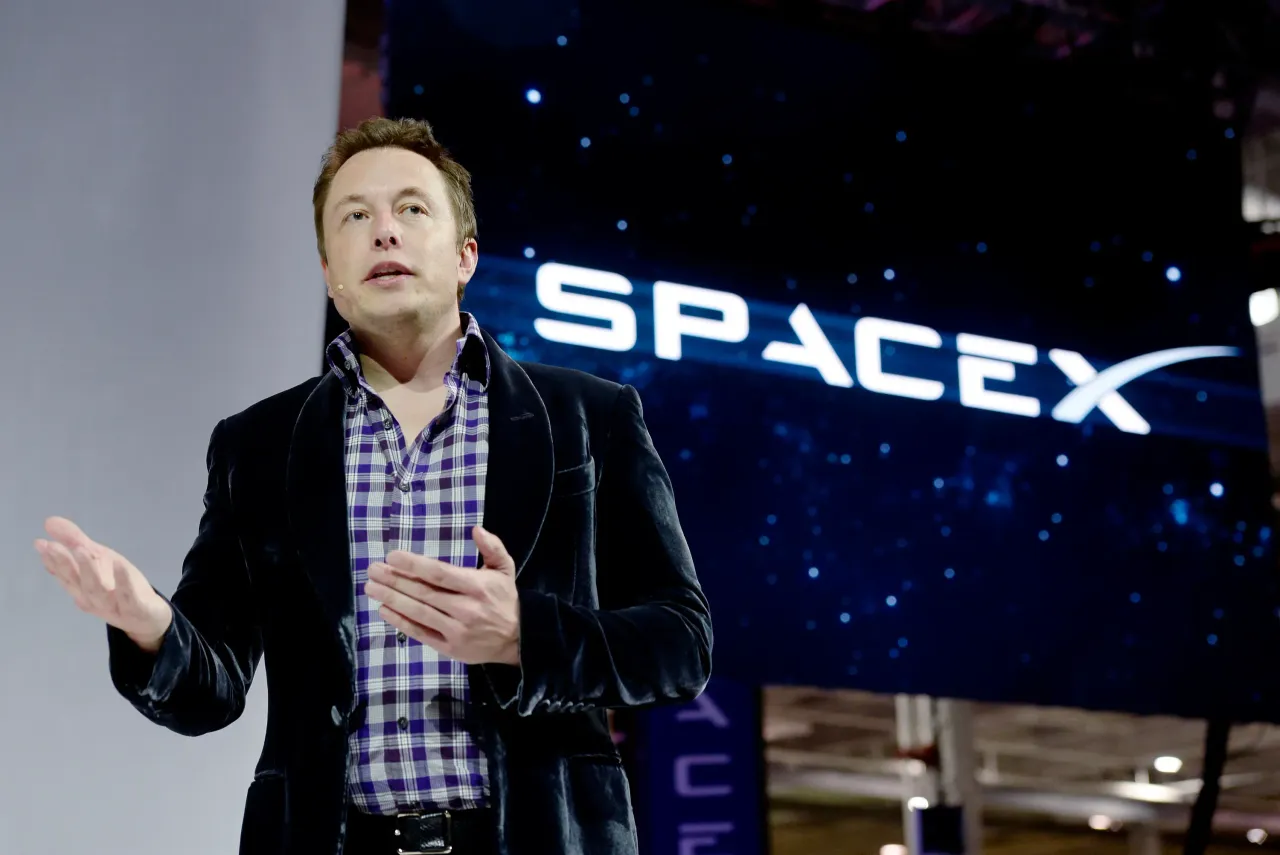
Billionaire investor and CEO of Baron Capital, Ron Baron, said on Wednesday that he saw Elon Musk’s SpaceX (SPCX) potentially reaching a $14 trillion to $15 trillion valuation as Starlink’s business continues to grow.
“I think Starlink alone could be a trillion dollars in revenue in 10 years,” Baron said in a CNBC interview. “And if you look at the margins, $700 billion, $800 billion of [earnings before interest, tax, depreciation and amortization] EBITDA. And you put a multiple on that, that would support a $14 trillion, $15 trillion valuation.”
That compares with a valuation of less than $2 trillion for SpaceX right now, according to Baron, who said he recently took a deeper look at the company’s prospects.
Advertisement|Remove ads.
Baron added that he also remains bullish on Tesla (TSLA), but isn’t sold on Elon Musk’s vision for humanoid robots.
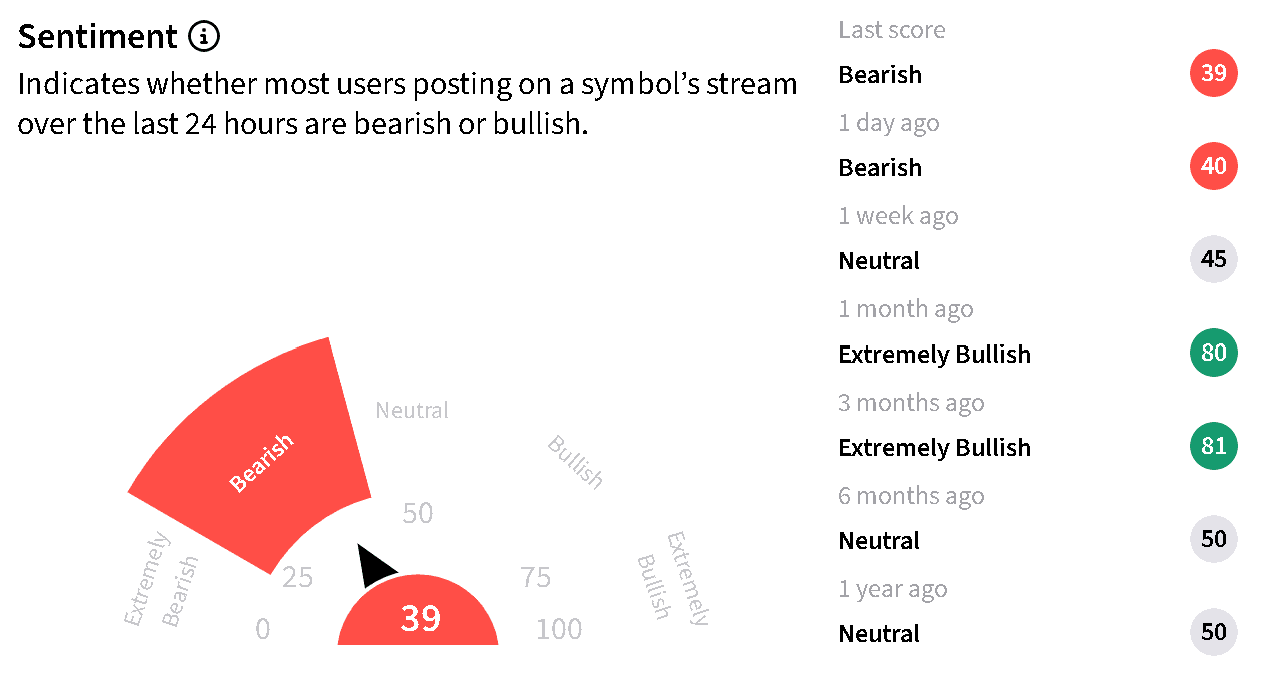
SPCX stock gained over 2% as markets opened on Wednesday, while TSLA stock traded flat. On Stocktwits, retail sentiment around SpaceX remained in ‘bearish’ territory over the past day, while sentiment around Tesla trended in the ‘extremely bearish’ zone.
Falling Launch Costs Could Drive Starlink Expansion
Baron’s thesis rests in part on the sharp decline in the cost of launching payloads into orbit, which he sees as a key driver of SpaceX’s ability to expand Starlink.
Advertisement|Remove ads.
“In 2010, it cost $18,700 a kilo to put something into space,” Baron said. “And with the Falcon 9, it went down to $2,700. And then with the heavy rocket, it went down to $1,500.”
According to him, the next-generation rocket could push that cost substantially lower. “And the new rocket that he’s [Musk] developing now, it’s going to bring the cost down to... $100, $150,” Baron said.
Lower launch costs could allow SpaceX to deploy a far larger Starlink constellation and expand beyond its current consumer-internet business. Baron said only about 30% to 35% of the potential revenue would come from consumers, with the rest coming from government, enterprise and mobile customers.
Advertisement|Remove ads.
He also sees Starlink’s customer base potentially growing from about 15 million today to 300 million over the next decade.
Baron Remains Bullish On Tesla FSD
“I think [for] Tesla, the time to buy the stock is now,” Baron said, pointing to the continued adoption of Tesla’s Full Self-Driving (FSD) technology and the company’s position in electric vehicles and energy.
“The FSD is catching on. It's becoming bigger and bigger. There are 1.4 million people who are using it, and 55% overall growth per year,” he stated.
Advertisement|Remove ads.
Baron also said Tesla’s market share is increasing again because legacy automakers are not fully committing to electric vehicles. “Tesla's market share is increasing again,” he said. “Because the other car companies, the legacy car companies, are not going all in on electric vehicles.”
Baron Isn’t Sold On Tesla’s Robot Ambitions
However, Baron remained more cautious about Tesla’s humanoid-robot ambitions, despite Musk’s repeated claims that the business could eventually become larger than Tesla’s automotive operations.
“I'm not giving a lot to the robots,” Baron said, adding that Tesla also has “very important batteries and energy technology.”
Advertisement|Remove ads.
Read also: SK Hynix Says It's 'Exploring Options,' Denies Any Finalized Intel Chip Deal
For updates and corrections, email newsroom[at]stocktwits[dot]com.
Comments posted here will also appear on symbol pages.

Latest News
/filters:format(webp)https://news.stocktwits-cdn.com/large_Getty_Images_2257538219_jpg_2976ffdb40.webp)
/filters:format(webp)https://news.stocktwits-cdn.com/IMG_9209_1_d9c1acde92.jpeg) Yuvraj Malik·52m ago
Yuvraj Malik·52m ago/filters:format(webp)https://news.stocktwits-cdn.com/large_Getty_Images_2242116732_jpg_8edfaf9518.webp)
/filters:format(webp)https://news.stocktwits-cdn.com/shivani_photo_jpg_dd6e01afa4.webp) Shivani Kumaresan·1h ago
Shivani Kumaresan·1h ago/filters:format(webp)https://news.stocktwits-cdn.com/large_Getty_Images_1238536755_391df938ce.jpg)
/filters:format(webp)https://news.stocktwits-cdn.com/Anushka_Basu_make_me_smile_in_the_picture_b92832aa_af59_4141_aacc_4180d2241ba8_1_2_png_1086e0ed8c.webp) Anushka Basu·1h ago
Anushka Basu·1h ago/filters:format(webp)https://news.stocktwits-cdn.com/large_Getty_Images_2259521181_jpg_b4c58b3d45.webp) Shivani Kumaresan·1h ago
Shivani Kumaresan·1h ago/filters:format(webp)https://news.stocktwits-cdn.com/large_Getty_Images_2232147544_jpg_6b4f358800.webp) Yuvraj Malik·1h ago
Yuvraj Malik·1h ago/filters:format(webp)https://news.stocktwits-cdn.com/large_Getty_Images_2257538585_jpg_225f88c502.webp)
/filters:format(webp)https://news.stocktwits-cdn.com/IMG_8805_JPG_6768aaedc3.webp) Deepti Sri·2h ago
Deepti Sri·2h ago