


Advertisement|Remove ads.
Fed Beige Book: Iran War Pushes American Companies Into ‘Wait-And-See’ Mode
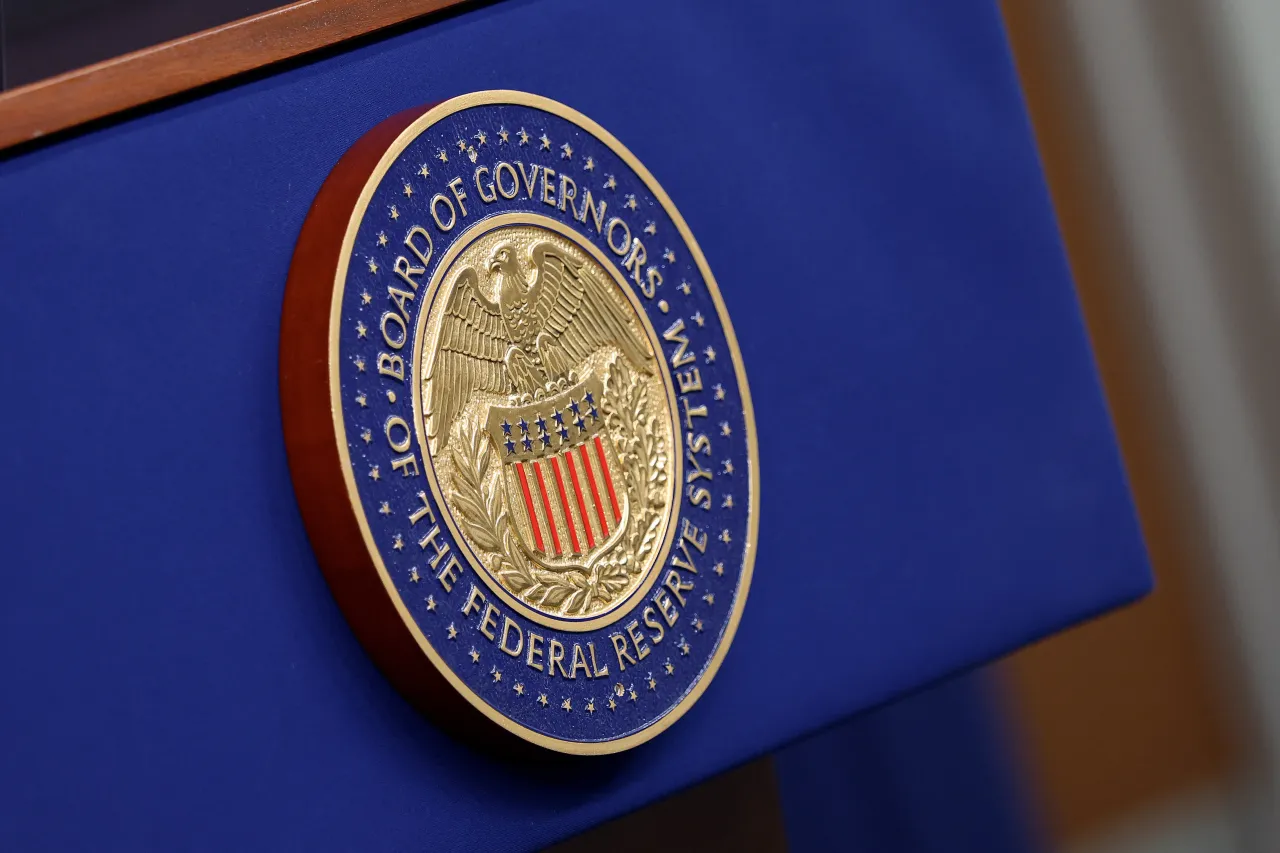


- A key concern highlighted in The Beige Book is the sharp rise in energy and fuel costs, which increased across all 12 Federal Reserve districts.
- The labor market, however, has remained relatively stable, the Fed noted, with employment levels staying steady.
- The Fed is widely expected to keep its benchmark interest rate steady at the current 3.50%-3.75% range at its next policy meeting slated for April 28-29.
Advertisement|Remove ads.
U.S. businesses are facing rising uncertainty and cost pressures due to the ongoing war in Iran and the wider Middle East conflict, according to the latest Beige Book report released by the Federal Reserve.
“The conflict in the Middle East was cited as a major source of uncertainty that
complicated decision-making around hiring, pricing, and capital investment, with many firms adopting a wait-and-see posture,” the Fed said.
Despite these challenges, overall economic activity across the United States continued to grow at a slight to modest pace in most regions, the central bank noted.
Advertisement|Remove ads.
Top Economic Concerns
A key concern highlighted in The Beige Book is the sharp rise in energy and fuel costs, which increased across all 12 Federal Reserve districts.
This had a cascading effect, leading to higher freight and shipping costs, as well as higher prices for petroleum-based products, including plastics and fertilizers. The Fed noted in its report that input cost pressures are now spreading beyond energy, affecting a wide range of sectors, including metals, technology, and insurance.
The labor market, however, has remained relatively stable, the Fed noted, with employment levels staying steady.
Advertisement|Remove ads.
Key Interest Rates
The Fed is widely expected to keep its benchmark interest rate steady at the current 3.50%-3.75% range at its next policy meeting slated for April 28-29.
However, some experts are signalling that the Fed may hike interest rates amid the inflationary pressures of the war. Jeremy Siegel, professor emeritus of finance at the University of Pennsylvania’s Wharton School of Business, recently warned of a rate hike, saying the odds were “no longer negligible” amid the backdrop of high crude oil prices due to the Iran war.
According to data from the CME FedWatch tool, the odds of a rate hike are currently at 0.5%, down from 1% a week ago.
Advertisement|Remove ads.
Oil prices have surged about 45% in the past year, driven up largely by the war in Iran.
Meanwhile, at the time of writing, the SPDR S&P 500 ETF (SPY), which tracks the S&P 500 index, declined about 0.05% in extended trading hours, while the Invesco QQQ Trust ETF (QQQ) fell 0.06%, and the SPDR Dow Jones Industrial Average ETF Trust (DIA) was flat.
Retail sentiment on Stocktwits regarding the S&P 500 ETF was in the ‘neutral’ territory.
Advertisement|Remove ads.
For updates and corrections, email newsroom[at]stocktwits[dot]com.
Comments posted here will also appear on symbol pages.

Latest News
/filters:format(webp)https://st-everywhere-cms-prod.s3.us-east-1.amazonaws.com/large_fuelcellenergy_resized_ef1a57cfe6.jpg)
/filters:format(webp)https://news.stocktwits-cdn.com/Aashika_Suresh_Profile_Picture_jpg_2acd6f446c.webp) Aashika Suresh·23m ago
Aashika Suresh·23m ago/filters:format(webp)https://news.stocktwits-cdn.com/large_oscar_health_jpg_89aa74c6fe.webp)
/filters:format(webp)https://news.stocktwits-cdn.com/IMG_8805_JPG_6768aaedc3.webp) Deepti Sri·29m ago
Deepti Sri·29m ago/filters:format(webp)https://news.stocktwits-cdn.com/large_Getty_Images_2217651425_jpg_0d7dc8a6cd.webp)
/filters:format(webp)https://news.stocktwits-cdn.com/shivani_photo_jpg_dd6e01afa4.webp) Shivani Kumaresan·48m ago
Shivani Kumaresan·48m ago/filters:format(webp)https://news.stocktwits-cdn.com/large_spy_jpg_a85fe2a8bc.webp) Aashika Suresh·1h ago
Aashika Suresh·1h ago/filters:format(webp)https://news.stocktwits-cdn.com/large_Getty_Images_2217856934_jpg_29efdc61ed.webp) Deepti Sri·1h ago
Deepti Sri·1h ago/filters:format(webp)https://news.stocktwits-cdn.com/large_Getty_Images_2263602546_jpg_a0f4e7e3ca.webp)
/filters:format(webp)https://news.stocktwits-cdn.com/1707726834303_jpg_11f20a9aa9.webp) Shashank Nayar·2h ago
Shashank Nayar·2h ago